

Sponsored

Advertorial

Rolf Benz 973: Side table and tray

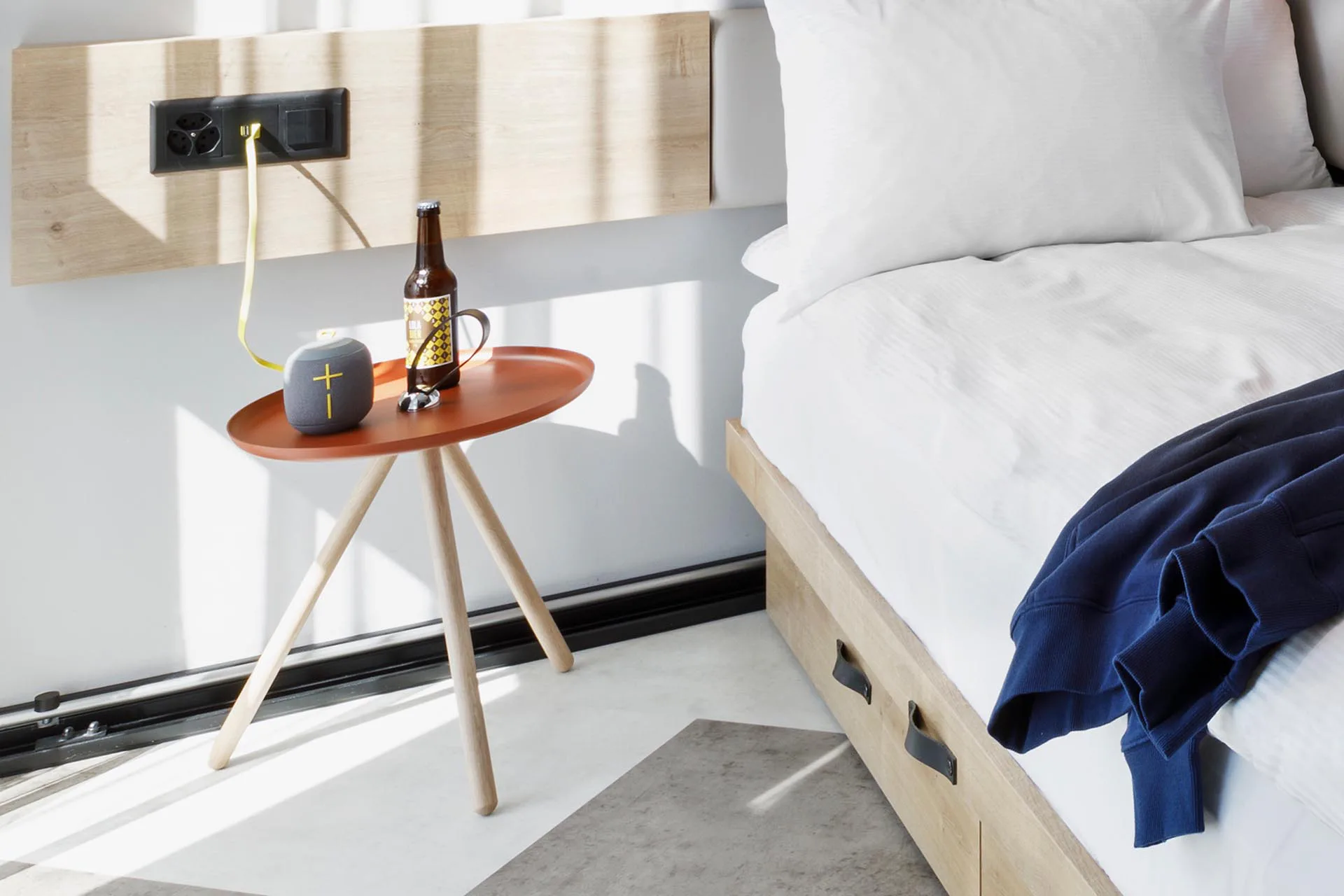
Rolf Benz 973 is a side table and tray in one. Thanks to its elegant loop made of dark brown core leather, it follows every movement of the sofa and completes any room situation.

Rolf Benz 973: Side table and tray

Advertisement

Rolf Benz 973

Side table and tray
> To the Festive Raffle

© ️Rolf Benz

The coffee table with sheet steel top designed by Pascal Bosetti is both a side table and a tray. Thanks to its elegant loop made of dark brown core leather, it follows every movement of the sofa and complements any room situation. The sheet steel top is available in various RAL colors, the structure is made of solid oak or American walnut.

Price: from 434 euros.

You can find more information here.

Made in Germany. Made im Schwarzwald.

Since it was founded in 1964, Rolf Benz has been designing and producing innovative upholstery culture in the Black Forest. Since August 2020, the international design brand has been underlining this quality statement with a new certificate: “Furniture Made in Germany”. It is the first geographical mark of origin for furniture and consumer goods recognized by the RAL German Institute for Quality Assurance and Certification. Unlike most other upholstered furniture manufacturers, Rolf Benz consistently manufactures fully integrated - with its own upholstered frame factory - in the immediate vicinity of the company headquarters in Nagold and receives the certificate for the entire upholstered furniture collection.

The traditional company Rolf Benz can draw on decades of experience and has high quality standards. Precise work and strict controls run through the entire production chain. At Rolf Benz, sustainability is not a short-lived trend. This is also reflected in the motto “Resource of the Future”. The company pays attention to the economical use of renewable raw materials and the shortest possible transportation routes.
© ️Rolf Benz

  • Mei architects and planners completed the Schiecentrale in Rotterdam’s Lloydkwartier in 2008. The practice is still based in the building complex to this day, and Robert Winkel also lives there.

    „We're interested in people who have ideals" 

    What qualifies architects as project developers? What values enable them to survive in the highly competitive real-estate industry? How can architectural practices use digital data to regain influence over construction processes? We speak to Robert Winkel, who works in architecture and real estate.

  • View from the entrance of two learning centres and the adjoining sports hall on the school grounds

    A Place for Personal Development  

    Classrooms are a thing of the past. At Ammersee, pupils learn in open clusters overlooking the lake. Dettinger Architects designed the school building using timber-frame construction.

  • HALBZEUG #4: Zumthor, Bawa, Nauta and Ramstad

    How often do you miss a lecture, an exhibition closing event or a panel discussion, and lose track of notable buildings, new architectural practices and trends in architecture? In episode 4, we report on our press trips, discuss the projects we've experienced and offer a little glimpse behind the scenes of a press trip.

  • View of the art district and the adjacent fjord landscape

    Art Moves to the Countryside 

    How an old commercial complex by the fjord became a branch of the Statens Museum, and why it also houses a kayak storage facility with a workshop.

  • Inclusive Centre near Barcelona

    An old textile factory was transformed into a day centre for individuals with disabilities. As a public building in the heart of the city, it represents a completely new understanding of inclusion.

  • View from the new atrium. For the first time, the central stairwell with lift provides all tenants with direct access to their offices and laboratories.

    Added Storeys Instead of Demolition 

    In Uppsala, Sweden, a 1970s office complex was facing demolition. Following its unexpected rescue, it has become a pilot project for circular construction. Anders Tväråna of White Arkitekter relatess how Lumi also became an economic success.