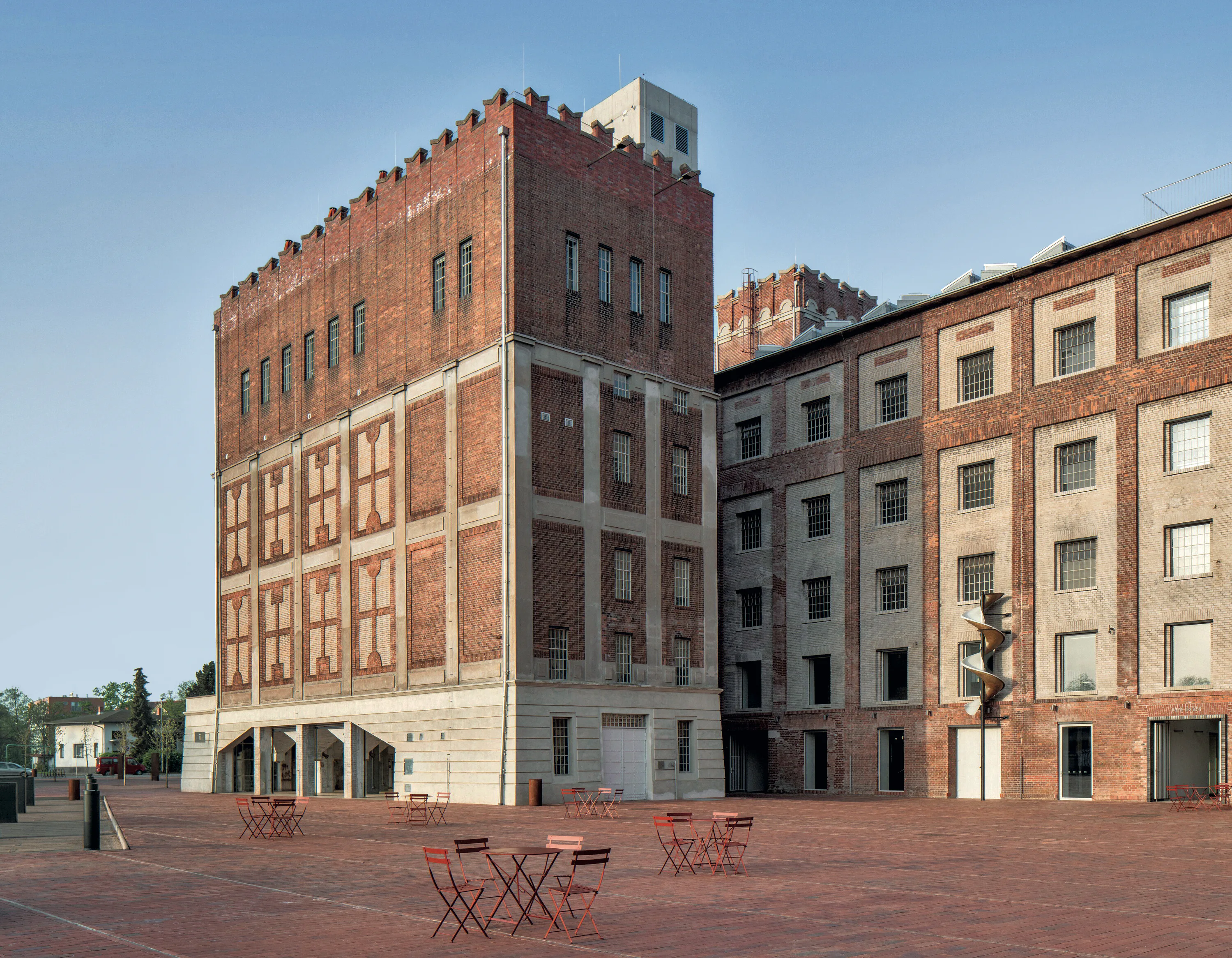
The Inner Life of Gočár’s Grain Silo
The historic Automatic Mills (“Automatické mlýny”) in the Czech city of Pardubice, located in Eastern Bohemia, have been in continuous operation for over a century. Designed by the architect Josef Gočár for the Winternitz brothers, the mill complex was constructed in 1910 on the right bank of the Chrudimka River. The project marked the first major commission for Gočár, who is regarded as the pioneer of Czech modernism. In 1924, he expanded the complex by adding a grain silo to the east of the flour mill as a separate structure. With its red and white brickwork, nearly windowless facade, dovetail battlements on the parapet, and an arched footbridge linking the mill and silo, the majestic factory resembles a fortress more than an industrial building. Its exterior evokes the ancient Ishtar Gate of Babylon, which was being excavated in present-day Iraq at the time. After production ceased in 2013, investors Lukáš and Mariana Smetana acquired the landmark complex. Collaborating with the municipal and regional authorities, they opened up the previously inaccessible site to the city, developing it with the support of four Czech architect firms into a new cultural and social hub.