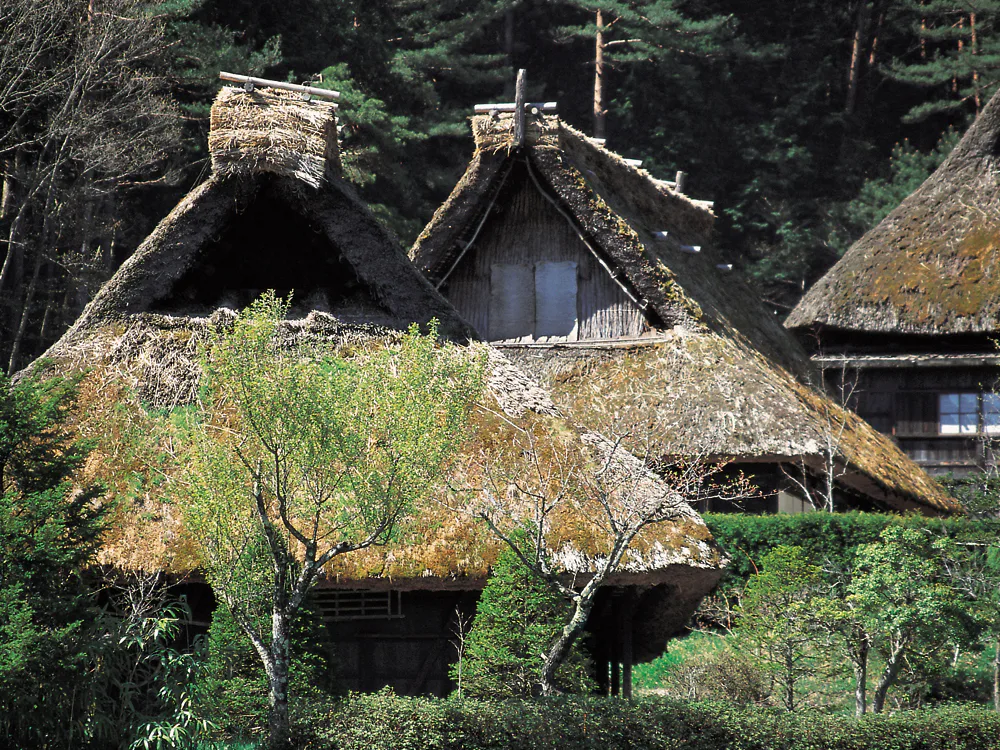
Discussion: The Rise and Development of the Minka
"Minka" is the word used to describe the house of the common people in Japan, as distinct from the residences of the civil and military aristocracy or the clergy. The term includes the houses of the farming population ("noka") and town dwellers ("machiya"). The minka is distinguished from earlier structures by a number of features, the most important of which are the development of earth or earth-rendered walls, and the transition from supporting posts to structural columns. In early forms of construction, the feet of the posts were buried in the ground. In the Muromachi period towards the end of the 15th century, this gave way to a system of columns supported by foundation stones. A further feature of the minka is the "yuka", an internal realm raised above the ground.