Discussion: Built Transparency - Nineteenth Century Greenhouses
- Christian Schittich
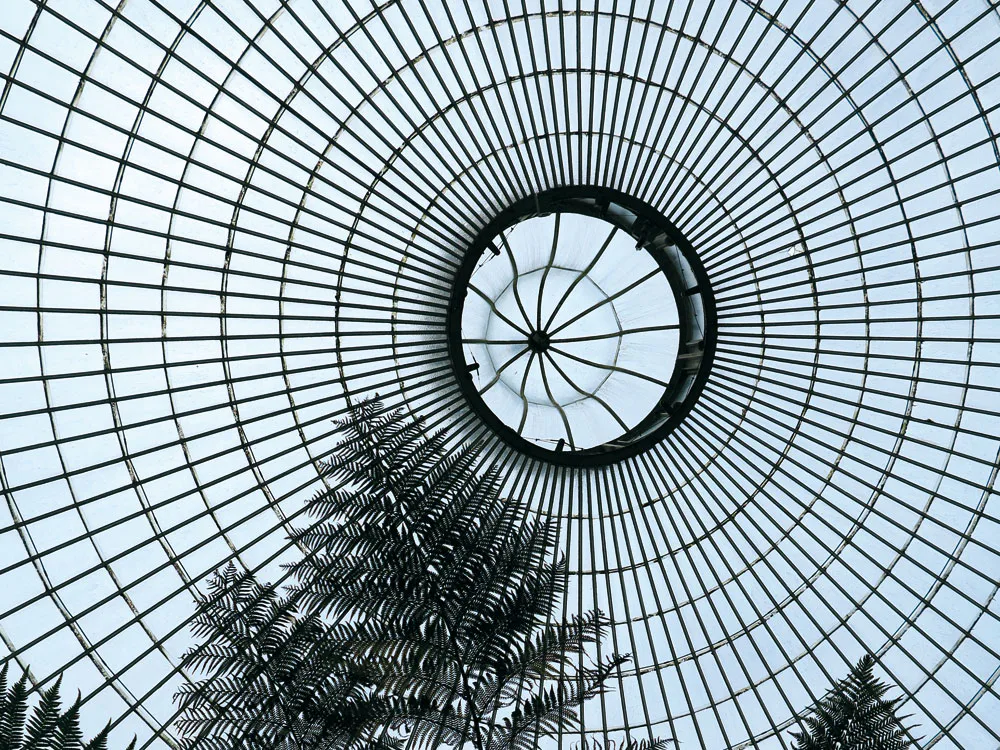
They are among the nineteenth century's most fascinating structures, yet tend to be overlooked by classical architectural history: the lacelike greenhouses of iron and glass whose form and articulation are derived solely from functional and technical requirements. New construction methods and formal innovations - later to become fundamentals of modern architecture - are brought to bear in these early manifestations of industrialised construction. Because their erecters - typically gardeners or engineers - were completely unburdened by the conventions of the architecture of their time and questions of style, they were able to employ unusual material combinations as well as the nascent potential of prefabricated construction - but also experiment with hitherto unknown aesthetics. And the building codes for these purely utilitarian structures for plants - initially, stays of longer duration by people were not foreseen - allow considerable leeway. These factors, in combination with incipient industrialised methods for the production of iron and glass, during a phase in which an increasing number of exotic plants was arriving in Europe from the colonies - aristocrats and wealthy individuals were keen to cultivate and exhibit them - led to the construction of unprecedented spaces. If it hadn't been for the experience gained by erecting these greenhouses, pioneering buildings such as Joseph Paxton's Crystal Palace (1851) would not have been possible. After all, Paxton also obtained his structural knowledge by building greenhouses - although not much remains of them today. Even before Paxton entered the scene, John Claudius Loudon - like Paxton, also a gardener - established the fundamental principles of greenhouse construction. In his numerous early-nineteenth-century texts and studies he seeks to define their ideal "characteristics". His sole point of departure: the needs of the plants. To allow the greatest possible amount of light to enter their interiors, Loudon insists that the load-bearing members be as slender as possible. Furthermore, he develops the curvilinear forms that are to become associated with the greenhouses of his day. In his works he makes reference to the ideas of Sir George Mackenzie, who in an 1815 lecture had proposed orienting a greenhouse's skin to the celestial dome to take into account the differing solar altitude over the course of the year and allow the sun to optimally penetrate the panes of glass. This approach also minimises the amount of reflected light.