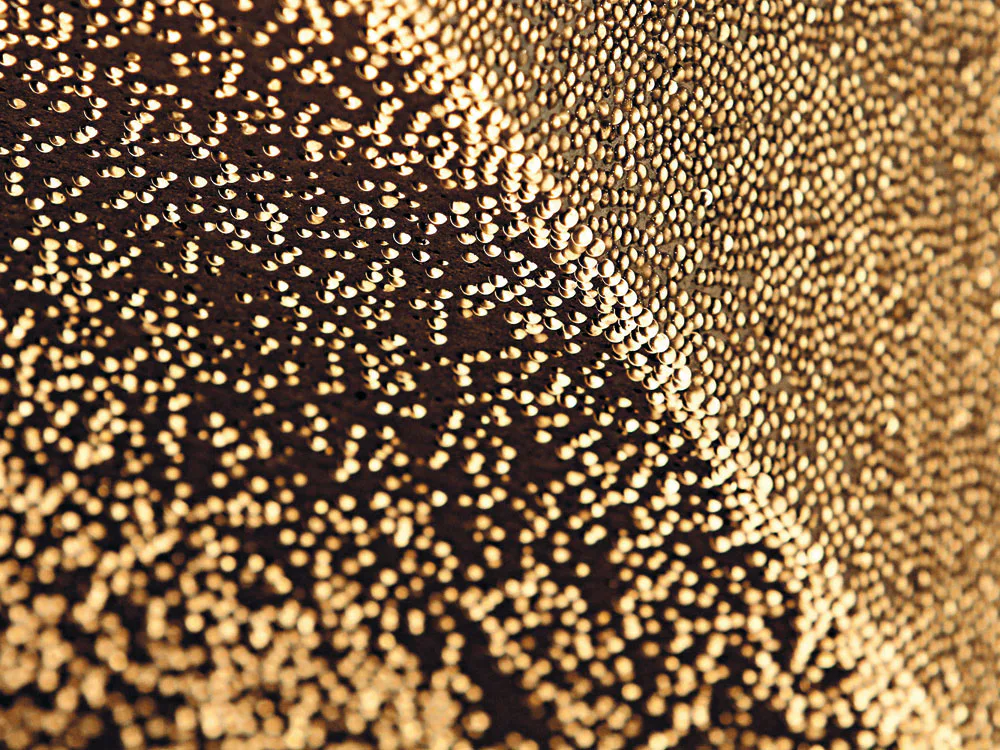
Materials and Construction: Surface Activation: Enlivening Concrete
The term "surface" enjoys equal significance in technical research and design, uniting important, though disparate elements. On account of its many facets, the word lends itself particularly well to making architecture and design receptive to a broad spectrum of current developments, mainly in other disciplines. For the design of objects and spaces, decisions about surfaces are basically decisions on materiality. Material technology research, on the other hand, is concerned with what it simply calls the function of a surface. Interfaces define the reality of the world we live in. Phenomena at the boundaries between materials play an important role in many areas, whether visibly and functionally in everyday culture or invisibly, as in nanomaterials research. Michel Serres has provided perhaps the clearest articulation of the topos of the building envelope as a synthetic extension that helps to connect us to our environment1.