Technology: Performative Translucence
- Frank Kaltenbach
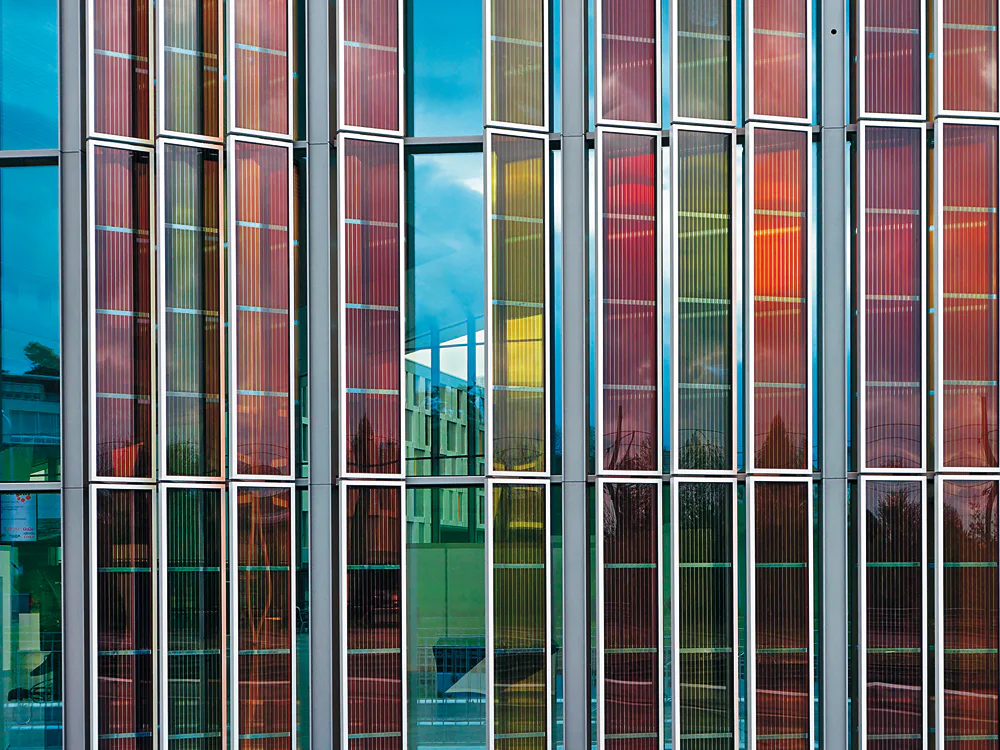
Interactive screens that can be switched to become reflective or function as translucent room dividers, or which seem almost to dissolve into thin air - these state-of-the art displays are pointing the way toward translucent building envelopes. They are coming closer and closer to Mike Davies's vision of a Polyvalent Wall (1981). Several of the products and research projects presented here were on display at "glass technology live" at this year's Glasstech trade fair in Düsseldorf. Highly insulated, thin and light: thin glass (familiar to us from smart phones) is increasingly being used in facades. By employing the down draw method, Schott has created scratch-resistant layers of glass with the thickness of a single human hair, and with a radius of curvature of just a few millimetres. To reduce the weight of triple glazing and improve its light transmittance, Lisec uses partially pre-stressed 2-mm-thick glass in the middle layer. The triple glazing's energy transmittance corresponds to that of double glazing.