Focus on Bars, Restaurants, Cafes: Naturally Staged - Gastronomic Design Concepts
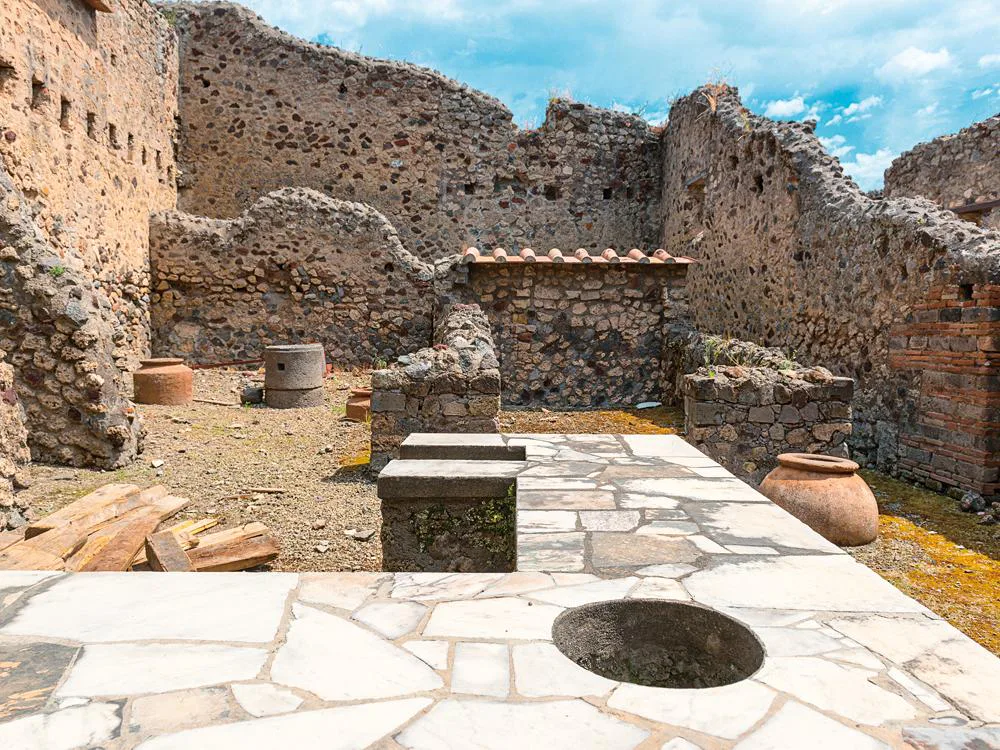
Restaurants are an inextricable part of modern life. After all, is there anyone who only ever wants to eat at home? The proverbial need for a change of scenery plays at least as large a role in this regard as culinary variety. A guest survey by online reservation service Bookatable recently found that for 80 % of Germans the design of a restaurant plays a crucial role. And this even though so-called "restaurants without chairs" — i.e. takeaway and delivery services — are garnering an ever larger share of the market. Historically speaking eating out hasn't always been commonplace. Like so many things the restaurant also stems from an idea of the ancient Romans — in Pompeji alone there were about 150 food stalls (A, B) — though gastronomy died out at the same time as Constantine and his consorts did. In early modern times cooking and eating were purely private affairs. It was only in an emergency, such as when people were travelling, that meals not prepared in the domestic kitchen were consumed. It's no wonder then that the food on offer in hostels were usually of simpler, or even questionable, quality. It was only in post-revolutionary France that the restaurant emerged as a place to seek out of one's own free will, for the sake of a change, and was presumably named after a "restorative", that is to say, fortifying meat broth served therein.