Stairs, ramps, lifts - Routing - Planning principles

Designing Circulation Areas

Designing Circulation Areas

Pleasant and Inviting Circulation Areas
Staged paths and innovative floorplan concepts 

“Infrastructure provision” doesn’t sound very interesting at first, more like the necessary evil of making building components and spaces accessible in the horizontal and vertical direction while taking into account a wide variety of requirements. That’s why the ever more frequently encountered fresh interpretations of this design task by architects who take it as the pivotal element of their concepts, resulting in surprising yet compelling space configurations, are even more interesting.

Spectacular lifts and escalators, unusual floor plan arrangements or stairway sculptures that define the space provide staging for the required pathways. Infrastructure takes on the characteristics of an amenity and becomes an exciting spatial experience as well as a crucial criterion of a successful design. The separation between infrastructure and space dissolves, because the infrastructure becomes a space of sojourn and communication.

The volume at hand, in accordance with the typological approach of the series, shows the entire spectrum of interesting options for infrastructure provision, starting with school construction – which, far from the “never-ending hallway” character, already seizes upon current work methods in the draft stage and enables future-oriented learning – and continuing on to innovative concepts for residential, cultural and transport facilities, the sporting and working worlds, and even landscape planning. Alongside these extensive project documentations that provide a great deal of inspiration and stimulate new ideas, theoretical contributions of renowned specialist authors illuminate the topic in addition to the planning basics in regard to route guidance, steering of visitor flows, orientation in space, accessibility for the Disabled and the important task of light planning.

- Staged paths and exciting communication spaces
- Innovative concepts for providing infrastructure
- New space strategies
- Spectacular lifts and escalators
- Typological spectrum of project examples


  • Stroh

    Die Professur für Kreislaufgerechten Holzbau am Karlsruher Institut für Technologie (KIT) präsentiert dieses umfassende Nachschlagewerk zum nachhaltigen Bauen mit Stroh. Stroh bietet großes Potenzial für eine klimagerechte Baukultur: Es ist regional verfügbar, kostengünstig, CO2-speichernd und vollständig kreislauffähig. Die Publikation vermittelt Wissen über konstruktive, rechtliche und gestalterische Möglichkeiten auf nachvollziehbare, kritisch reflektierte und praxisnahe Weise. Sie dokumentiert Ergebnisse aus Lehre und Forschung, beleuchtet realisierte Projekte und zeigt konstruktive Prinzipien, Detaillösungen sowie gestalterische Potenziale. Hochwertige Fotografien, Pläne und Grafiken vermitteln die Inhalte anschaulich.

  • Paris

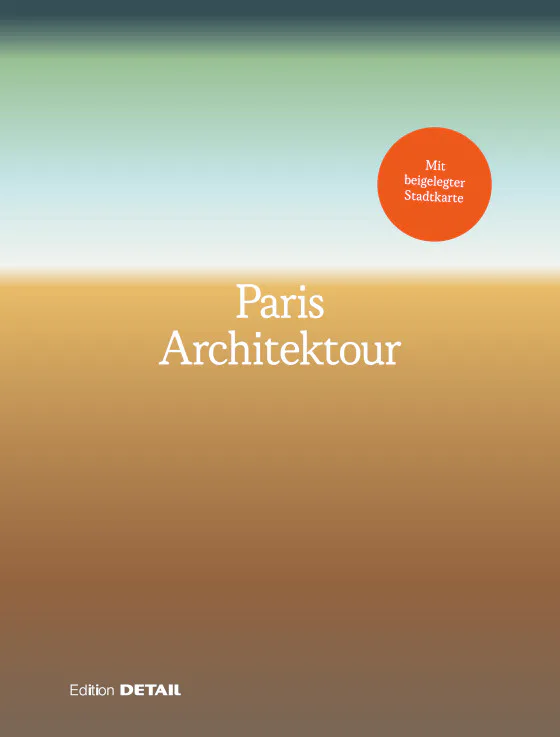
    Paris carries its history in its buildings and yet remains a perpetual site of architectural experiment. No other major city negotiates tradition and innovation quite so naturally. The book portrays a generation of architects – among them established practices such as Moussafir Architectes and Régis Roudil – who are fundamentally rethinking urban space. Large-format photographs, precise plans, and well-researched texts invite readers on an architectural tour of the city, presenting a variety of outstanding contemporary buildings that engage with the defining issues of our time: urban density, ecological responsibility, and social diversity. A multilayered picture of a city in transition – between cultural heritage and a visionary future.

  • Paris

    Das Buch bietet einen Einblick in die aktuelle Architekturszene von Paris. Büros wie Moussafir Architectes oder Régis Roudil stehen beispielhaft für eine Generation, die den städtischen Raum neu denkt. Fotografien, Pläne und Texte führen durch die Stadt und stellen zahlreiche zeitgenössische Bauwerke vor. Dabei werden Themen wie urbane Dichte, Nachhaltigkeit und soziale Vielfalt sichtbar. So entsteht das Bild einer Stadt im Wandel, die ihr historisches Erbe mit neuen Perspektiven verbindet.