International projects of carbon neutrality in buildings

Net zero energy buildings

Net zero energy buildings

 - Karsten Voss, Eike Musall

Living and working with an equalised energy balance
Strategies and experiences from the perspective of planners and users

Net zero energy buildings, equilibrium buildings or carbon neutral cities – depending on location and the reasons for making the calculation, the numbers are run differently. The variety of terms in use indicates that a scientific method is still lacking – which is a problem not just in regard to international communication, but also with respect to planning processes as a response to energy challenges. The clarification and meaning of the most important terms in use is extremely important for their implementation.

Since October 2008, a panel of experts from an international energy agency has concerned itself with these topics as part of a project entitled “Towards Net Zero Energy Solar Buildings”. The objective is to analyse exemplary buildings that are near a zero-energy balance in order to develop methods and tools for the planning, design and operation of such buildings. The results are documented in this publication: In addition to the presentation of select projects, it is not just architectural showcase projects that are shown – the focus is on relaying knowledge and experience gained by planners and builders.

Even if many questions remain unanswered: Project examples that have already been implemented prove on a practical basis that the objective of a zero energy balance is already possible today.

- Representation of a comprehensive balancing methodology
- Explanation and usage contexts of crucial terminology
- Energy balancing in building practice
- Implementation examples of zero energy and plus energy buildings
- Typology-oriented cross-sectional views of international projects


  • Stroh

    Die Professur für Kreislaufgerechten Holzbau am Karlsruher Institut für Technologie (KIT) präsentiert dieses umfassende Nachschlagewerk zum nachhaltigen Bauen mit Stroh. Stroh bietet großes Potenzial für eine klimagerechte Baukultur: Es ist regional verfügbar, kostengünstig, CO2-speichernd und vollständig kreislauffähig. Die Publikation vermittelt Wissen über konstruktive, rechtliche und gestalterische Möglichkeiten auf nachvollziehbare, kritisch reflektierte und praxisnahe Weise. Sie dokumentiert Ergebnisse aus Lehre und Forschung, beleuchtet realisierte Projekte und zeigt konstruktive Prinzipien, Detaillösungen sowie gestalterische Potenziale. Hochwertige Fotografien, Pläne und Grafiken vermitteln die Inhalte anschaulich.

  • Paris

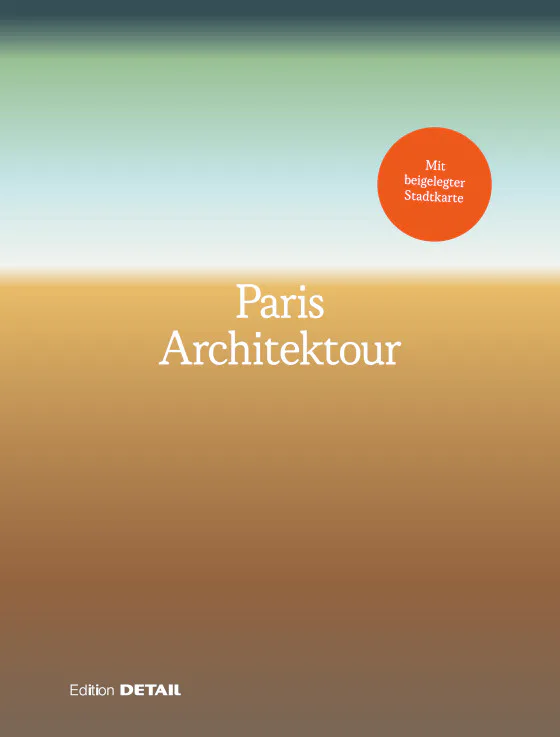
    Paris carries its history in its buildings and yet remains a perpetual site of architectural experiment. No other major city negotiates tradition and innovation quite so naturally. The book portrays a generation of architects – among them established practices such as Moussafir Architectes and Régis Roudil – who are fundamentally rethinking urban space. Large-format photographs, precise plans, and well-researched texts invite readers on an architectural tour of the city, presenting a variety of outstanding contemporary buildings that engage with the defining issues of our time: urban density, ecological responsibility, and social diversity. A multilayered picture of a city in transition – between cultural heritage and a visionary future.

  • Paris

    Das Buch bietet einen Einblick in die aktuelle Architekturszene von Paris. Büros wie Moussafir Architectes oder Régis Roudil stehen beispielhaft für eine Generation, die den städtischen Raum neu denkt. Fotografien, Pläne und Texte führen durch die Stadt und stellen zahlreiche zeitgenössische Bauwerke vor. Dabei werden Themen wie urbane Dichte, Nachhaltigkeit und soziale Vielfalt sichtbar. So entsteht das Bild einer Stadt im Wandel, die ihr historisches Erbe mit neuen Perspektiven verbindet.