
The Charges
Reading Gerhard Matzig’s article in the Süddeutsche Zeitung about the Pritzker Prize, published on March 12, 2026, brings a smile to one’s face. In his view, given current events, Smiljan Radić must be either extremely uninformed or extremely indifferent. He finds it inexplicable how anyone could accept the prize under these circumstances. With this observation, he hits the nail on the head. Since the revelation of Tom Pritzker’s alleged relationship with Jeffrey Epstein, the debate over the awarding of the highest honor in architecture has moved beyond purely professional considerations. A political discourse on the existence and future prospects of the prize has been massively called into question. The winner has now been announced, and one thing is certain: Smiljan Radić is no Marcel Reich-Ranicki – he is accepting the prize. Is the architectural elite now complicit with Tom Pritzker, or are we asking too much of the Chilean outsider in this case?
The Architect
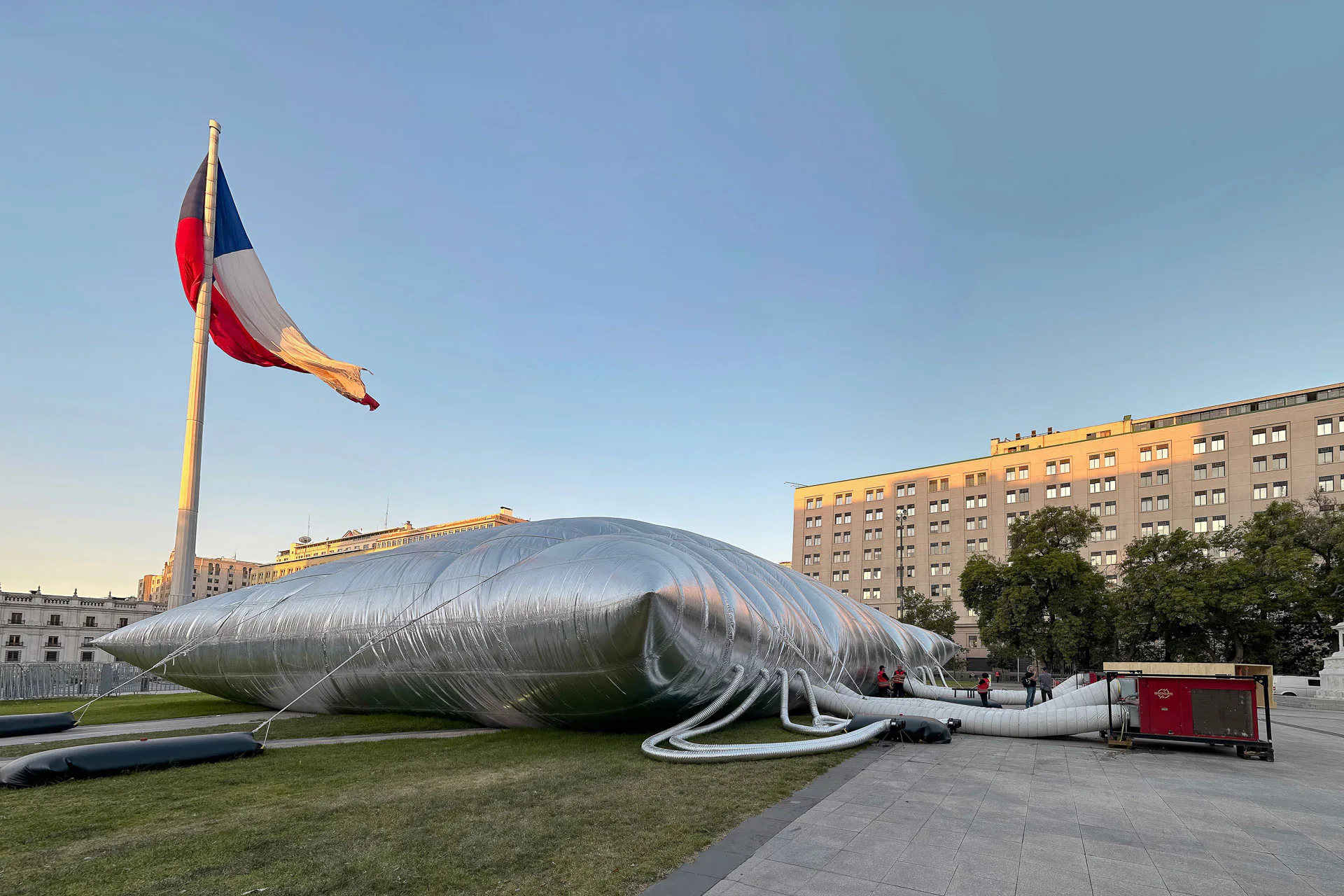
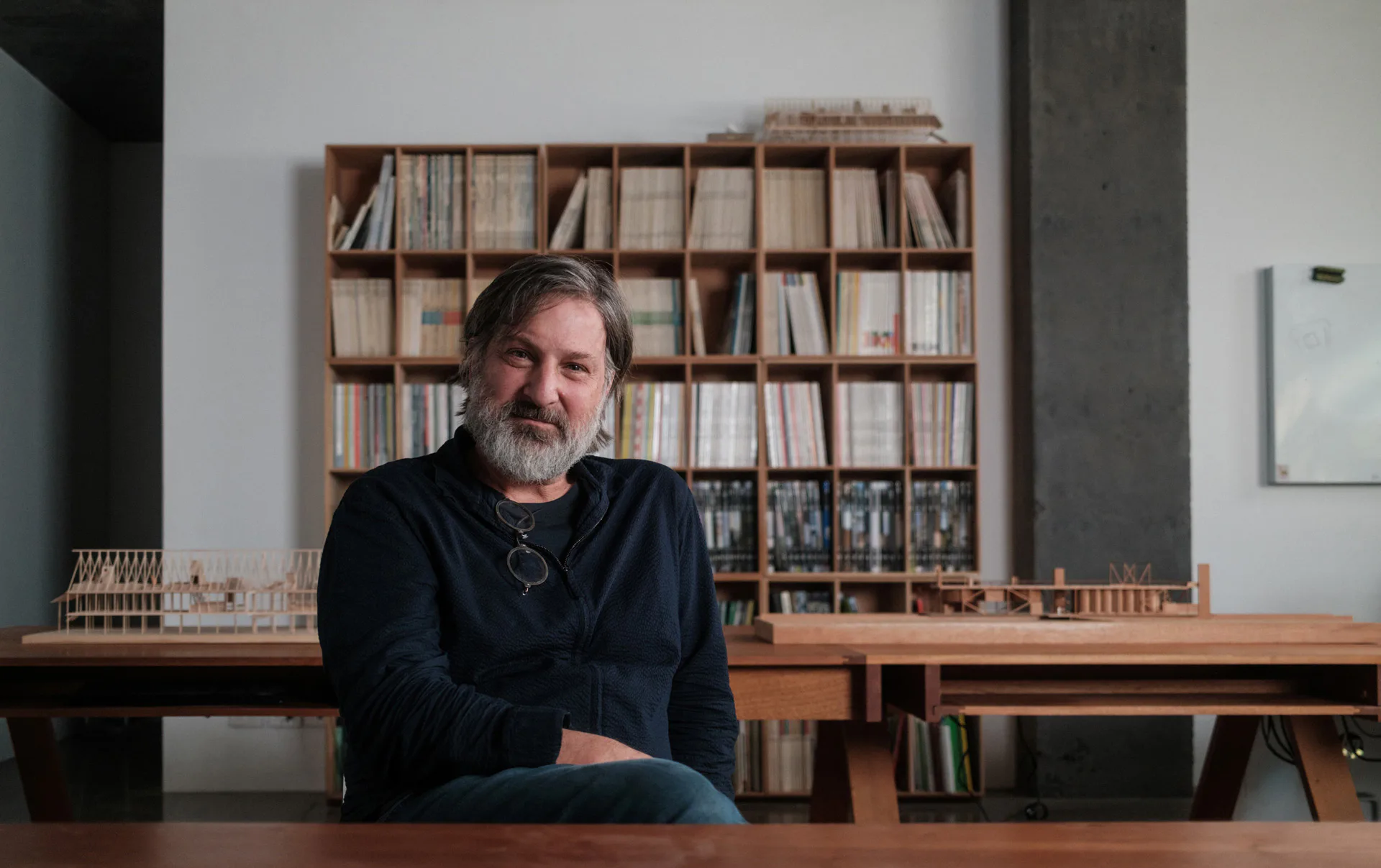
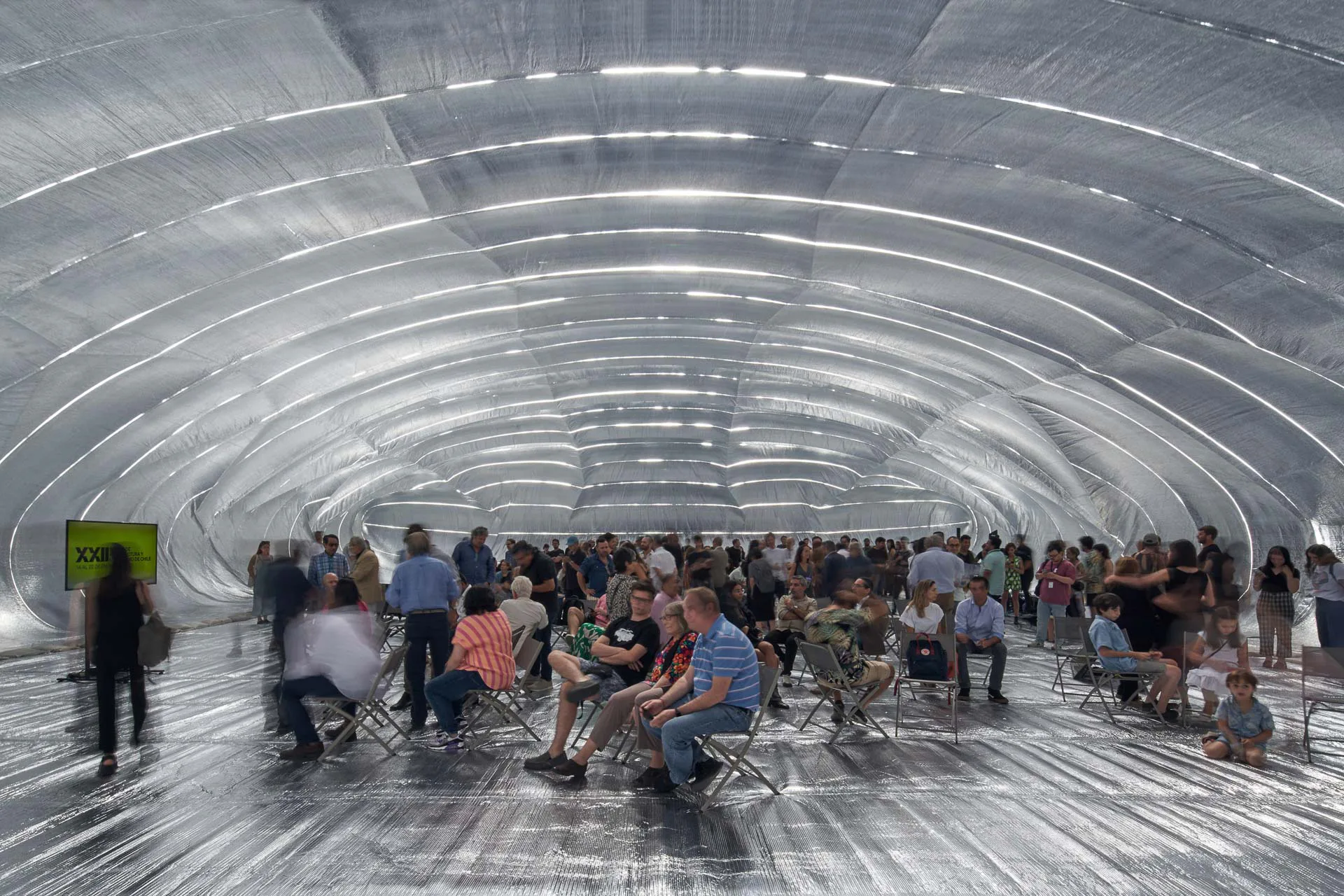
What is telling about the selection of Smiljan Radić – and this at least suggests a slight forward-thinking approach on the part of the jury – is that he is not an architect who thinks in superlatives and carries out one megaproject after another. Radić impresses with his strong conceptual designs, clear forms, attention to detail, and expressive choice of materials. His architecture maintains a constant balance with art. In many of his projects, Radić plays with boundaries: boundaries between art and architecture, between interior and exterior, and between permanence and the temporary. The jury sees in this tension something uncertain that they find particularly appealing. Radić demonstrates his sensitivity to the exploration of boundaries in 2023 with his temporary design for the 22nd Biennial of Architecture and Urbanism in Chile. There, with the “Guatero” project, Radić created a temporary event space for 350 people. The inflatable membrane is composed of films that are actually used for thermal insulation. A specific layering technique for the films creates joints through which daylight illuminates the interior. After 10 days, the pavilion was dismantled, and the only trace left behind was the flattened grass. Smiljan Radić demonstrates this sensitivity to architecture and nature in many of his projects.
At first glance, Smiljan Radić is a Pritzker Prize laureate of a truly extraordinary kind. The Pritzker Prize jury, consisting of Alejandro Aravena, Barry Bergdoll, Deborah Berke, Stephen Breyer, André Aranha Corrêa do Lago, Anne Lacaton, Hashim Sarkis, Kezuyo Sejima, and Manuela Lucá-Dazio, explained their decision as follows: “Radić’s work operates at the intersection of uncertainty, material experimentation, and cultural memory, prioritizing fragility over any unwarranted claim to certainty.”
Or, as Smiljan Radić himself describes in his interview with Christian Kerez titled How to Carry the World on One’s Back: “We are like Tadeusz Kantor’s Traveler, a living object composed of his luggage, which clothes him in a private past and shapes both his movements and his surroundings on stage.”
His award nevertheless raises questions. On the one hand, his fascination with architecture is clearly evident. The conceptual balance between art and architecture is inspiring and multifaceted. The unanswered questions in this regard do not lie with the architect himself, but with the institution. For by awarding Radić this prize, one not only avoids addressing issues of equality, community-oriented architecture, innovation, and other current topics, but also continues to perpetuate the image of a “one-man show” in architecture.
And now: Is Smiljan Radić a narcissist for accepting the prize? Here, for once, art and morality offer a similar answer: it depends on your perspective. But perhaps the time has finally come for the architectural world to set aside its omnipresent cult of heroes and stop naming prizes and awards after alleged culprits like Tom Pritzker or Fritz Höger. Because in architecture, just like in any other industry, there are no heroes.


