
Winner of the Aga Khan Award
Community Centre near Hohhot by Zhang Pengyu
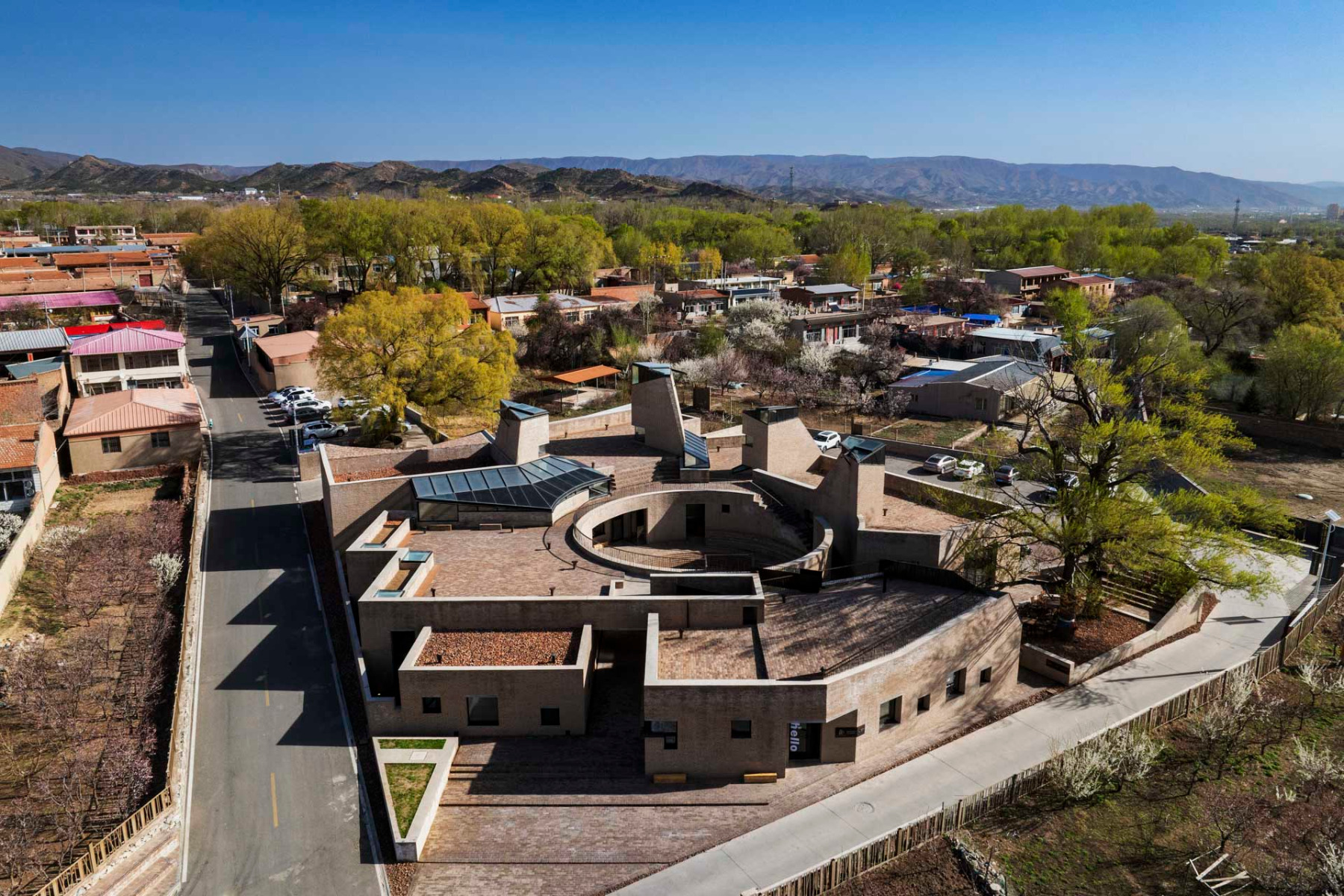
The approximately 1,200 m² building complex consists almost entirely of recycled bricks. Its scale is based on the one- to two-storey buildings in the town centre. © Aga Khan Trust for Culture / Dou Yujun © Aga Khan Trust for Culture / Dou Yujun
This year's Aga Khan Awards were presented on 15 September in the Tajik capital of Bishkek. The jury, chaired by Yvonne Farrell, selected a total of seven winners from Bangladesh, Iran, Pakistan, Egypt, Palestine – and China. The award for the community centre in Wusutu near Hohhot, the capital of Inner Mongolia, is only the third award among 132 winners to date to go to the People's Republic.
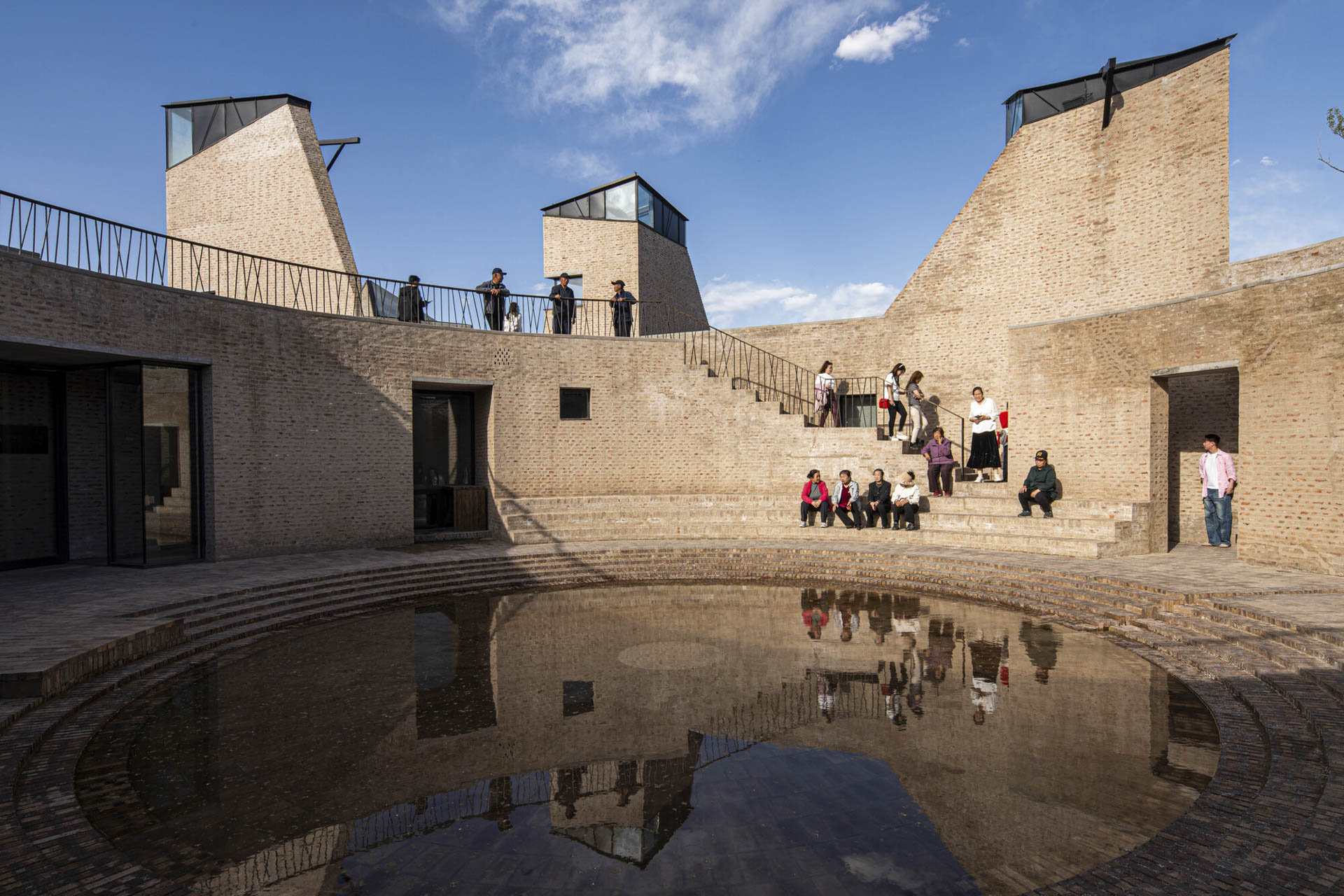
The centre of the circular courtyard can be temporarily transformed into a water basin. © Aga Khan Trust for Culture / Dou Yujun
Community centre on former temple grounds
The area around Hohhot has always been a settlement hub for the Muslim Chinese minority known as the Hui. Many of them have recently moved from Wusutu to nearby Hohhot. In return, the location at the foot of the mountains and the apricot blossoms attracted numerous artists to the village. Among them was Zhang Pengju, an architecture professor from Hohhot and head of the Inner Mongolian Grand Architecture Design office. The villagers commissioned him to build a community centre on the site of a former Buddhist temple.
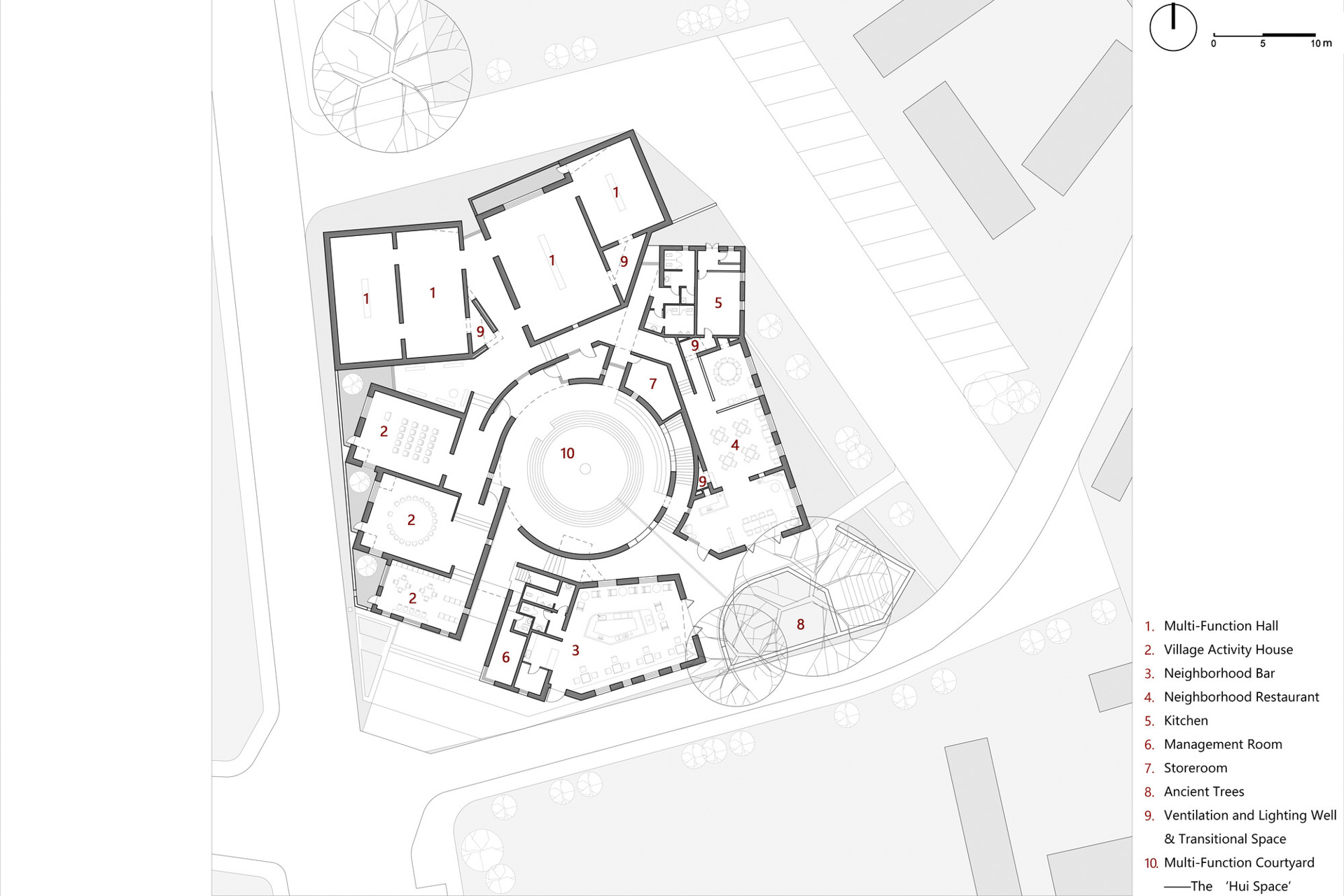
Floor plan, © Zhang Wenjun / Zhao Zhen
Courtyard as a social meeting place
The 1,200 m² complex was built in just seven months using recycled bricks from local demolition sites. It offers space for exhibitions and cultural events, but also for the everyday activities of local residents – whether it's a game of mahjong for the elderly or pottery classes for young people. Past a neighbourhood café and a restaurant on the street, a narrow passageway leads to the centre of the complex – the approximately 200 m² circular courtyard, the lowered part of which can be temporarily flooded to create a water basin. The planning team largely dispensed with partition walls inside the building. Nevertheless, the flow of visitors is directed in such a way that the different user groups get in each other's way as little as possible.
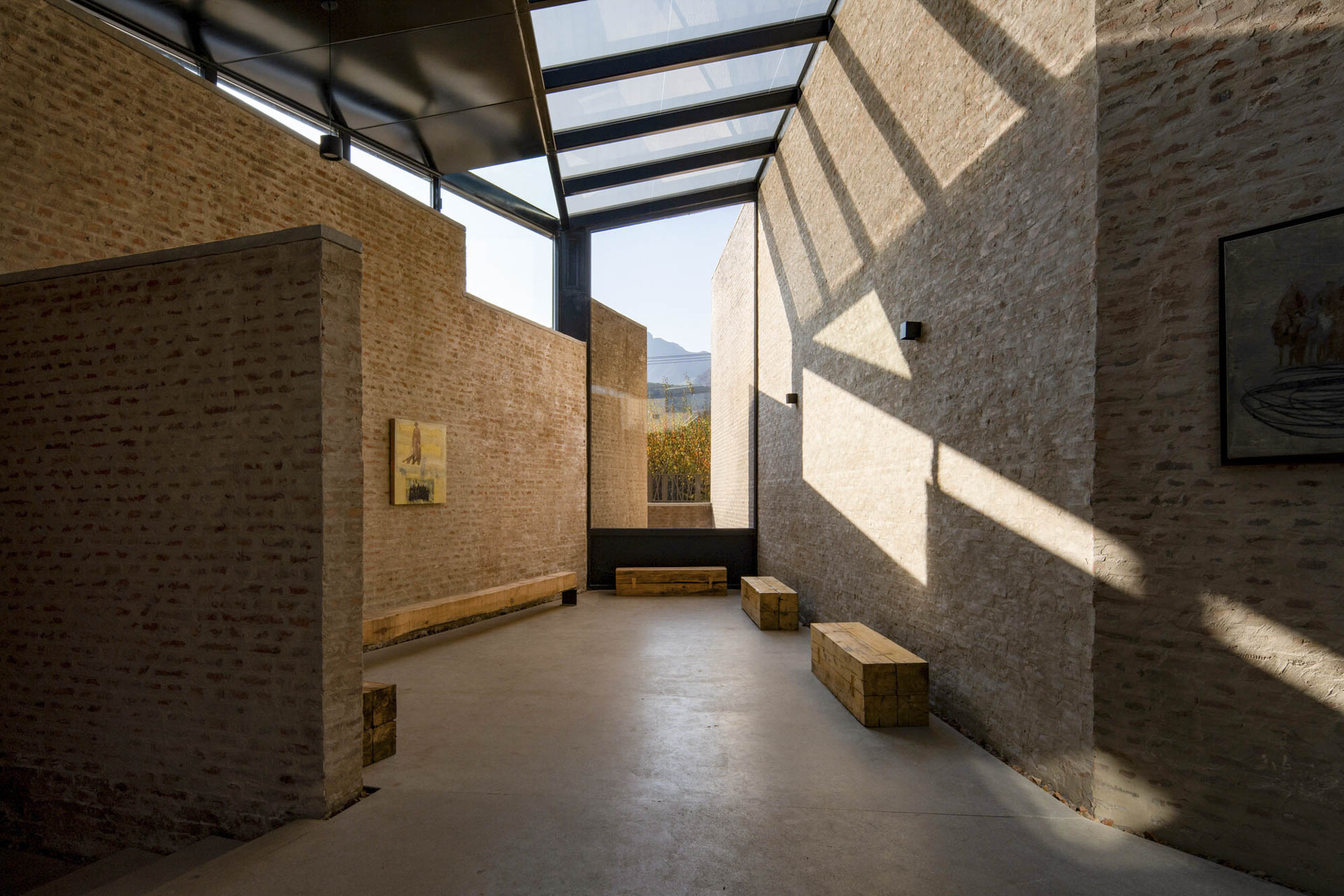
Large window openings offer repeated views of the nearby mountain landscape. © Aga Khan Trust for Culture / Dou Yujun
Roof terrace as an adventure playground
A staircase leads from the inner courtyard up to the roof terrace, which, with an area of almost 800 m², is also an important social meeting place – especially for children, who have plenty of space to play here. Four striking ventilation towers rise above the roof surface. They are part of a sophisticated low-tech system that ensures natural ventilation with ground-level air inlets and automated skylights. The jury's verdict states, among other things: "The dynamics of this project significantly enhance social interaction, cultural experience, and environmental resilience. Thus, by integrating diverse users and embracing a high multifunctional articulation through its fluid spaces, the centre has generated a valuable shared and inclusive communal microcosm within a rural human macrocosm."
Architecture: Inner Mongolian Grand Architecture Design Co.
Client: Gemeinde Wusutu
Location: Huimin, Hohhot (CN)
Structural engineering: Xin Zhou
Contractor: Inner Mongolia Yinglihong Construction and Installation Co.
Gallery


