
Robot chapel
Housing for a Milling Robot near Barcelona
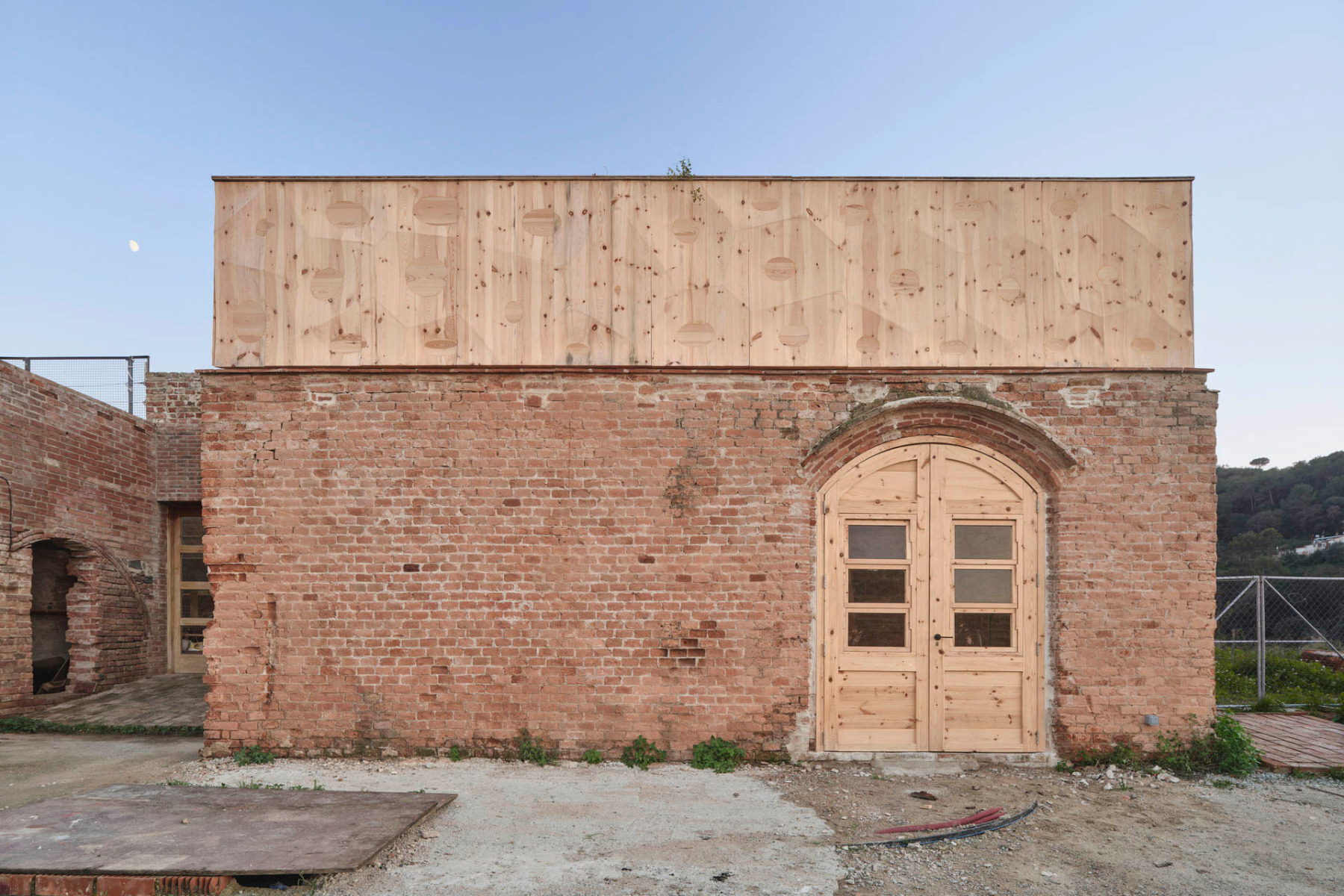
International master's students from the Catalan Institute for Advanced Architecture (IAAC) created their own house for the architecture school's six-axis milling robot. © Adrià Goula
Normally, automatic manufacturing machines are housed in dreary industrial halls. However, the IAAC's international master's students have created a home for the architecture school's six-axis milling robot that, thanks to its sacred appearance, has been aptly named the 'Cathedral of Robotic Artisans' (Cora for short). The robot chapel is located next to the Centre for Digital Manufacturing and Research at the Valldaura Lab Campus, which is situated in the Collserola Nature Park near Barcelona.
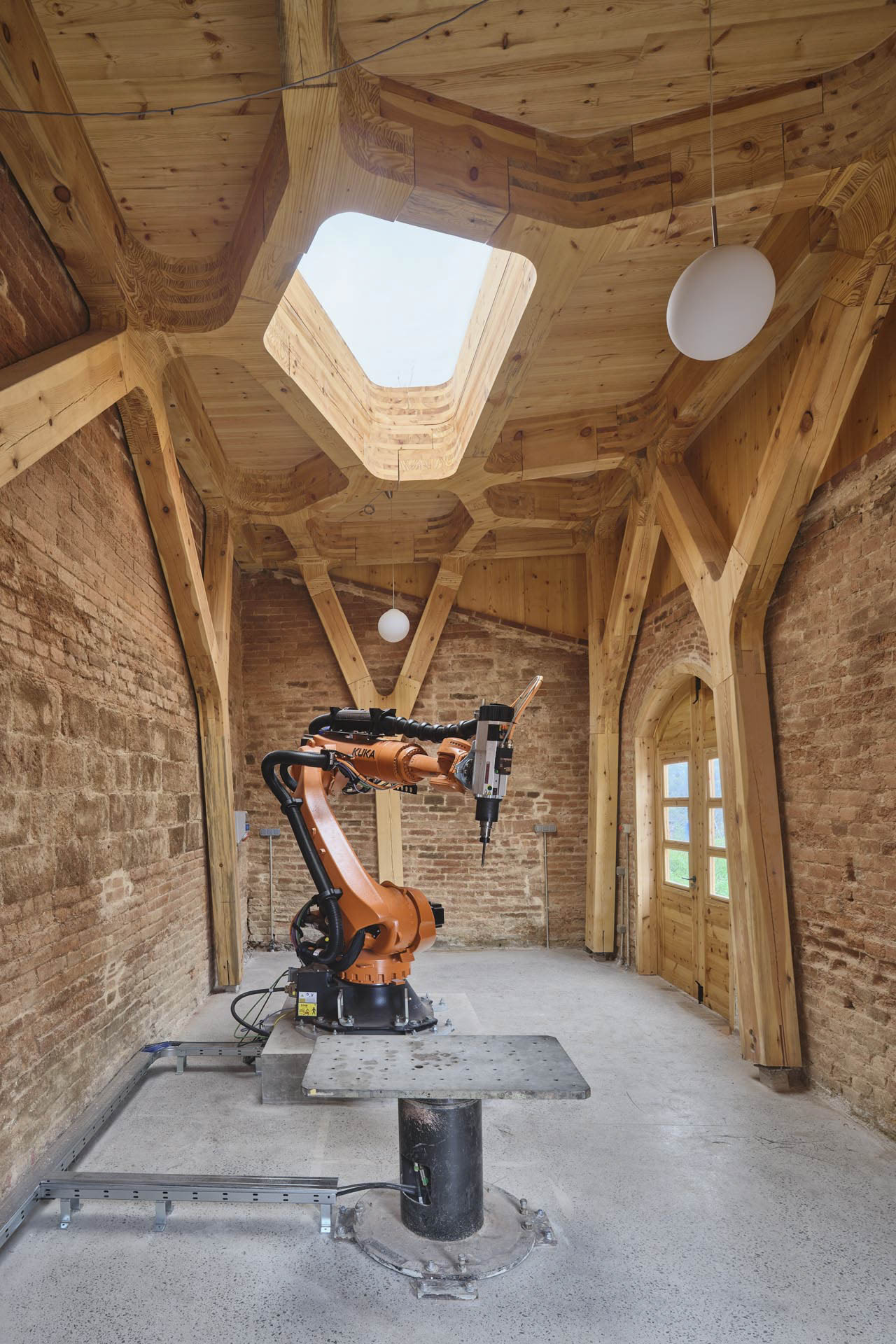
Inside the Cathedral of Robotic Artisans (Cora for short) is the six-axis milling robot from the IAAC. © Adrià Goula
Wooden structure within a brick shell
The new structure incorporates parts of an 19th-century brick building which was originally used as a stable. The walls of the original building have been preserved. To support the weight of the robot, a new floor slab was cast inside the walls. This flooring contains recycled bricks from the campus grounds. Students then inserted a new, self-supporting wooden structure consisting of columns, beams and nodes made of cross-laminated timber. The columns and roof were pre-assembled on site and lifted into position using a crane, then fixed to the floor slab with steel elements.
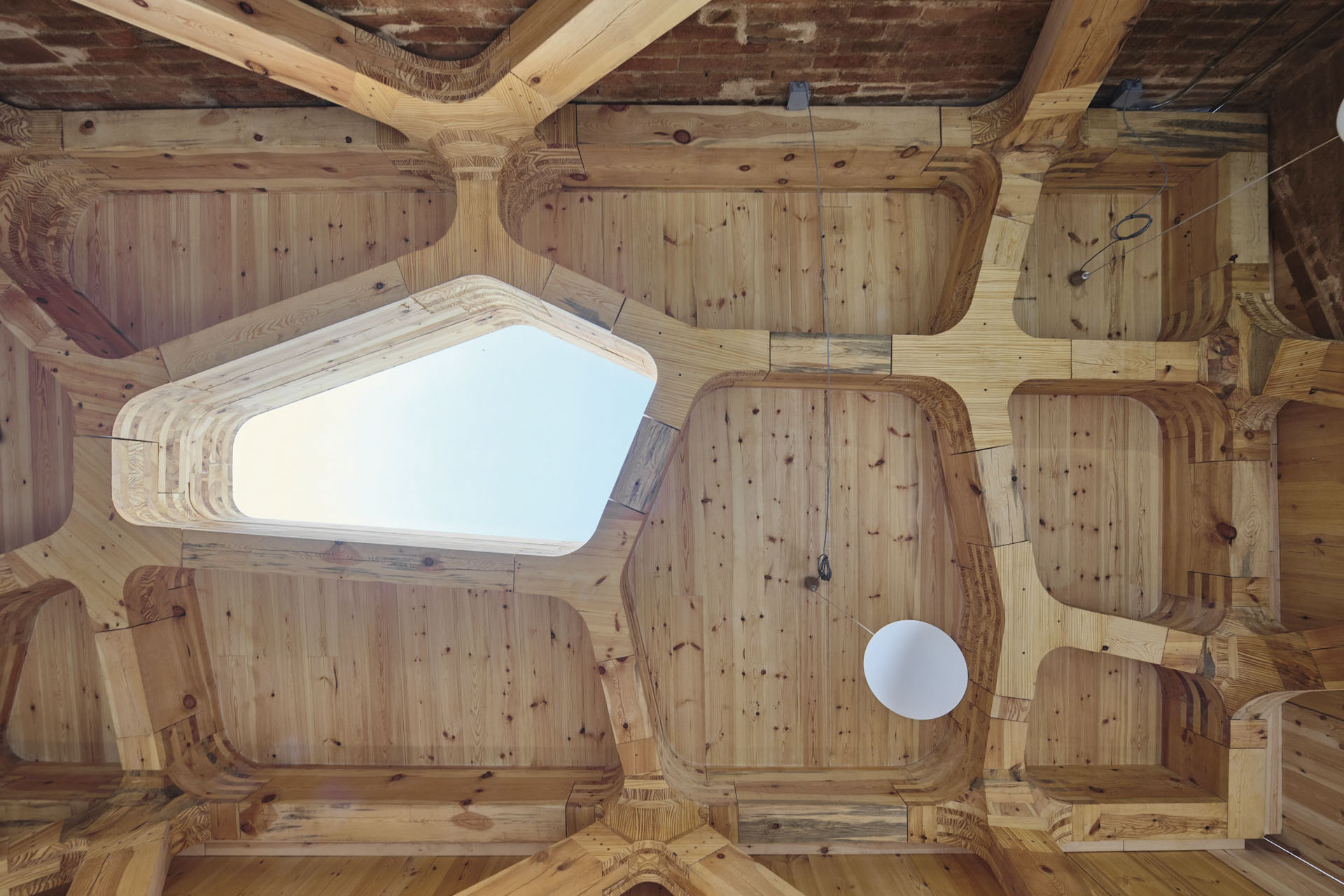
This new, self-supporting structure consists of solid wood supports and beams, as well as nodes made of cross-laminated wood. © Adrià Goula
Branched structure
Seven tree-like supports carry an 8.8 m by 4.6 m grid-like roof structure. According to the students, the design of this structure is based on the principle of a Voronoi diagram. Such polygonal structures can easily be described by algorithms, which in turn serve as digital tools for automated pattern generation.
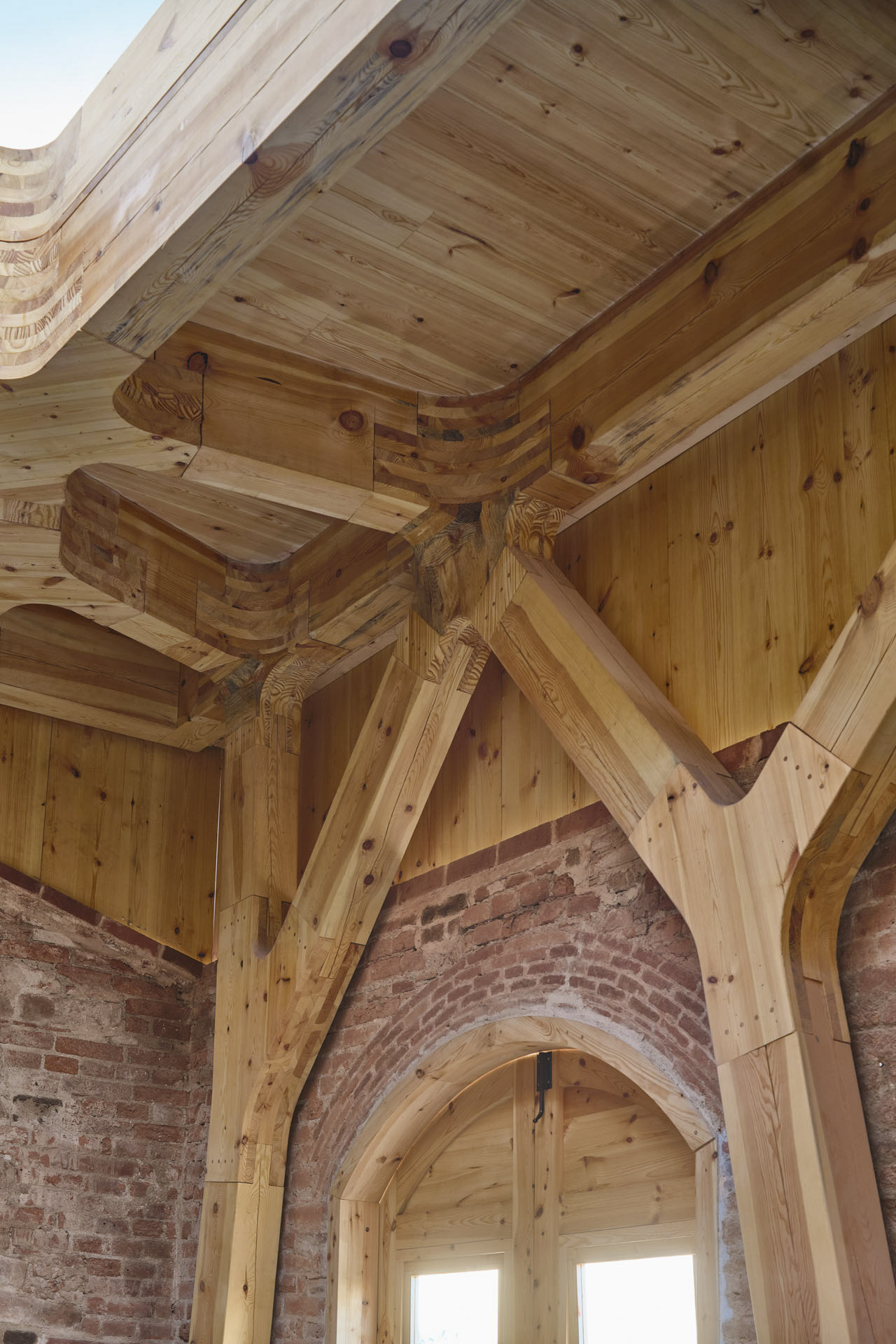
Tree-like branches support the Cathedral of Robotic Artisans' lattice-like roof structure. © Adrià Goula
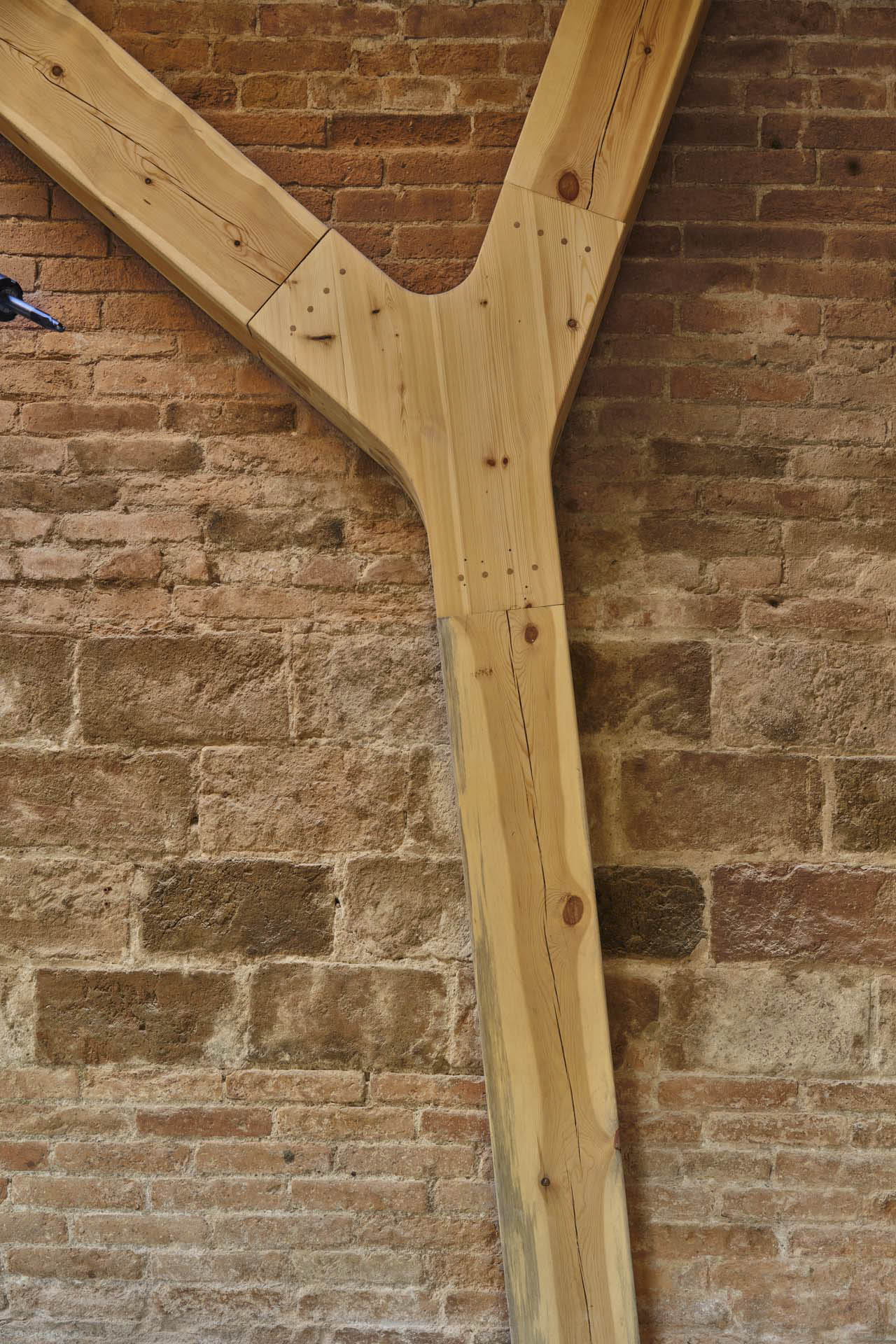
Details of the supports, © Adrià Goula
Construction using campus's own CNC technology
The nodes of the structure were produced using this technology. Due to the limited milling depth of the machines, some connections were made up of four individually milled layers that were then glued together to form coherent elements. The supports and beams are connected to the nodes using traditional carpentry techniques, such as finger joints and mortise-and-tenon joints.
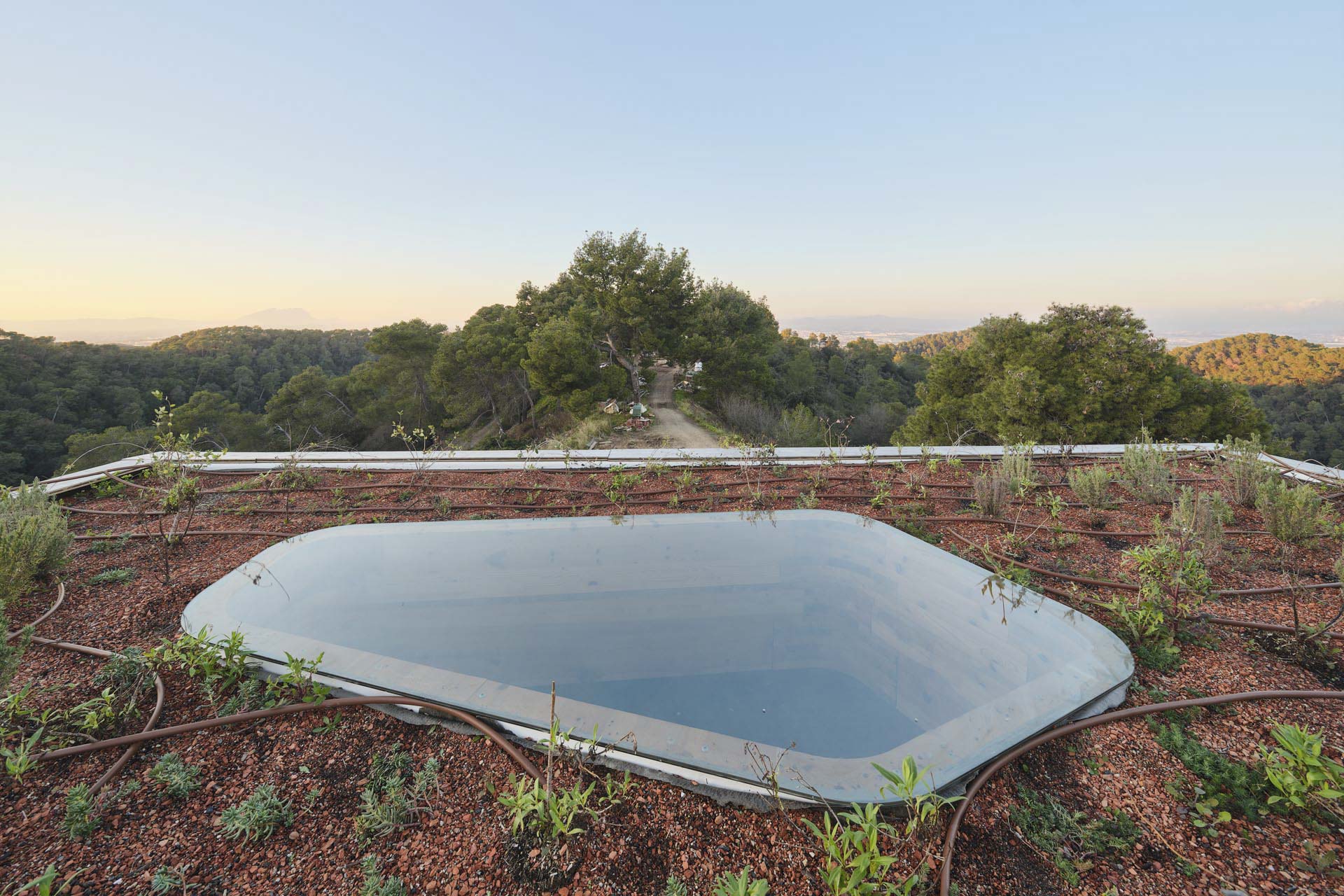
The students also created a green roof with an irrigation system. © Adrià Goula
Green roof with light eye
One of the openings in the grid is a skylight, which lets daylight into the room. The students planted vegetation and installed an irrigation system on the rest of the roof. On three sides, the supports extend beyond the existing masonry to varying degrees. The students clad the building with CLT panels at these points. While the interior surfaces appear untreated, the exterior features a honeycomb structure created by CNC milling, reminiscent of the Voronoi diagram principle.
Architecture: Students of the Master's program Advanced Ecological Buildings and Biocities (MAEBB) at the Institute for Advanced Architecture of Catalonia (IAAC), class of 2023/24
(Alexander Tamazov, Toni Javor, Emma Rodriguez Berghmans, Neeshi Doshi, Lamprini Makarona, Diana Ruzanska, Alfred Ziad Aramouni, Anushreya Kondapi, Juan Sebastián Batallas Cueva, Marianna Santos Fujii, Varun Sreenath, André Arruda Navarro, Mustafa Teksoy, Oliver Needham, Alireza Shayan, Alkiviaids Avarkiotis. Maya Shoavi, Sharvari Sharath, Sveta Sathyanadhan, Vanessa Marie Alvarado Barrios, Helen Girma, Karla Velarde Sandoval, Kristina Schüssler)
Client: Institute for Advanced Architecture of Catalonia
Location: Valldaura Labs, BV-1415, 08290 Cerdanyola del Vallès, Barcelona (ES)
Project management: Esin Aydemir
Other project participants: Bruno Ganem, Marielena Papandreou, Lorenzo Salinas, Viorel Cazacu sowie Pilar Fontanals, Laura Sanche
Consulting: Miquel Rodriguez, Elena Orte, Guillermo Sevillano, Ignasi Caus, David Valldeoriola, Silvia Burés, Toni Arola, Ionut Cosenco, Carles Enrich, Firas Safieddine Arturo de la Maza
Gallery


These articles might also interest you
-
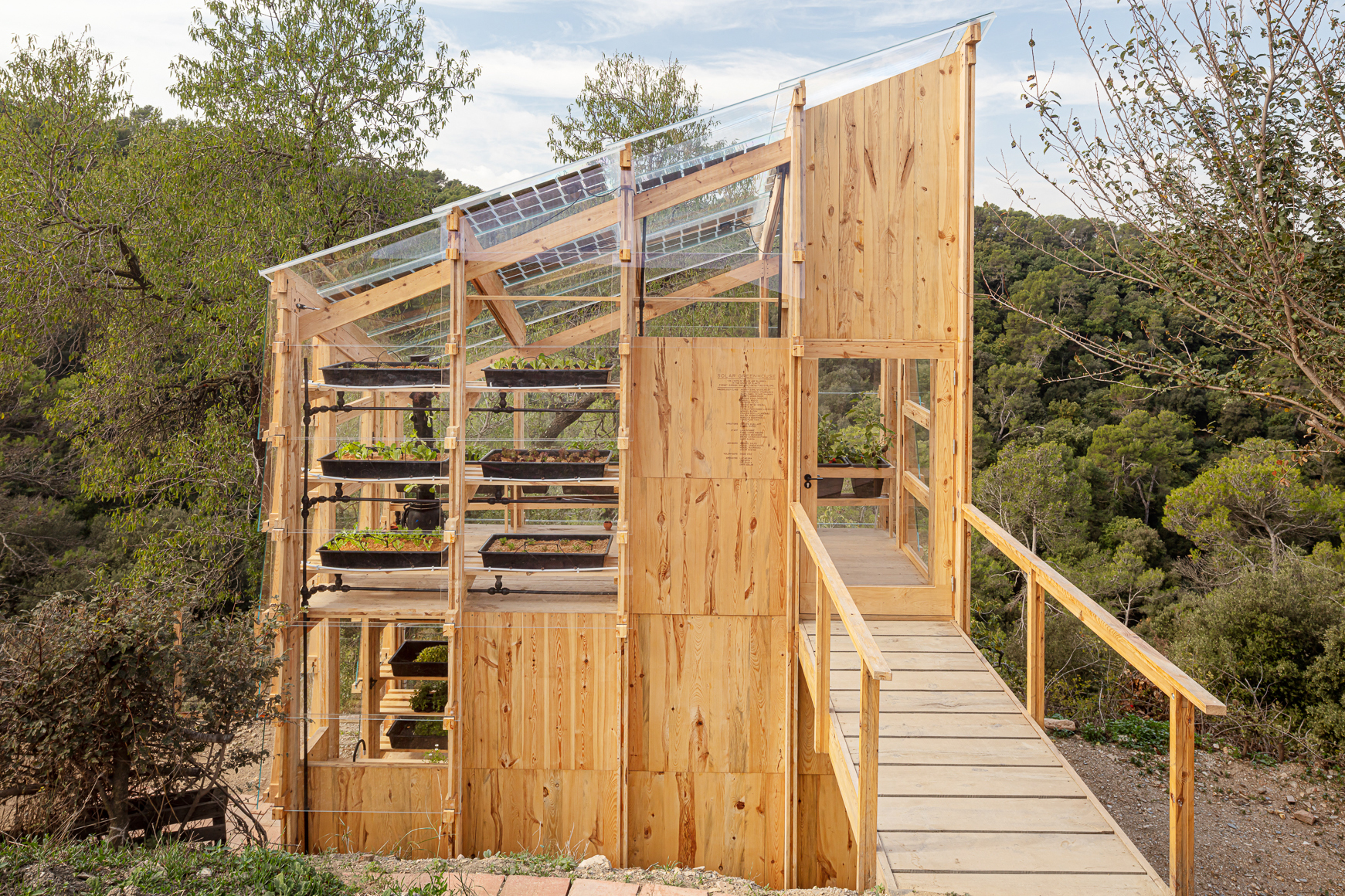
Pilot project for self-sufficiency
Solar Greenhouse near Barcelona
The Institute for Advanced Architecture of Catalonia (IAAC) has been operating a research and teaching campus on a converted farm outside Barcelona for several years. Now the students have added a greenhouse to the property.
-
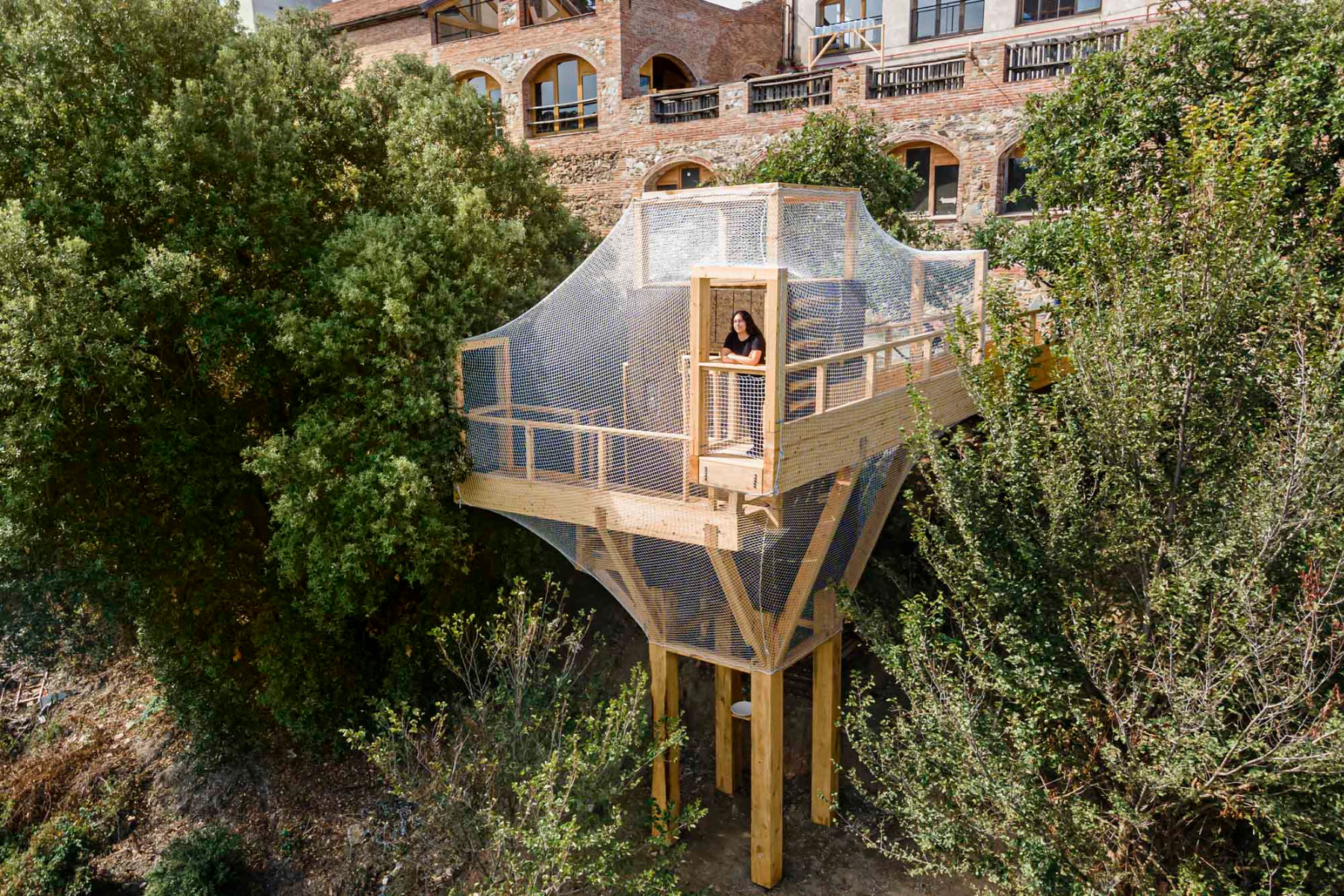
In the midst of nature
Student-Built Observatory near Barcelona
The Flora observatory built near Barcelona for observing nature was developed and erected by a team of students and researchers at the Institute for Advanced Architecture of Catalonia.
-
Micro living with maximum freedom
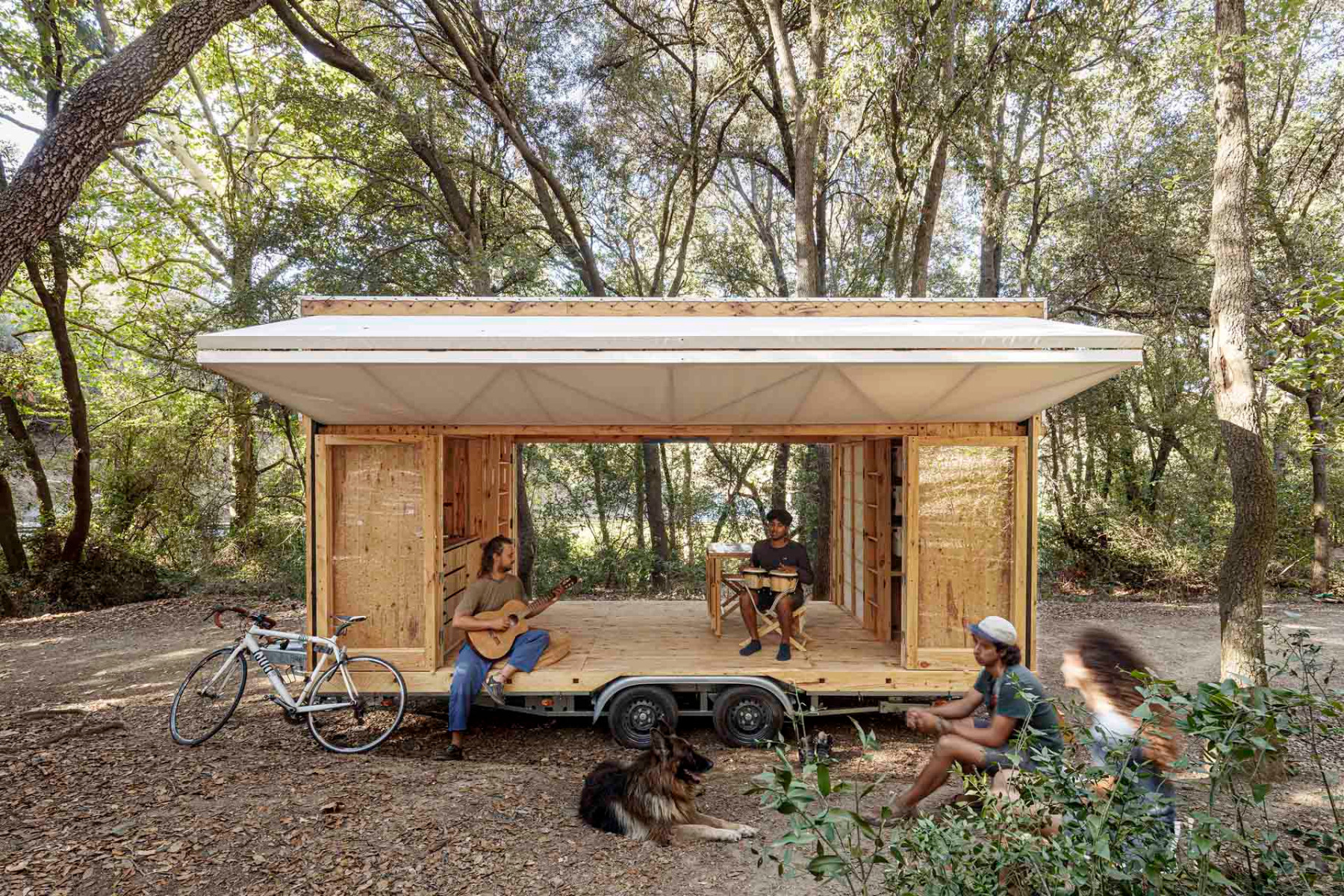
IAAC Designs Mobile Catalyst near Barcelona
Students from the Institute for Advanced Architecture of Catalonia (IAAC) develop MOCA – a mobile, convertible and self-sufficient home on wheels.