
Interview with Marcelo Spina
“Every Element had to be Remeasured”
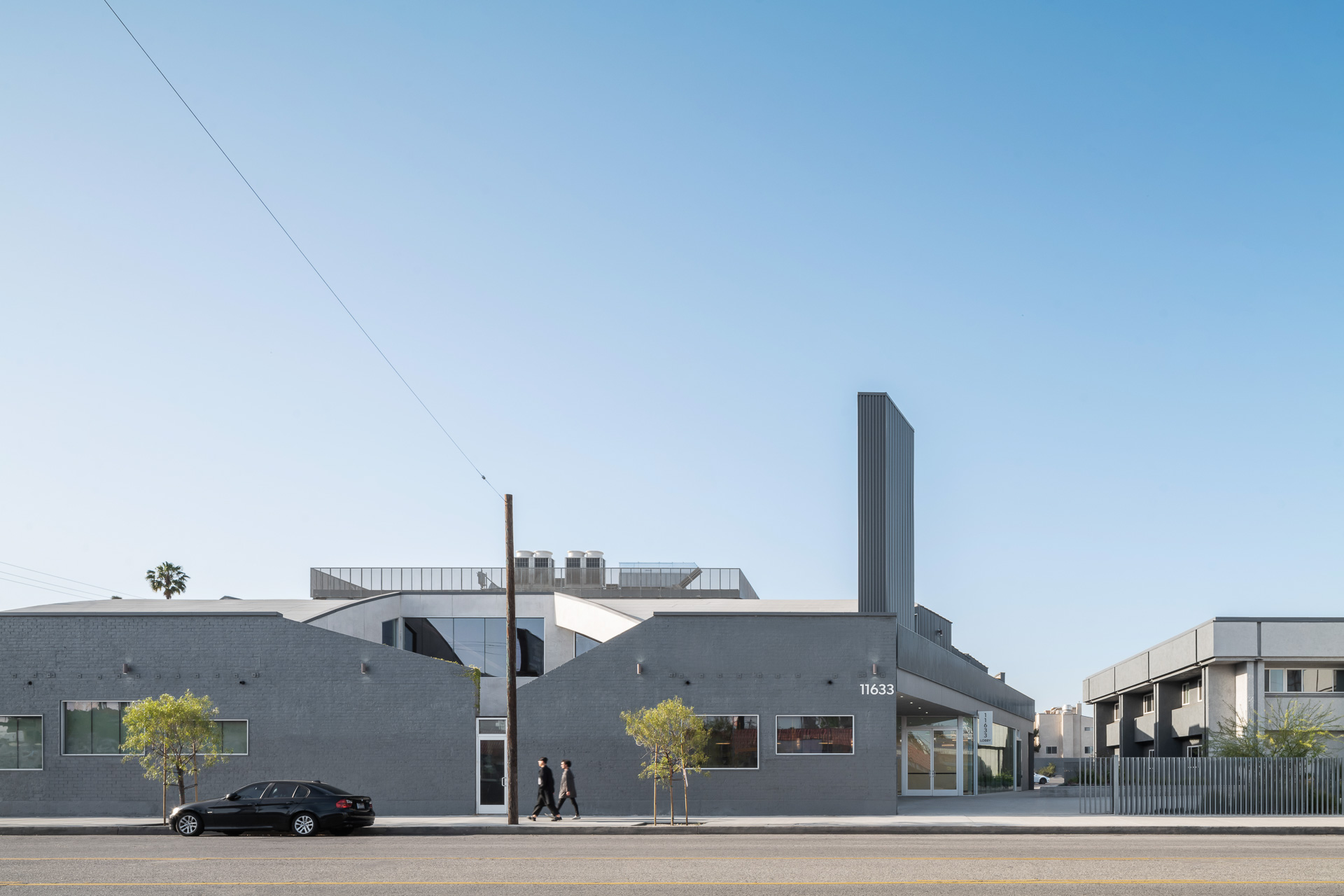
The brick facade of the former warehouse has been retained and opened up in places. © Paul Vu
The Victory Wellness Centre is the result of a seven-year development process. The programme, use and architectural strategy underwent fundamental shifts during this phase. Originally planned as a purely medical centre, the focus gradually shifted towards wellness – not least due to the impact of the Covid pandemic. However, the decisive factor was not so much a programme-related decision, but rather the structural transformation of a 1940s warehouse building that had most recently been used as a supermarket. The starting point was its single-storey structure with wide-span, arched wooden trusses. In this interview, the founder of the firm, Marcelo Spina, explains why the architects opted for an adaptive reuse approach rather than demolition.
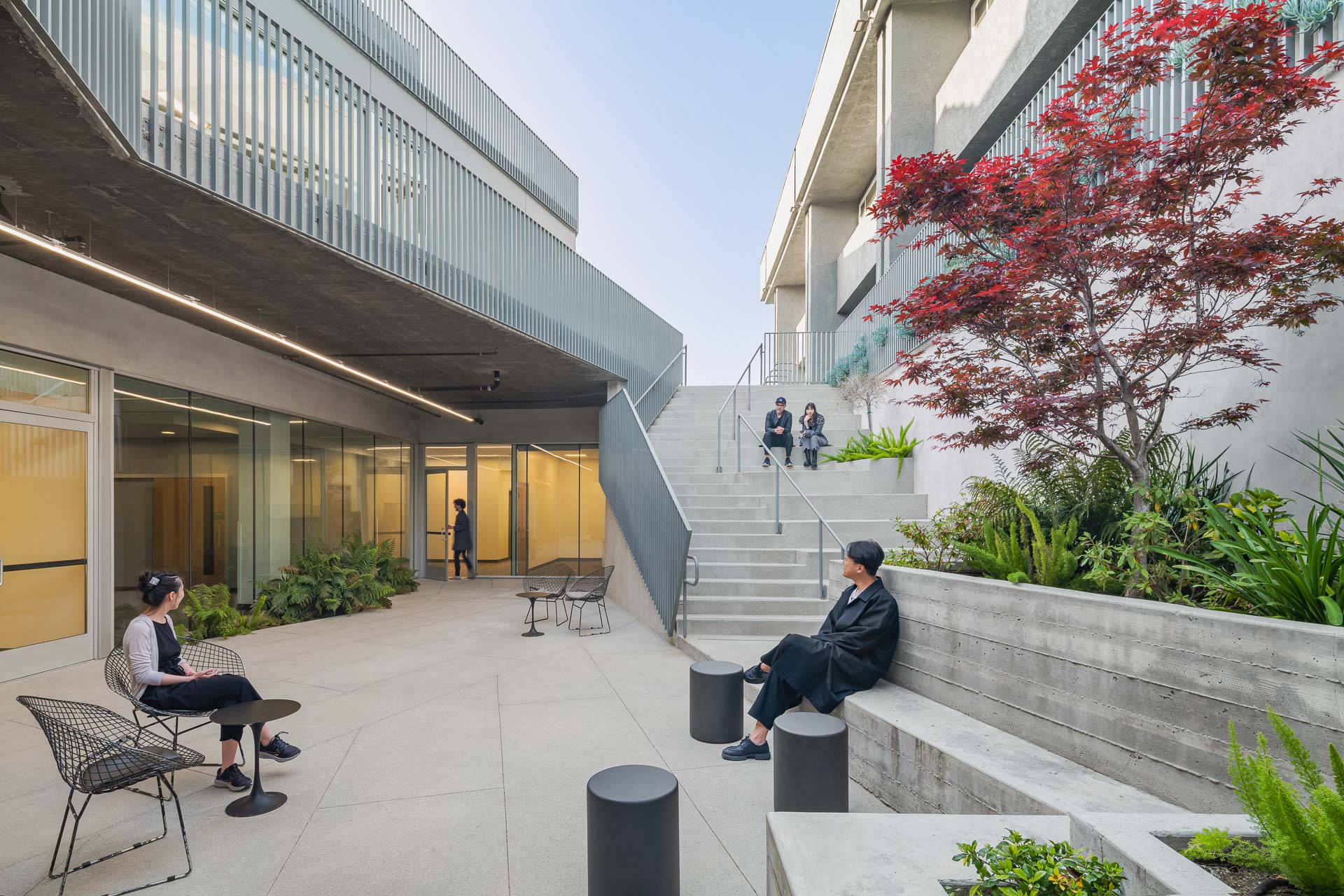
The largest of the four light wells is located on the entrance side and is open to the public during opening hours. © Paul Vu
How would you define the term "wellness centre"?
It is the result of a long process rather than a starting point. Originally, the plan was for a purely medical centre. However, over the course of the seven-year development process, the programme was adjusted. The medical component was reduced, while aspects such as quality of stay, light, air, and access to outdoor spaces became more important. In this case, "wellness" describes more of a spatial and atmospheric quality than a clearly defined typology.
The project is based on an existing building. What role did the existing structure play in the design?
A very central one. It was a generic yet solid structure from shortly after the Second World War, similar to many others found in Los Angeles. Its wooden arched trusses span around 40 m, forming an impressive interior space. Rather than building anew, the decision was made to retain the building and develop it structurally. This structure shaped the entire design, both spatially and technically. Within the clearly defined volume, we had a certain degree of freedom. If we had built from scratch, budget and envelope constraints would have resulted in a simpler and potentially less interesting project.
You added a basement. How was this structural change implemented?
It was one of the most complex tasks during the construction process. The basement did not exist before; it was added retrospectively. To achieve this, the entire building was excavated from the inside out. At the same time, the existing structure was shored up and secured. Securing the excavation required a perimeter clearance of around 3 m from the external walls, which directly impacted the geometry of the new courtyards.
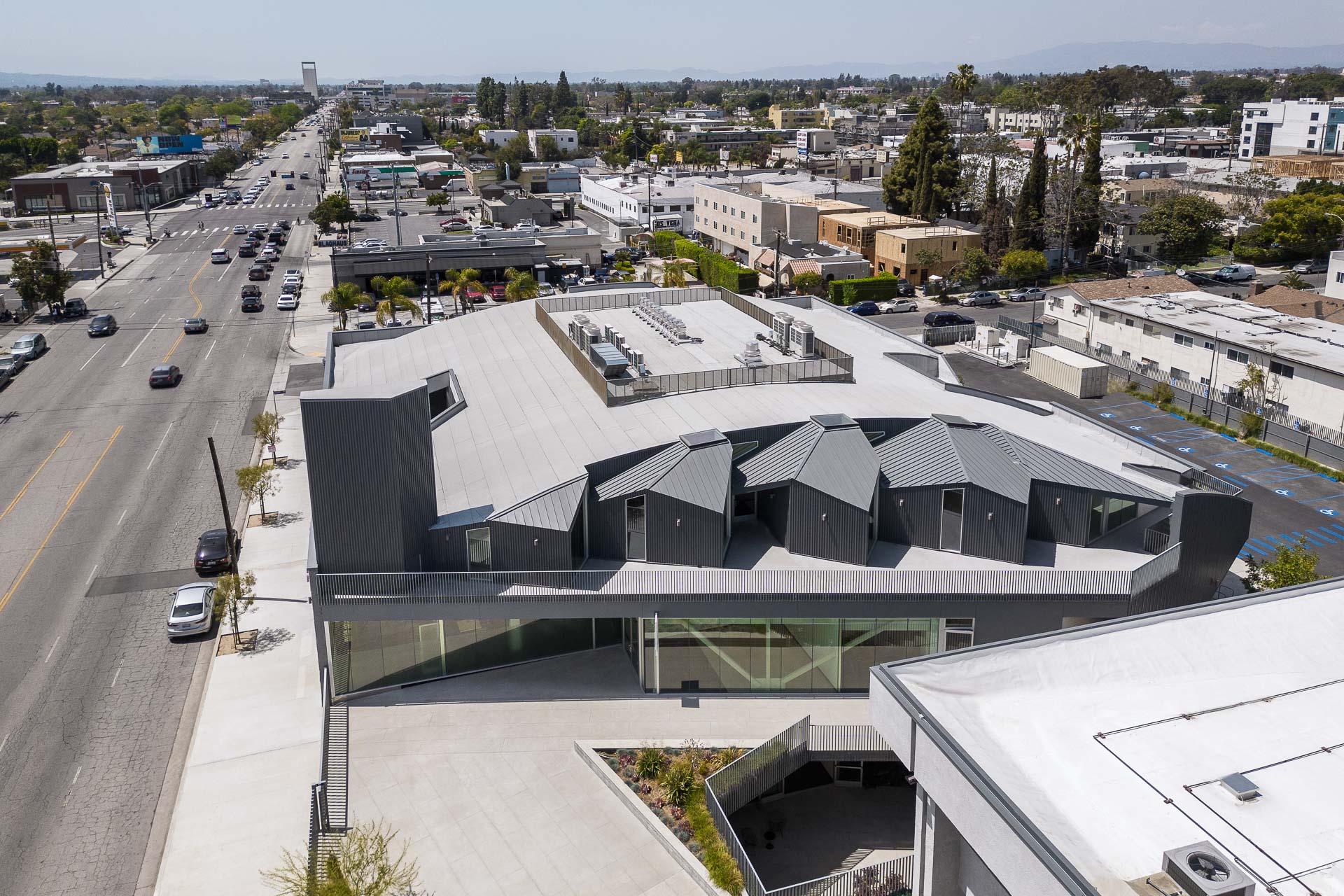
The new entrance facade breaks through the orthogonal order of the former warehouse. The sculpturally shaped offices on the upper floor are rented to external tenants. © Paul Vu
What other structural measures were necessary?
Above all, the building had to be seismically retrofitted. To achieve this, we developed a system connecting the existing timber trusses with new steel structures. These elements extend from the basement to the roof, ensuring that horizontal forces, such as those caused by earthquakes, are safely transferred. The challenge was to integrate these interventions so that the interior would not appear technical or industrial.
Do the courtyards play an important role in this?
Absolutely. As soon as we decided to create a basement, we had to reconsider the lighting and ventilation. The courtyards follow the grid of the existing load-bearing structure, which is approximately 7.5 m, and are sized accordingly. Three of them extend down into the basement. Not only are they functional, they are also spatially crucial: terracing and planting create microclimates with lower temperatures and a high quality of stay.
You have also made a large cut-out in the building on the entrance side.
Yes, we removed sections of the trusses to create a spacious outdoor area that runs diagonally across the site. This connects the front and rear of the site. This was a deliberate loss of floor area, but this is compensated for by the extension below ground. This new outdoor space, with its seating steps and planters, is spatially exciting and has enabled us to integrate the building more closely into the urban context.
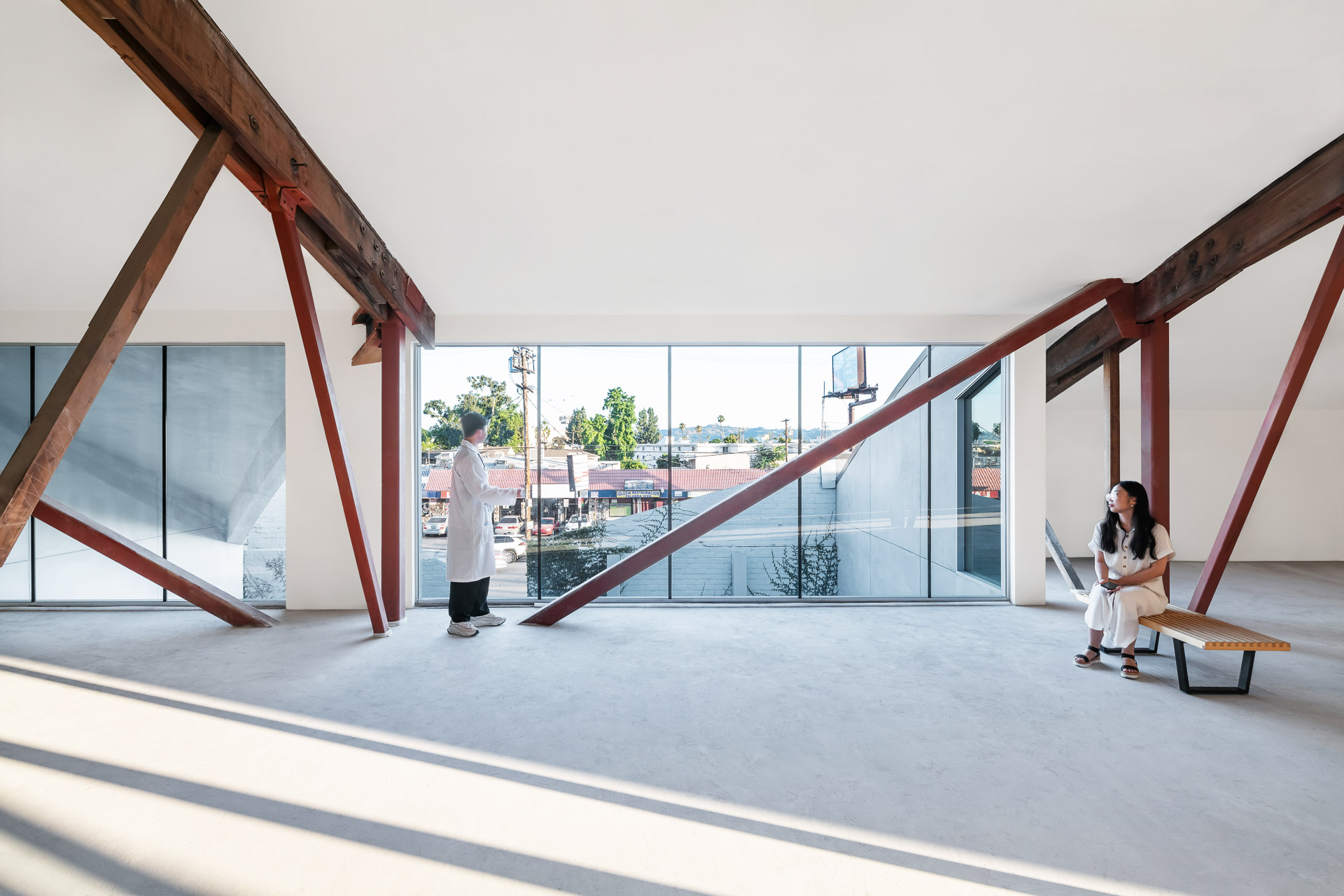
Additional steel beams, left exposed, stabilise the truss girders. © Paul Vu
How did you deal with the inaccuracies of the existing structure?
Such inaccuracies are typical of such projects. The trusses were not identical and there were deformations and deviations. Every element had to be remeasured. Many decisions were made directly on site, in close consultation with structural engineers and the construction company. This iterative approach is an essential part of the design process when working with existing structures.
The interior fittings differ significantly in form from the existing structure. Why?
Our aim was to break up the scale of the large hall and introduce a more human dimension. The polygonal geometries of the mezzanine create distinct spaces and orientations, while still being part of the overarching structural framework. There is an interplay between the existing structure and the new elements, rather than a simple juxtaposition.
Would you say that the structure dictated the design of the Victory Wellness Centre?
To a large extent, yes. The structural interventions — the addition of a basement, structural reinforcement and openings — were not just technical requirements, but also played a significant role in defining the spatial organisation and architectural quality. This project shows the potential of extending existing buildings when construction is considered an integral part of the design process.
Read more in Detail 4.2026 and in our Detail Inspiration database.
Architecture: Patterns
Client: Private
Location: North Hollywood, Los Angeles (US)
Project architects: Marcelo Spina, Georgina Huljich, Sanghyun Suh, Alejandro Loor
Team: Daniela Atencio, Dylan Krueger, Carlos Navarro, Justin Tan, Henry Yang, Laura Baobao, William Patrick Adams, Tom Ferrer, Dan Lu, Isabel Socorro, Rachele Sipione, Yipeng Liu
Structural engineering: Nous Engineering
Landscape architecture: Tina Chee Studio
Civil engineering: Richard Prutz, Here & Now Agency, SCI-Arc
Electrical planning: Abrari Associates
Building services engineering: CDME
Gallery


