
Brazilian architectural icon
Metro Arquitetos Expand Museu de Arte de São Paulo
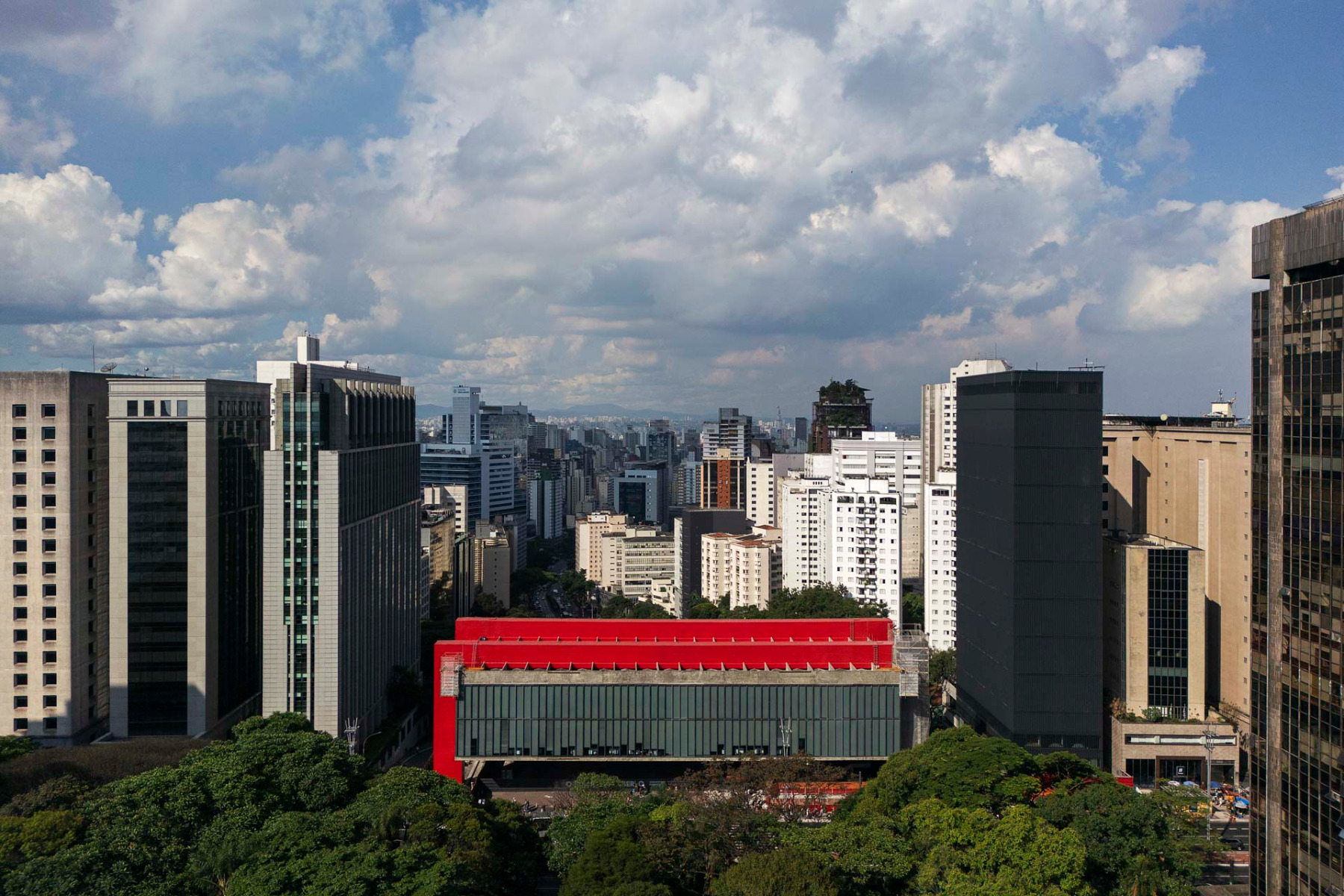
View of the Lina Bo Bardi Building and the Pietro Maria Bardi Building, © Leonardo Finotti
57 years after the inauguration of Lina Bo Bardi's iconic Brazilian architectural masterpiece, the Museo de Arte de São Paulo (MASP) in São Paulo, the museum recently unveiled its latest extension. The simple structure consists of a 14-storey tower clad in dark, perforated and folded aluminium metal panels. The extension creates over 7000 m² of new space and includes five exhibition galleries, two multi-purpose rooms, several classrooms and a laboratory. The glass-fronted base houses the reception area, a museum shop, a restaurant, a café and storage rooms. The simple tower, designed by Metro Arquitetos, has sparked debate about its aesthetic integration and the contrast in materials. What values and innovations does the additional structure represent?
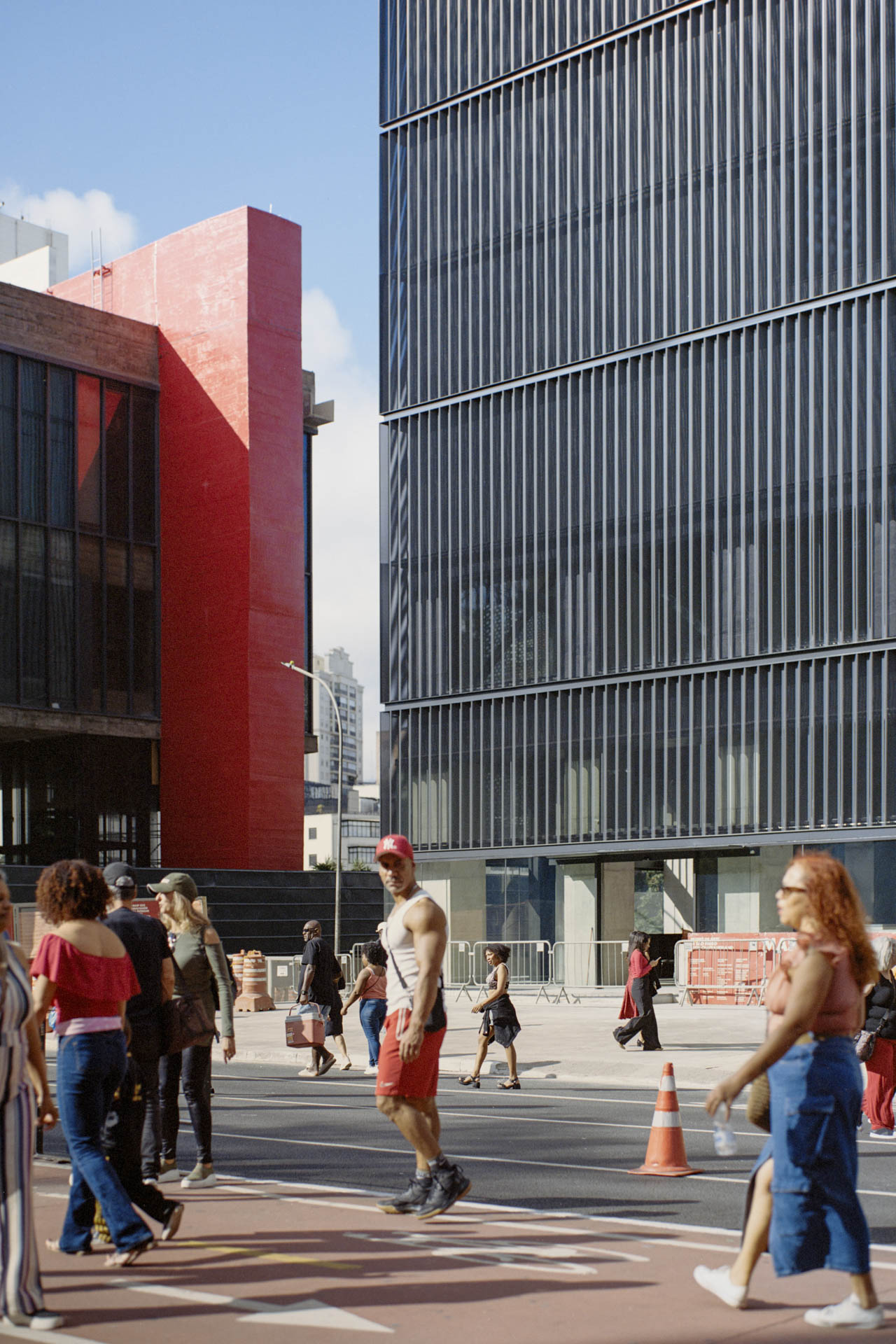
MASP and new extension seen from Avenida Paulista © Pedro Kok
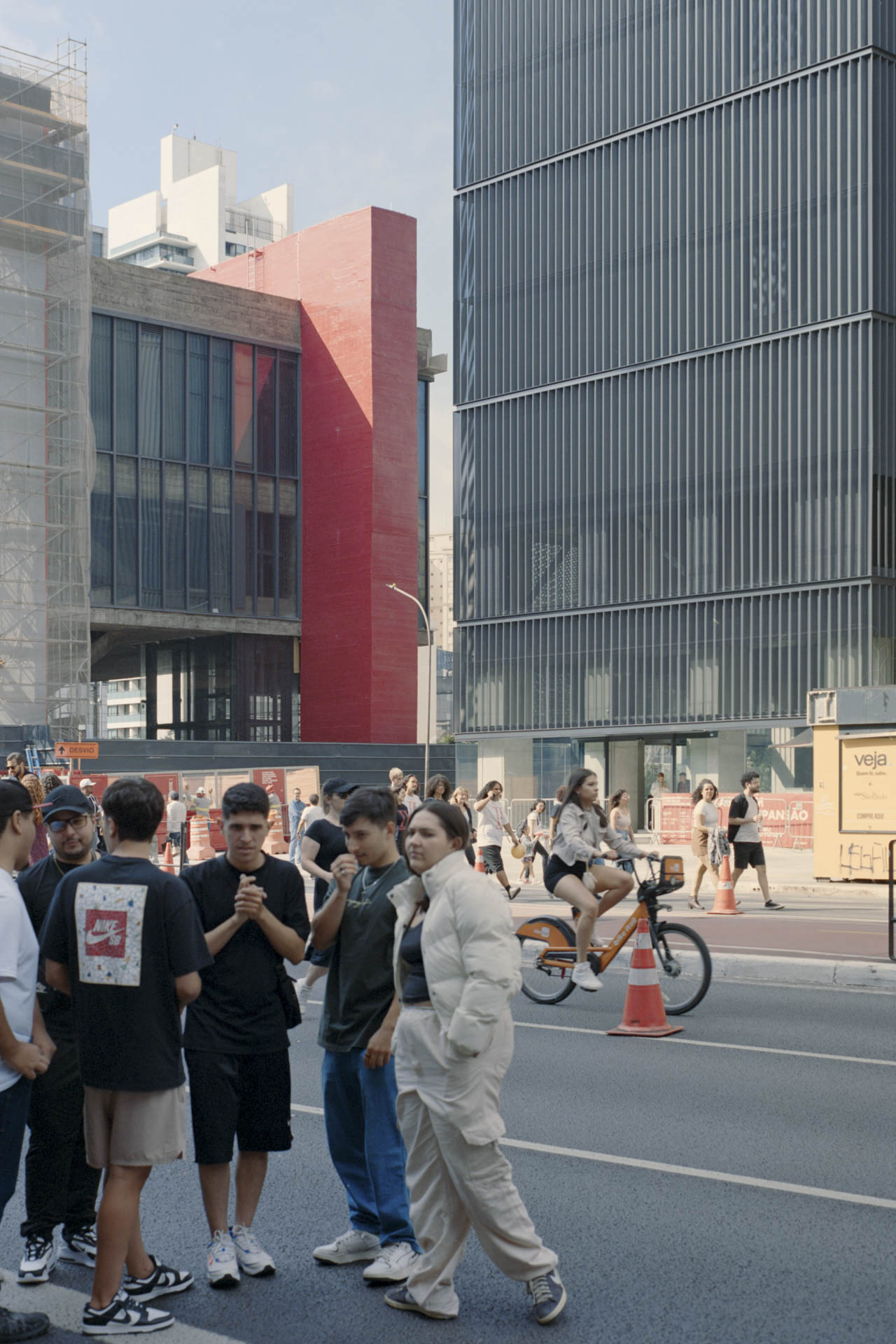
© Pedro Kok
The Giant Red Pillar's Neighbor
Located in the largest metropolis of South America, the museum on Avenida Paulista is surrounded primarily by office towers with eclectic styles characteristic of Brazil’s modernist period. Whether because of its elongated tall volume or its unusual dark façade, the building caused a stir among onlookers. The Pietro Maria Bardi building was conceived by refurbishing a pre-existing structure from the 1940s. The volume underwent an innovative partial demolition and simultaneous work of addition on its upper part. The architects drew inspiration from the contemporary vertical museum typology. They aimed to create a homogeneous and timeless design that would be both enduring and possible to maintain.
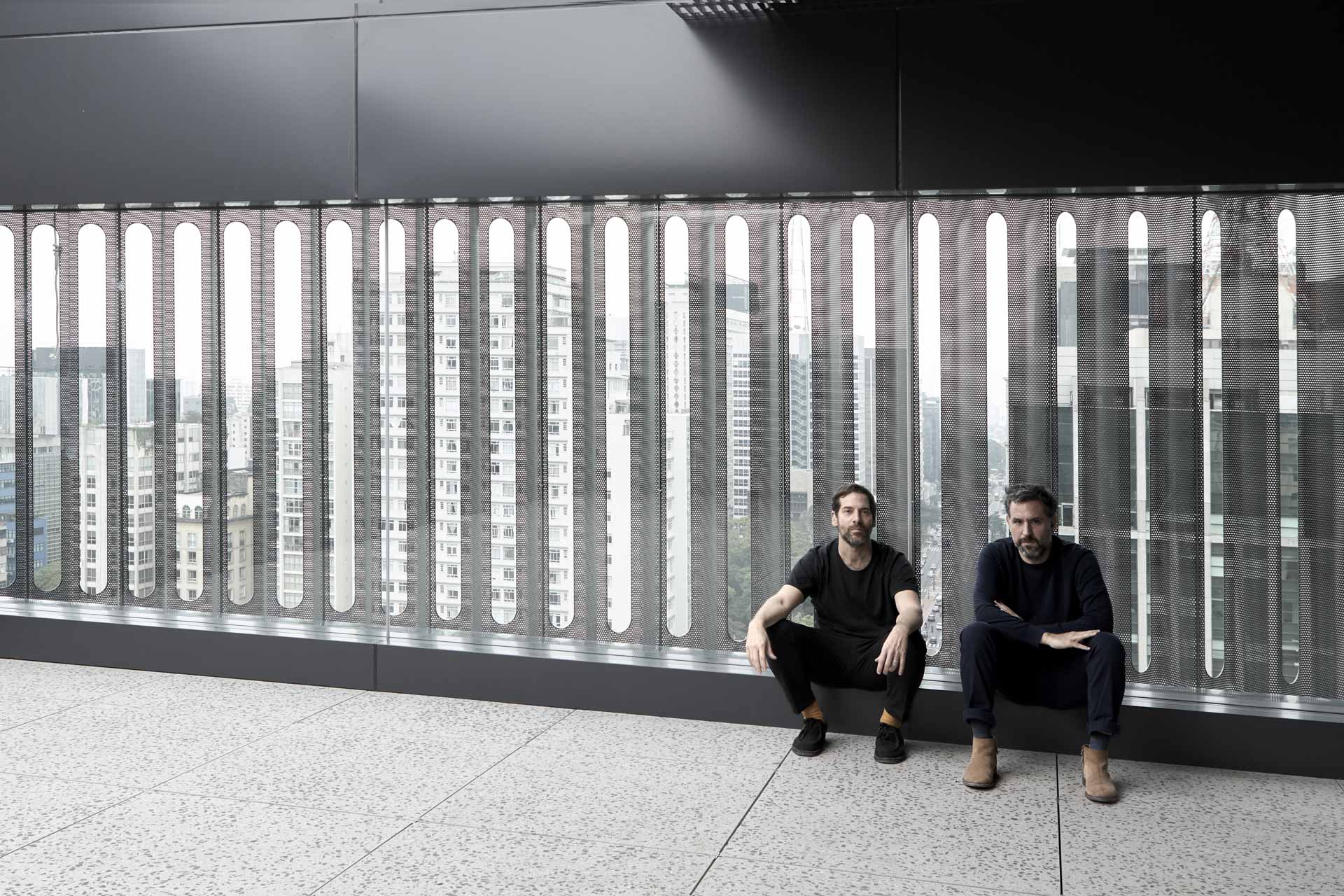
Gustavo Cedroni and Martin Corullon from Metro Arquitetos in the new extension of MASP museum in São Paulo, Brazil. © Bob Wolfenson
Behind the controversial facade
The new double-layered metal façade aims to reduce solar exposure and enhance thermal comfort, thereby reducing the air conditioning load. Furthermore, aligned with international museum conservation standards, the HVAC and LED systems ensure the preservation of artworks. The black metal panels cover the entire existing volume, except for the ground floor. This design strategy seeks to extend the sense of openness established by Lina Bo Bardi’s suspended structure.
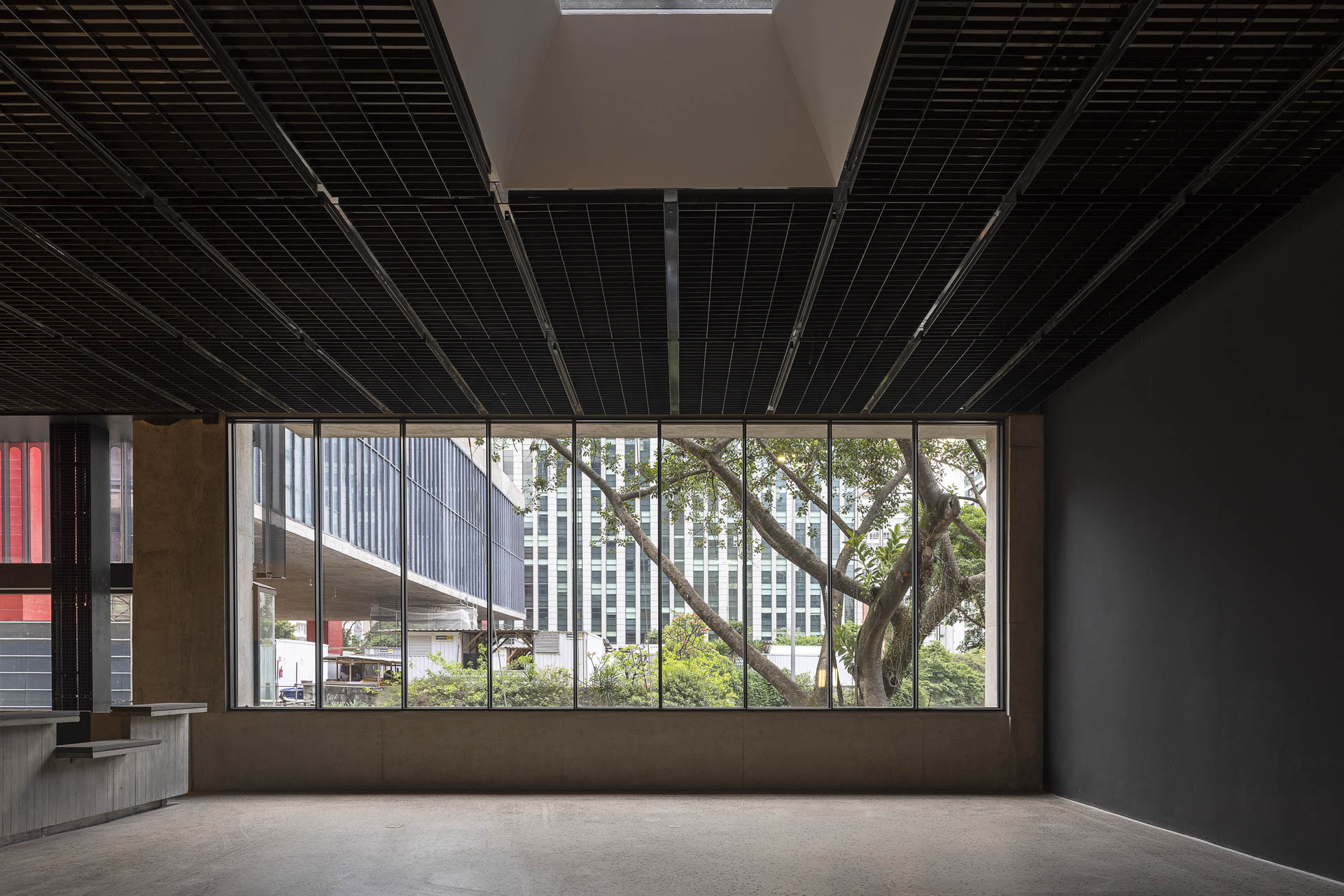
Groundfloor of the Pietro Maria Bardi building and view to Lina Bo Bardi building. © Leonardo Finotti
Pietro Maria Bardi – First director of MASP
A series of deliberate decisions ensure seamless integration between the new construction and the globally famous building. "The expansion project was designed in a way that complements Lina's building, creating an architectural ensemble that works as a single organism, and not just an addition of areas", defines Martin Corullon from Metro Arquitetos. One such gesture was the relocation of the ticket office to the basement of the Pietro Maria Bardi building. It effectively restored the ground floor to its original free span state — an essential principle in Lina Bo Bardi’s design. Additionally, an underground passage now connects the two structures, optimizing visitor circulation and the transport of artworks.
Architecture: METRO Arquitetos Associados und Neves Arquitetos
Client: Museu de Arte de São Paulo Assis Chateaubriand (MASP)
Location: São Paulo - SP 01310-200 (BR)
Gross floor area: 7,680 m²
Number of floors: 14 floors
HVAC: Teknika
Steel and concrete structures: Cia. De Projetos
Demolition design: SOFT Projetos Estruturais
Foundation design: MG&A Consultores
Lighting design: Fernanda Carvalho and Paula Carnelós
Installation design: MHA Engenharia
Facade and windows Design: QMD Consultoria
Acoustics: Harmonia Global
Landscaping: Ricardo Vianna
Accessibility design: Design Universal Consultoria
Gallery


