
Rollercoaster ride on the Maas
Fenix Museum in Rotterdam
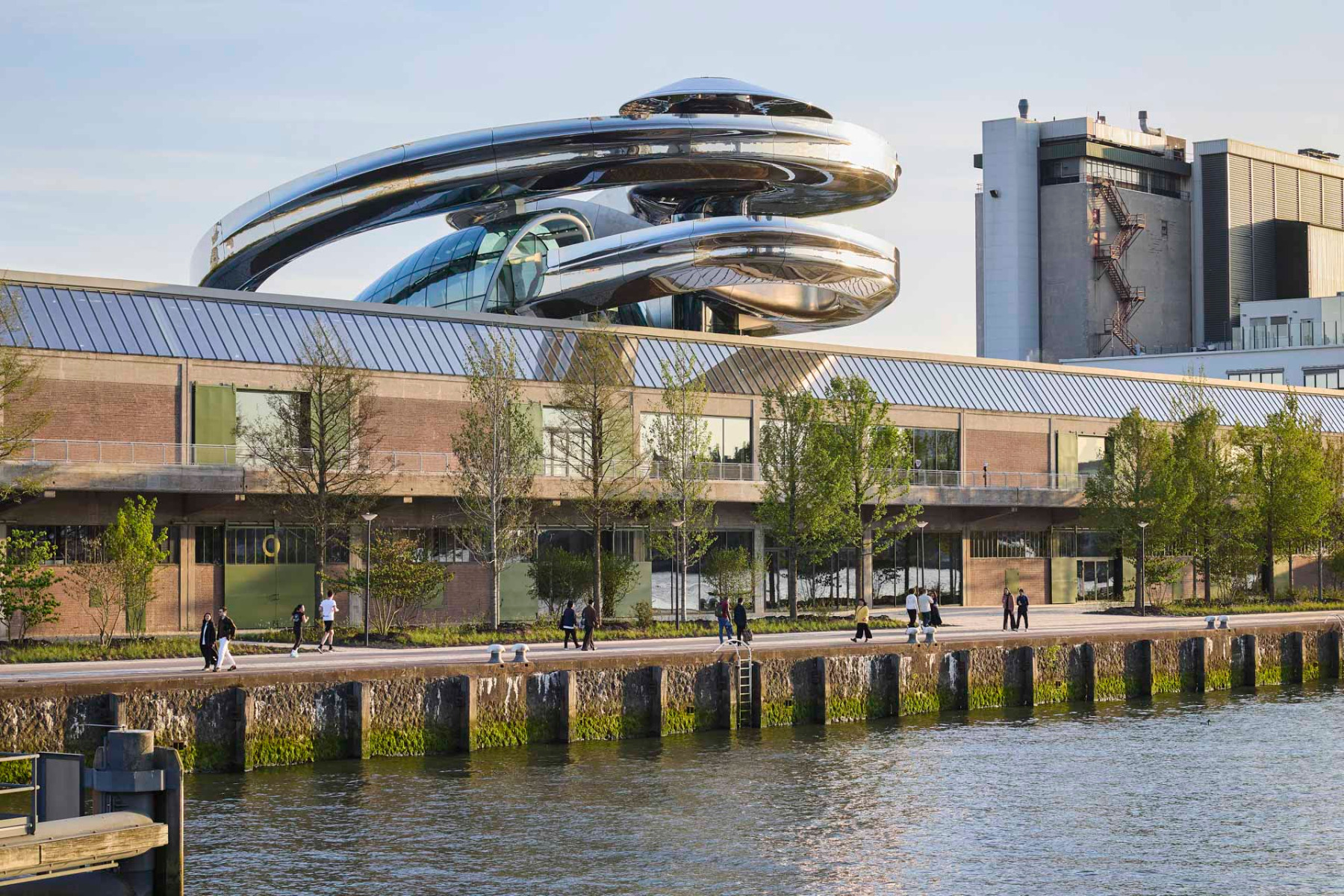
MAD's viewing platform, built above the roofs of the Fenix warehouse in Rotterdam's Rijnhaven, stands 24 m tall. © Hufton + Crow
Around the Rijnhaven area, Rotterdam is practising “slow urbanism” in its most concentrated form. In 1993, the converted office building of the Holland-America Line became home to the Hotel New York. In 2000, Bolles + Wilson built the Luxor Theatre at the eastern end of the harbour basin and, in 2013, OMA's de Rotterdam office tower was added. Yet a few old warehouses on the south side of the harbour basin still await the attention of architects and developers.
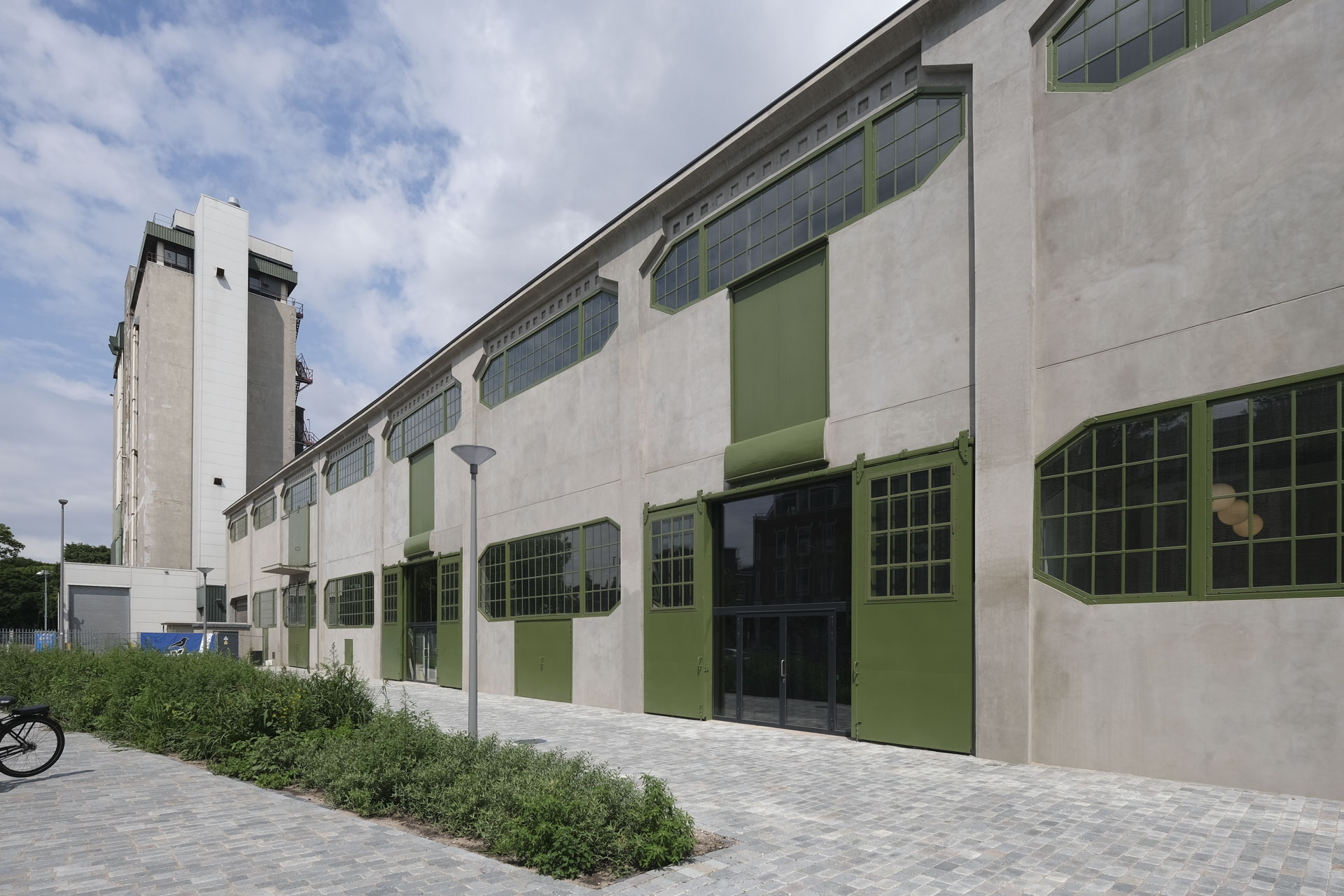
The two-storey building, which is over 100 years old, was renovated to a high standard by Bureau Polderman from Rotterdam. © Jakob Schoof
Migration museum in the old warehouse
Ma Yansong and his firm MAD have now converted the Fenix II warehouse into the Netherlands' first museum dedicated entirely to migration. This was MAD's first planning commission in the Netherlands, and the museum is the first ever to be built by a Chinese architect in Europe. MAD collaborated with Rotterdam-based Bureau Polderman on the renovation of the historic quay warehouse. The client was the private foundation Droom en Daad (Dream and Action).
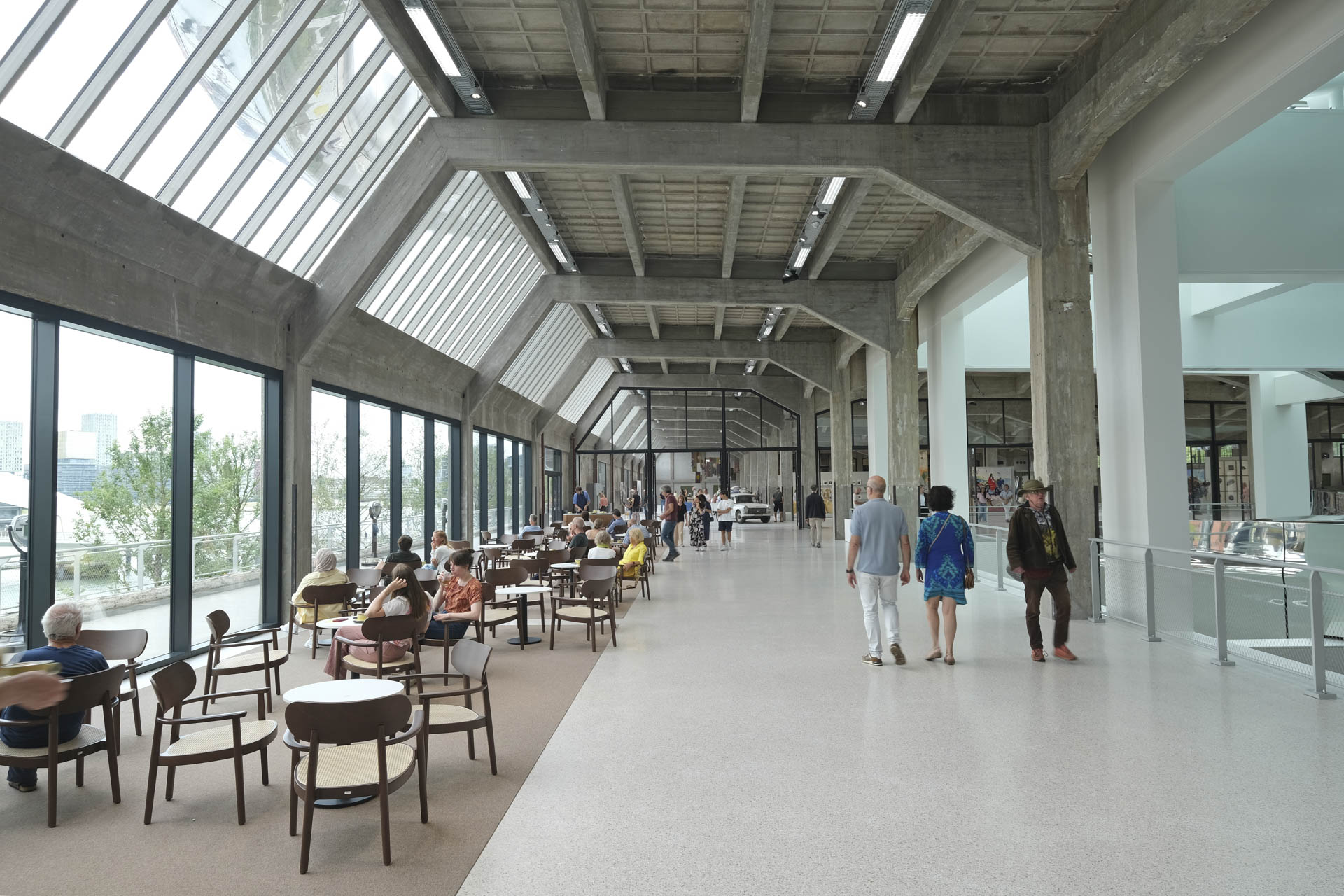
Large sloping windows bathe the café in bright, glare-free northern light. © Jakob Schoof
Rotterdam is the perfect location
When the 360 m long warehouse was built in 1923, it was considered the largest of its kind in Europe. It was built by the Holland-America Line, which enabled millions of Europeans to emigrate to America. What could be a more fitting home for a migration museum than Rotterdam, a city where people from 170 countries live together and which was formerly the world's largest port?
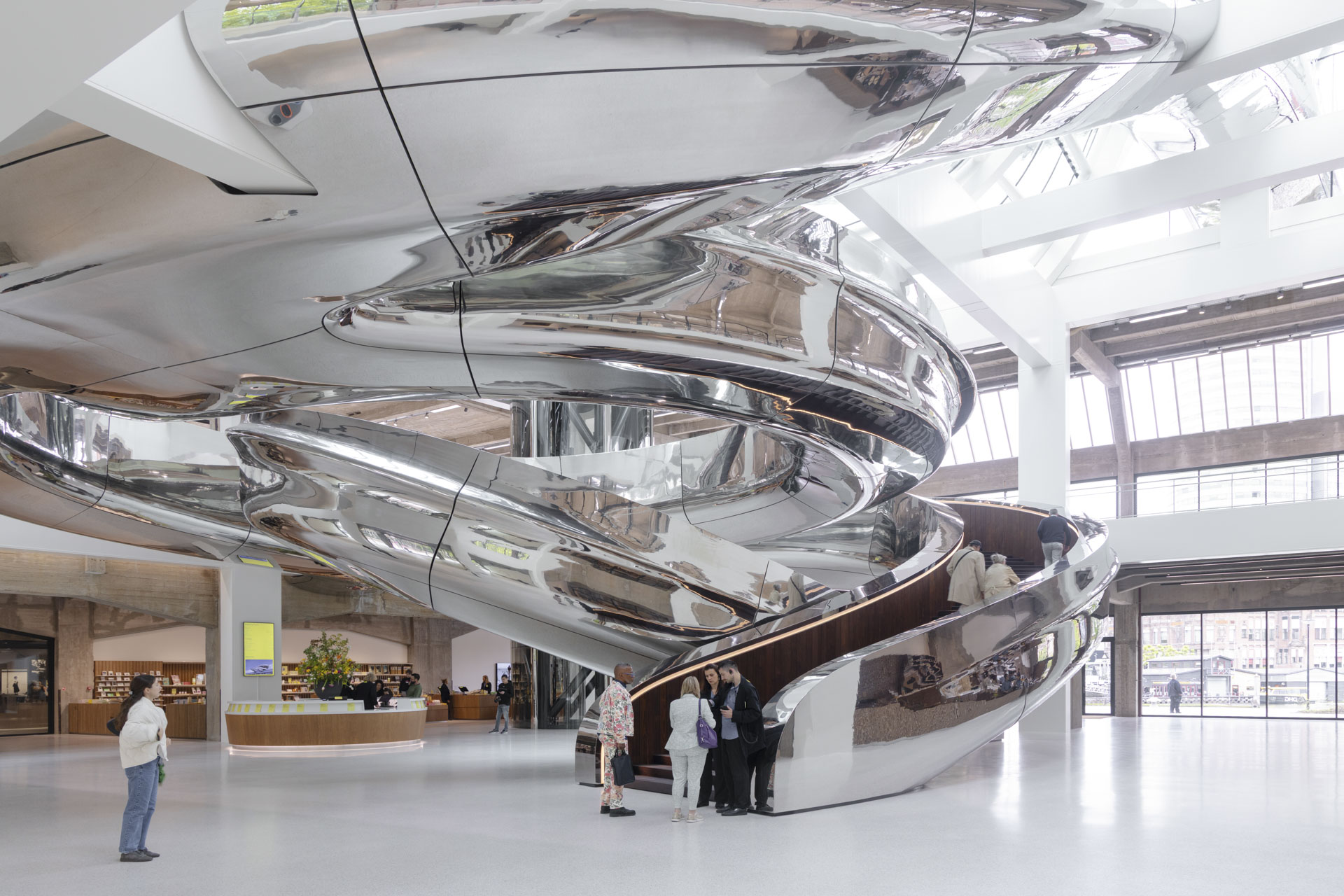
The spectacular 550 m-long ramp begins in the central atrium. © Arch-Exist
Two paths lead up and back down again
In the middle of the ground floor is the atrium, which has large glass fronts opening up on both sides – one looks out over the waterfront to the north, and the other one looks out over the Katendrecht residential district to the south. Adjacent to this are two rooms housing permanent exhibitions, which are open to the public free of charge. The vast majority of the exhibition space is housed in two generous, undivided halls on the upper floor. In between these, a ramp winds its way up to a viewing platform towering 24 m above the building. Strictly speaking, it is a 550 m long double helix that provides two routes: one for a quick ascent and one for a leisurely stroll.
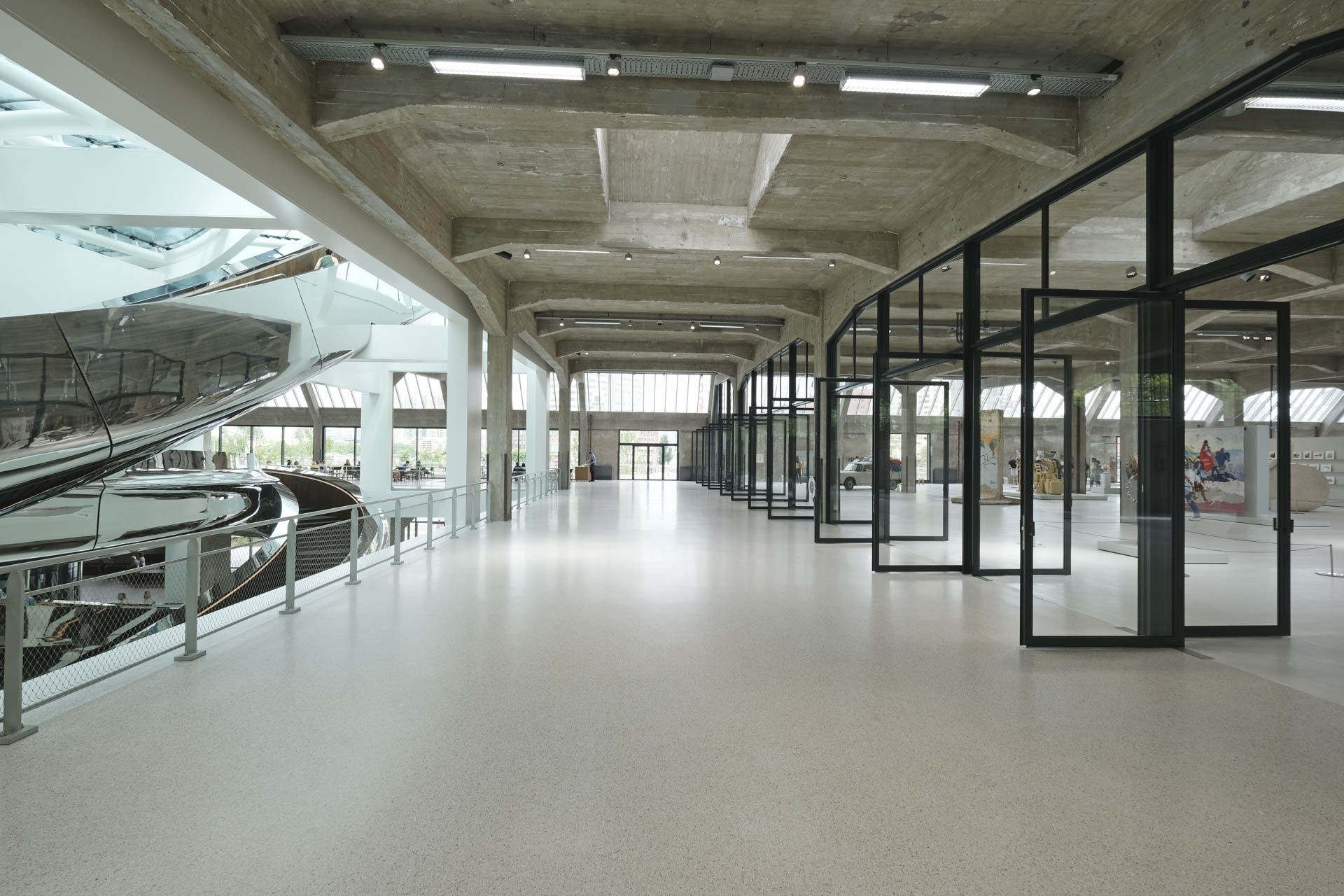
Delicate glass walls separate the exhibition rooms on the upper floor from the atrium. The profiles of the doors, which open alternately inwards and outwards, were manufactured by Jansen, a subsidiary of the facade specialist Schüco. © Jakob Schoof
Concrete structure has been brought to light
The Fenix Museum has many other notable features besides the atrium. Bureau Poldermann opened up the old building by removing later additions and restoring the impressive 1923 concrete structure to its former glory. The freshly plastered facades now have a uniform appearance again, with lime green sliding doors on the ground floor and large, octagonal window openings on the upper floor. These are not the only sources of light, however: large, north-facing, sloping windows and a row of south-facing skylights particularly flood the upper floor with bright, glare-free light.
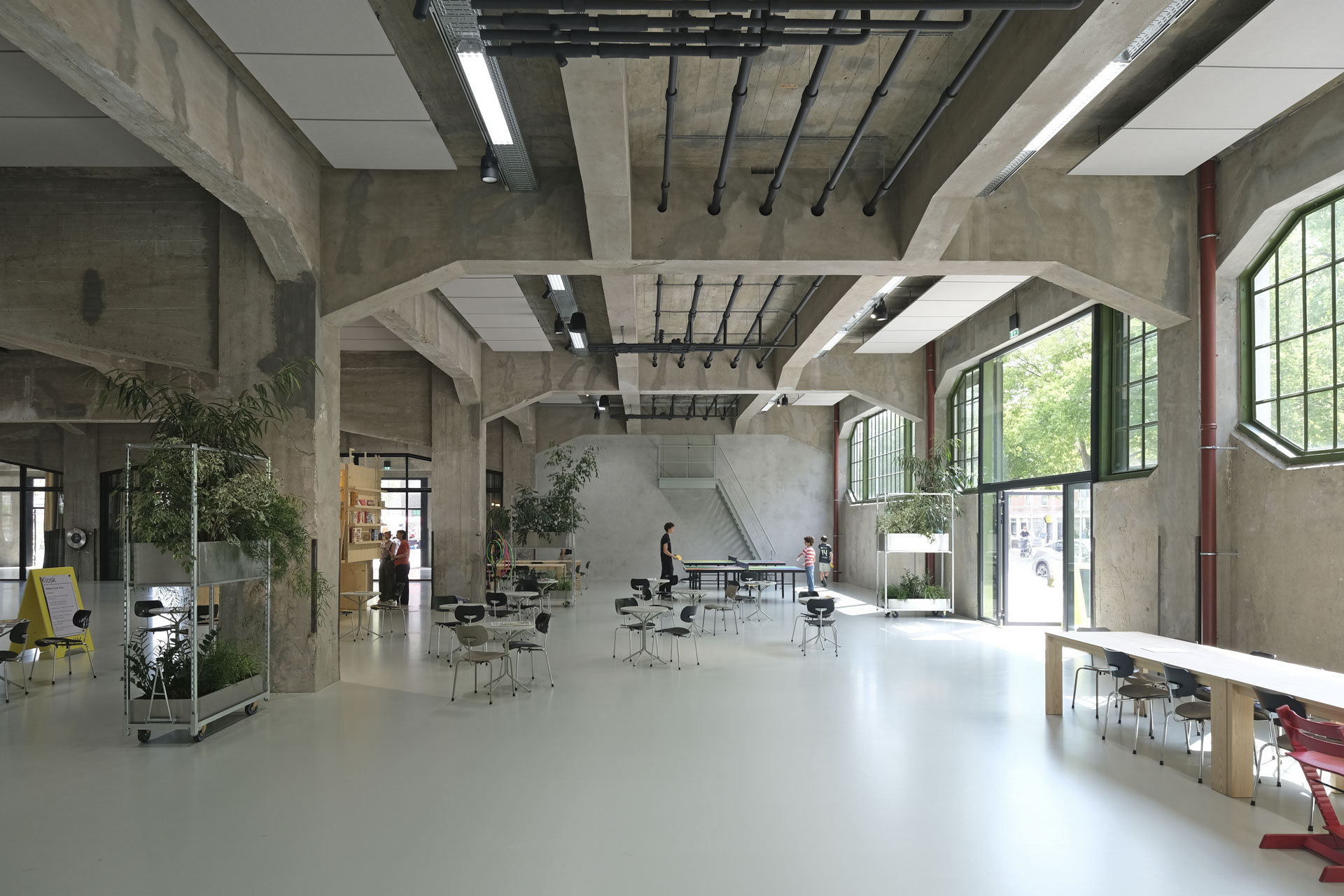
The Plein covers more than 2,200 m² and offers citizens of Rotterdam plenty of space for informal meetings, reading the newspaper, and playing table tennis. © Jakob Schoof
Plenty of space, but no consumerism
It's not just international architecture and art lovers who will find plenty to enjoy here. With an ice cream parlour, an Anatolian bakery, and a Michelin-starred restaurant serving Turkish cuisine, Fenix fulfils the developers' ambition to address migration through exhibitions and to bring food cultures from all over the world to Rotterdam. There is also the “Plein”, an urban living room spanning over 2,000 m² on the eastern part of the ground floor. Here, both residents and visitors will find a kiosk where they can read newspapers, as well as table tennis tables and a small stage for events. In other words, there is plenty of space without any pressure to consume, which is a quality that could probably only be financed by a foundation in this form and location.
Read more in Detail 9.2025 and in our Detail Inspiration database.
Architecture: MAD
Renovation of old buildings: Bureau Polderman
Partner architect: EGM
Client: Droom en Daad Foundation
Location: Paul Nijghkade 5, 3072 AT Rotterdam (NL)
Structural engineering: IMd Raadgevende Ingenieurs
Lighting design: Beersnielsen Lichtontwerpers
Building services engineering: Bosman Bedrijven
Building physics: LBP Sight
Gallery


