
Plant-based guest room
Rooted Potential near Copenhagen by Sara Martinsen
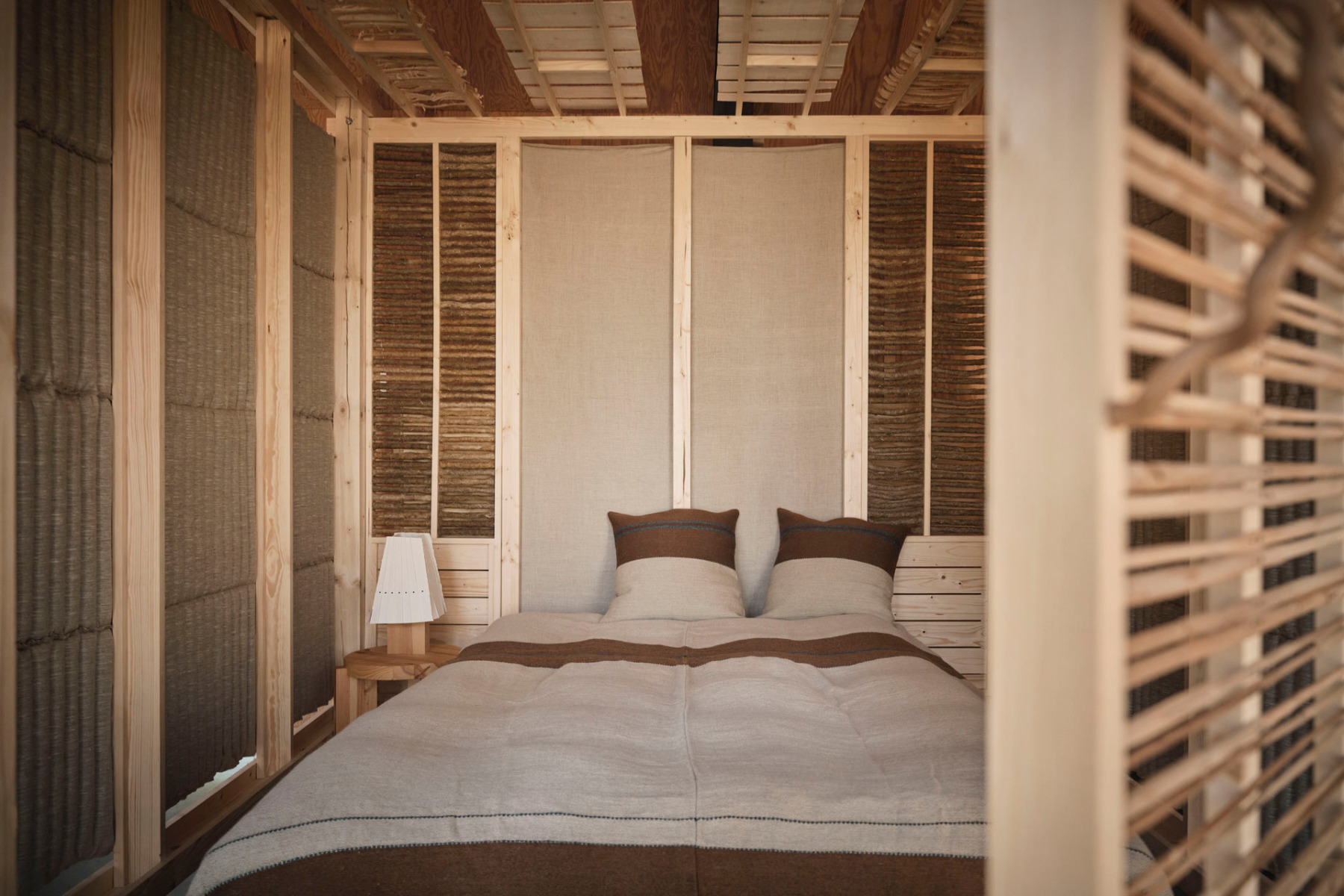
Sara Martinsen offers her Rooted Potential Pavilion as accommodation for guests at her summer house near Copenhagen. © Kristian Holm
The pavilion “Rooted Potential” by Danish designer and materials researcher Sara Martinsen focuses on organic materials, atmospheric restraint, and architectural reduction. The pavilion was created from an experiment with ten regional plants. The prototype explores the potential of using plants in architectural structures. It is a temporary experiential space, built from materials that change, age, and decay over time.
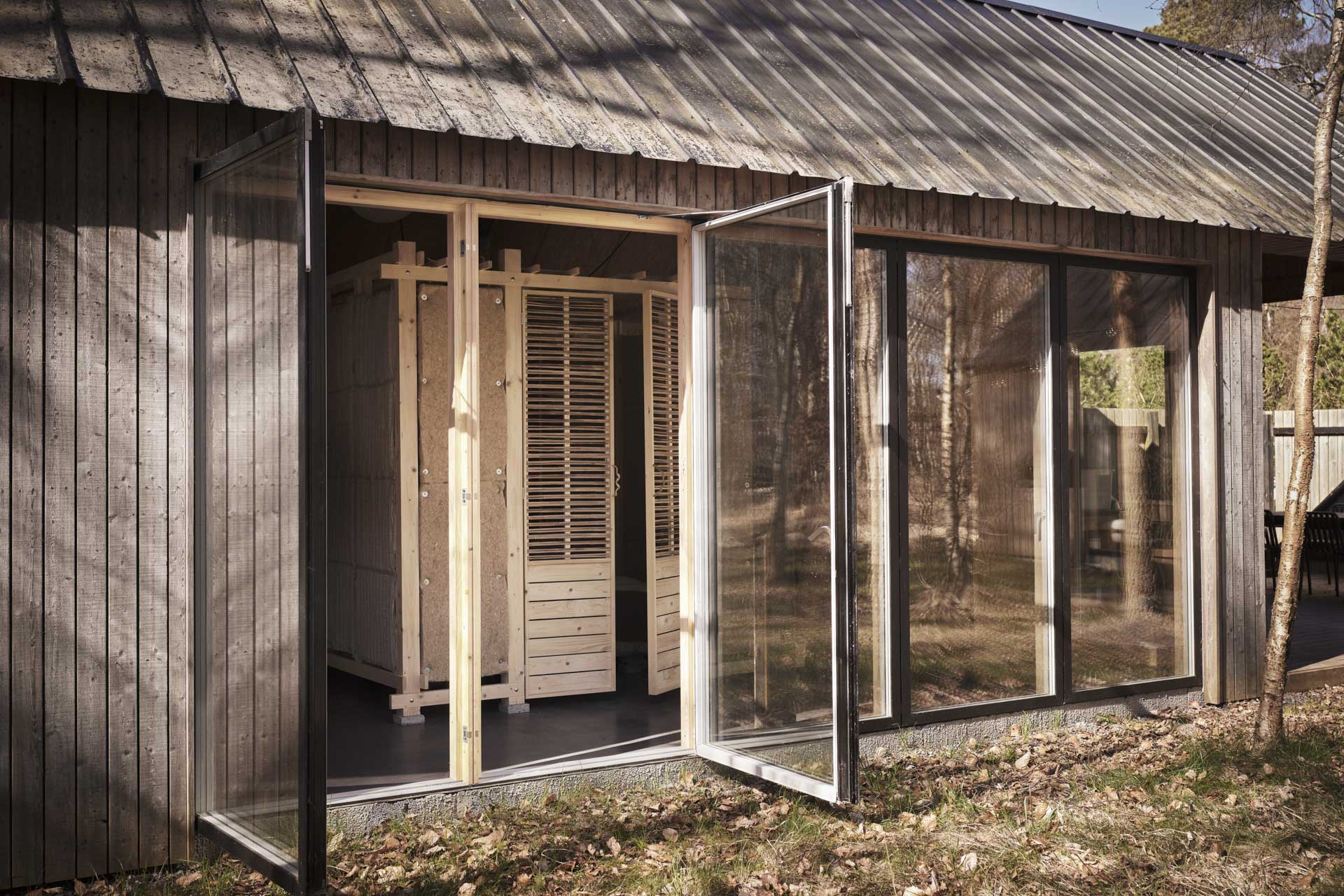
The pavilion is the result of a research project investigating the potential of using ten native Danish plants in architectural structures. © Kristian Holm
Local, bio-based materials
Sara invested a lot of time in selecting materials from the Copenhagen area. Finding the natural materials, harvesting them in the required quantities, and allowing for drying time determined the construction process. After being presented at the “Rooted Potential” exhibition at Officinet in Copenhagen, the pavilion now serves as accommodation at the designer's summer house. Guests in Jutland can now spend a night surrounded by plants that stimulate the senses.
Plants as building materials
For the pine wood pavilion, the designer chose robust and strong yet soft, bio-based materials. It was also important to her that the raw materials had insulating properties to regulate temperature and absorb and release moisture. These materials included seaweed, flax, clematis vitalba, Japanese knotweed, cattail, sea rush, hemp, silver grass, moor grass and yellow iris. The side walls of the pavilion consist of linen covers filled with seaweed and attached to the frame with press studs. Martinsen rolled unprocessed hemp fibres into cigar-like tubes for the back wall, arranging them repeatedly in a frame to form soft blinds. Other vertical surfaces are covered with exposed hemp insulation. The upper part of the wooden doors is filled with cattails. The curved handles are made of clematis. Ash chips are mounted on horizontal wooden beams to form the roof. All materials used are untreated and therefore not weather-resistant.
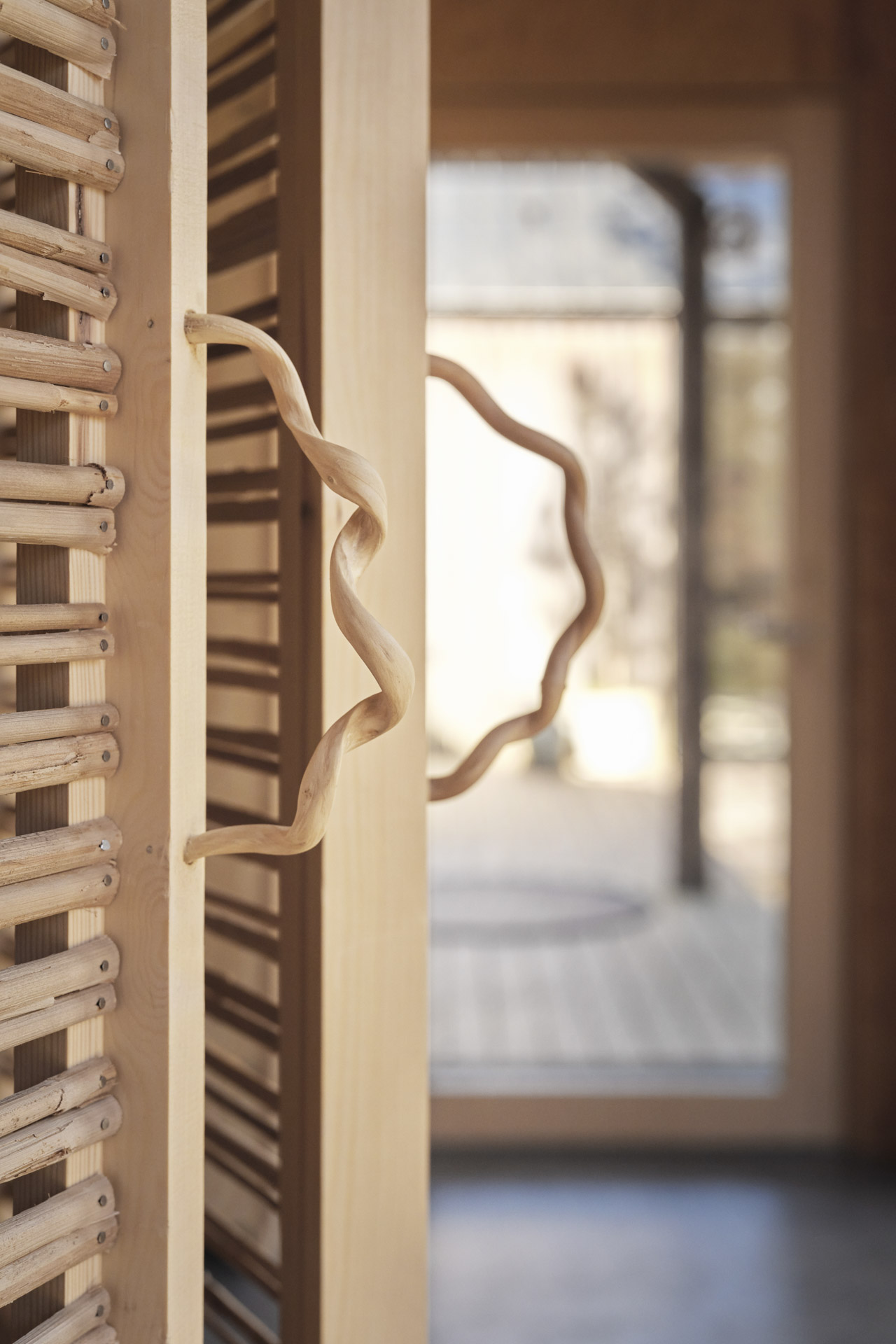
The door handles are made of clematis. © Kristian Holm
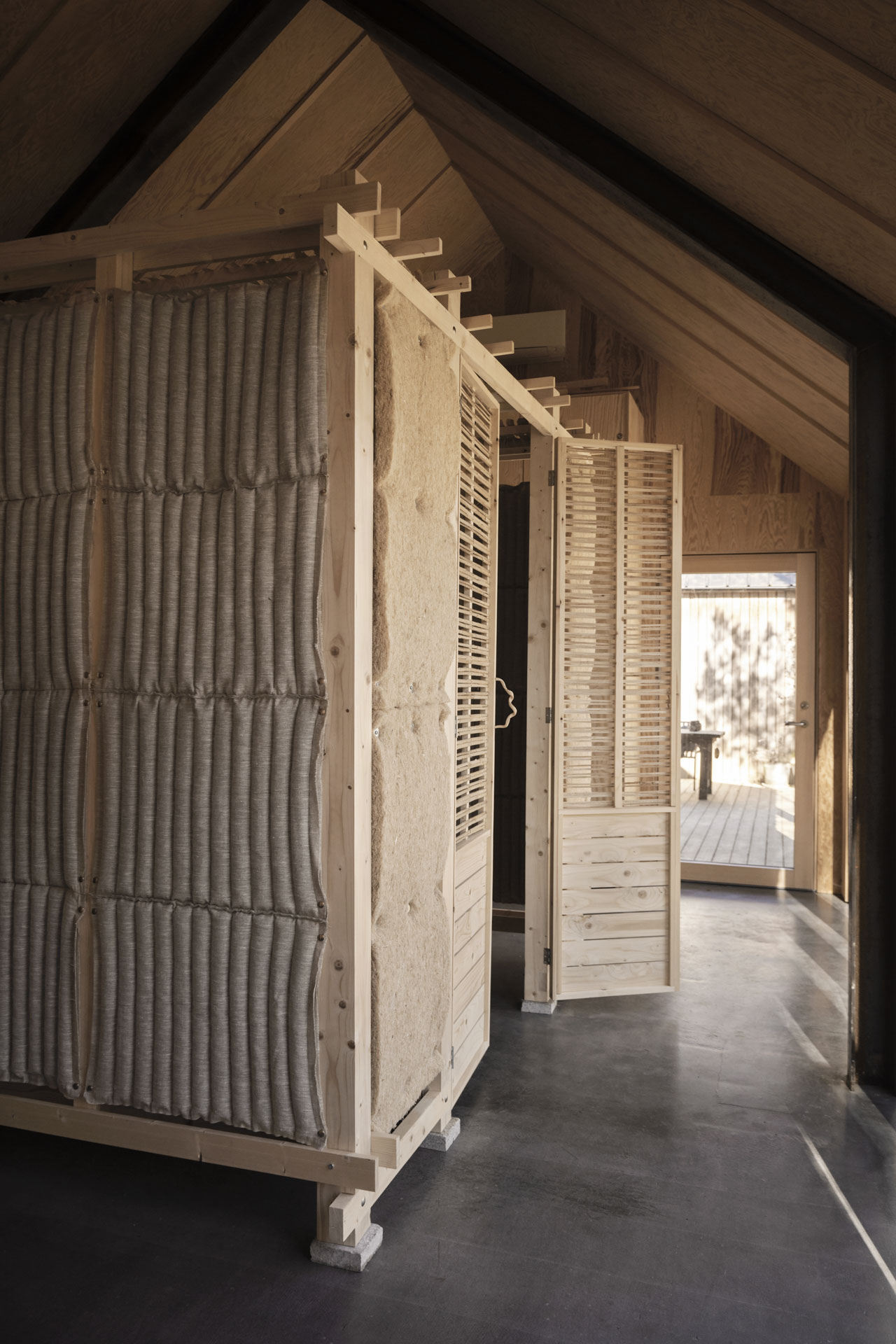
The walls consist of linen covers filled with seaweed and exposed hemp insulation. © Kristian Holm
A simple, climate-friendly construction
The pavilion can easily be dismantled and reassembled in different locations. The research project demonstrates how flora, when combined with craftsmanship, can be used to create an aesthetically pleasing space, the aesthetic of which is dictated by the materials available in the local environment. For the designer, one thing is clear: “Understanding the nearby resources available is crucial. We need to understand which materials can be used and when, and ensure access to knowledge about local potential, if we are to tackle current and future climate issues.” While the pavilion's design embraces transience, the long-term robustness and usability of such structures remains questionable.
Architecture: Sara Martinsen
Location: Jütland (DK)
Gallery


