
Kinetic shading system
Sombra Pavilion in Venice by MVRDV
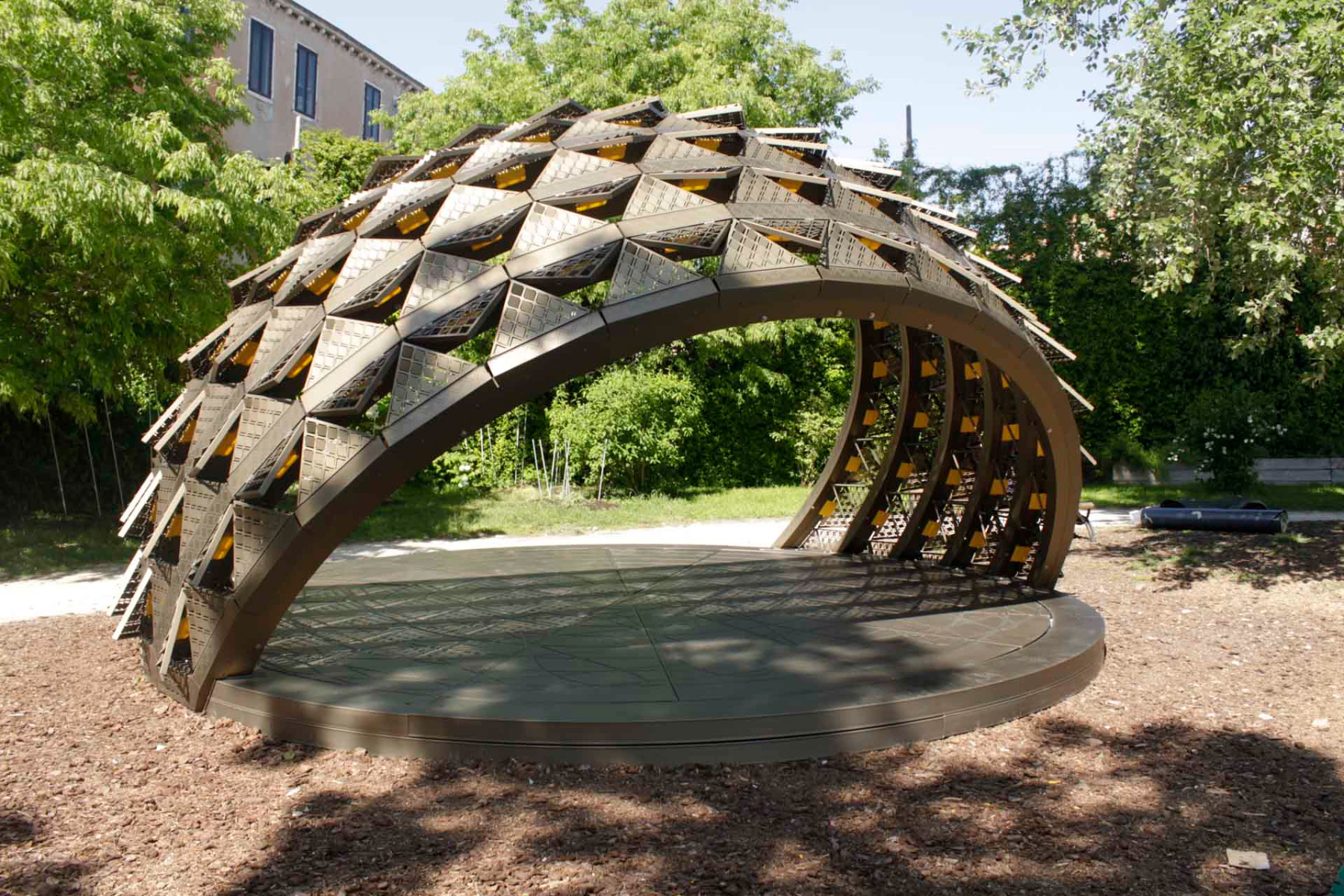
The Sombra Pavilion by MVRDV is an architectural experiment in the dynamic control of light, heat and ventilation. © Jaap Heemskerk
For the seventh edition of the group exhibition “Time Space Existence”, MVRDV, Studio Metadecor, Airshade Technologies, the AMOLF Institute, ARUP and Alumet have designed the Sombra Pavilion. The dynamic shading structure will be on display in the Giardini Marinaressa at the Architecture Biennale in Venice until November 23, 2025.
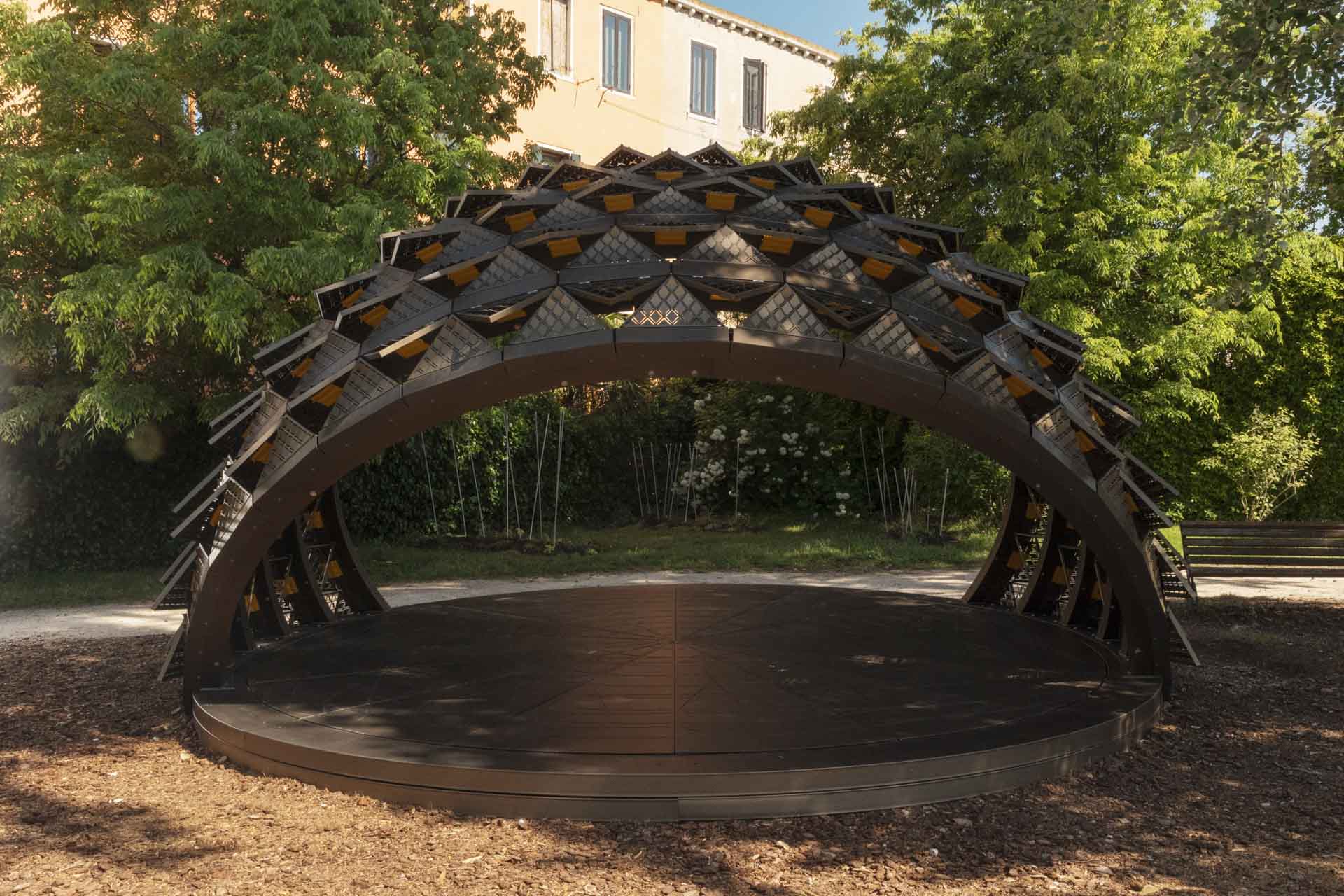
The Sombra Pavilion reacts to sunlight: when not in use, the panels are open; when exposed to direct sunlight, the panels close. © Federico Vespignani© Federico Vespignani
Demonstration object for innovative technology
The 30 m² pavilion is an architectural experiment in the dynamic control of light, heat and ventilation: kinetic components that are based exclusively on passive physical principles and use neither electronics nor motors. With its active reaction to sunlight and shadow, the installation creates a dialog between architecture and the natural environment. The name is a fusion of the two Latin words for sun (sol) and shadow (umbra).
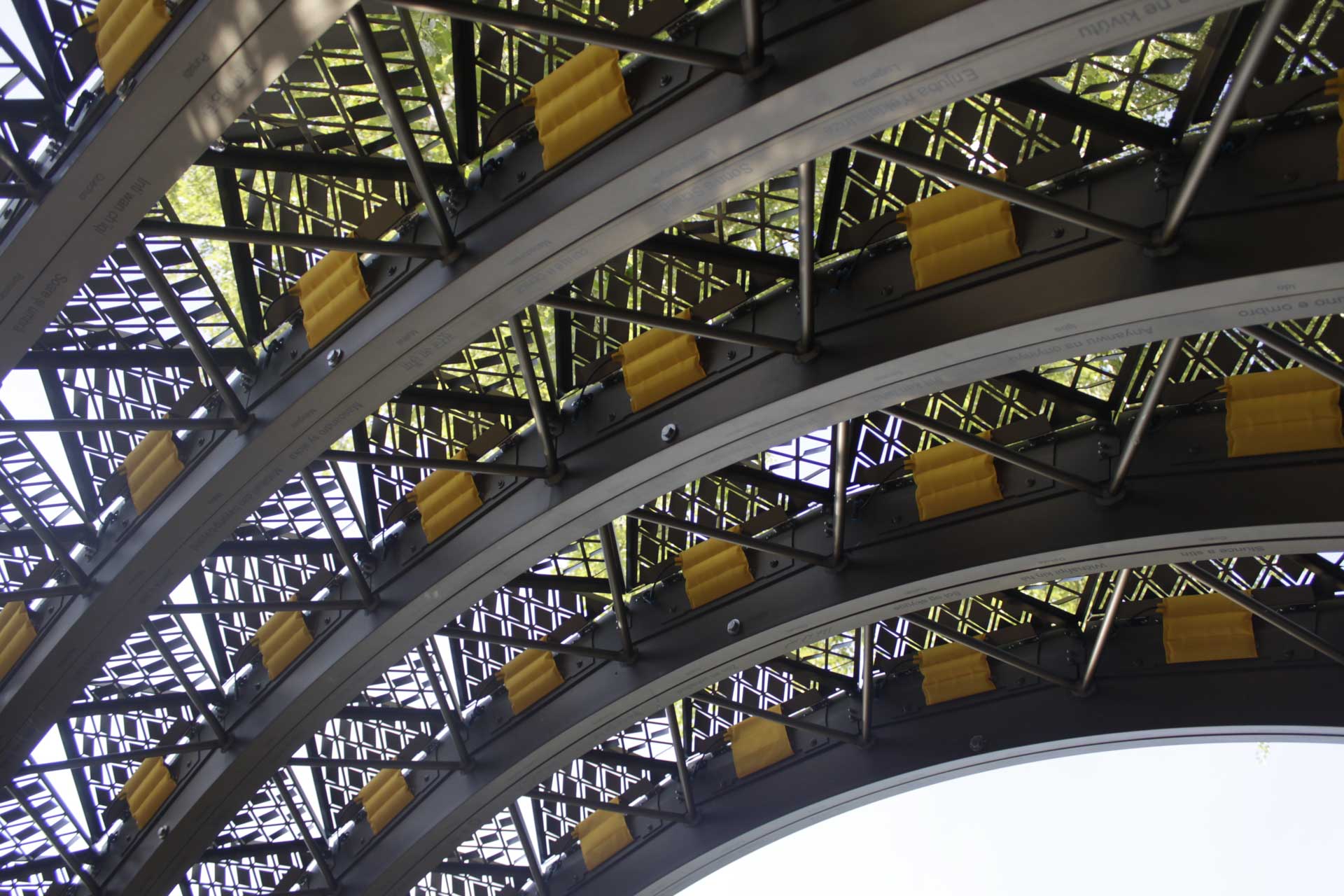
Reused beams from a previous project were used for the pavilion. © Jaap Heemskerk
Building climate-friendly with physical principles
“In view of the worsening climate crisis, it is clear that we need new architecture that is more in harmony with the environment,” says MVRDV partner Bertrand Schippan. In keeping with this year's exhibition theme of “Repair, Regenerate and Reuse”, the shape, inspired by Heliodon devices, is made from reused beams from a previous project. The pavilion's six metal ribs support triangular panels that provide shade thanks to perforated screens. The panels are hinged and react to the sun's rays using physical principles.
Principles of soft robotics
When not in use, the panels are open; in intense and direct sunlight, individual panels close to provide maximum shade. For this purpose, small air canisters are built into the ribs of the structure, which are heated by direct sunlight and cause the air pressure inside to rise. This pressure causes small airbags attached to the panels to inflate. Thanks to a mechanism inspired by the principles of soft robotics, the airbag contracts like a muscle when inflated and closes the panels. When there is no sunlight, the containers cool down, the pressure drops and the panels open again.
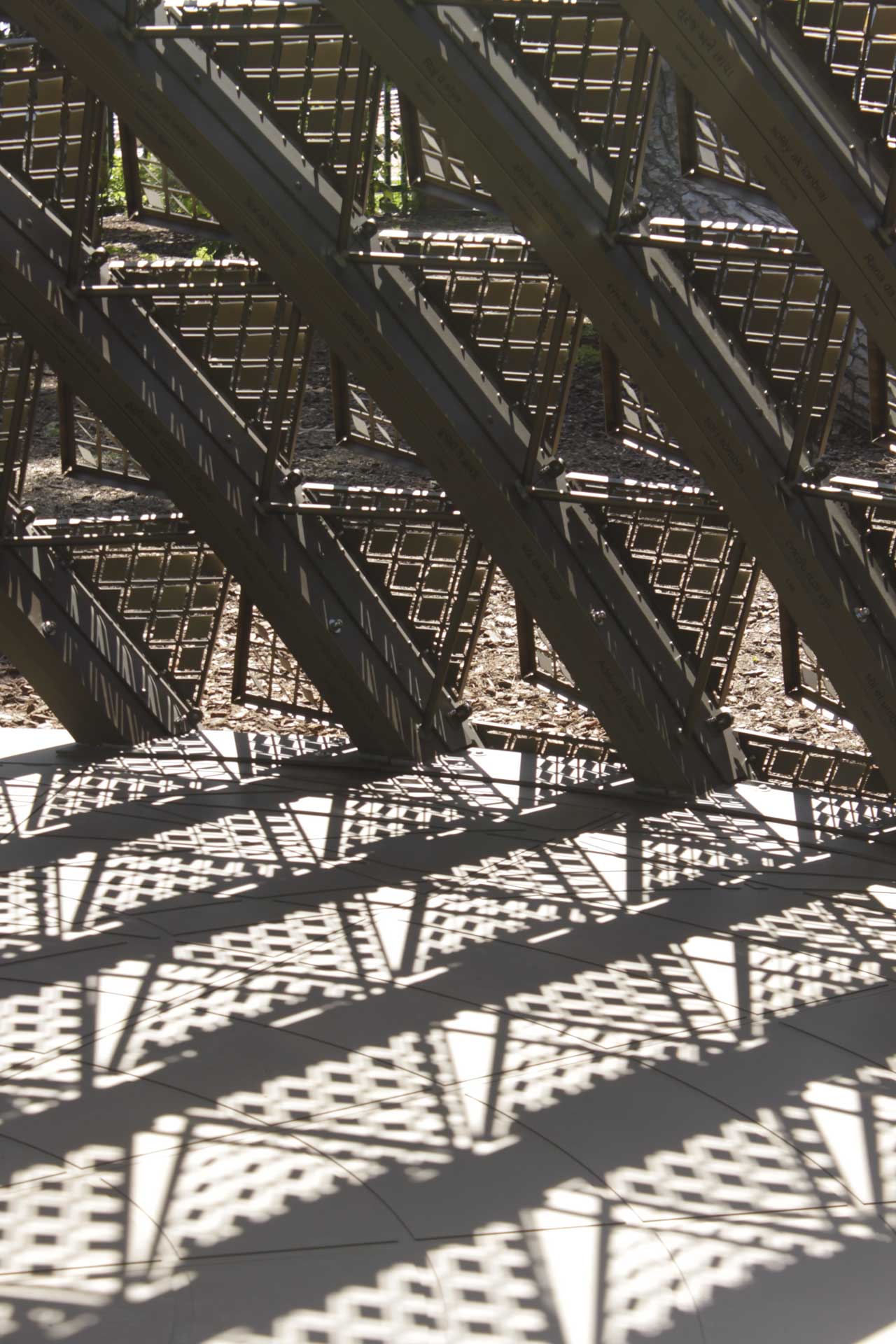
Foldable, triangular panels with a perforated surface provide shade. © Jaap Heemskerk
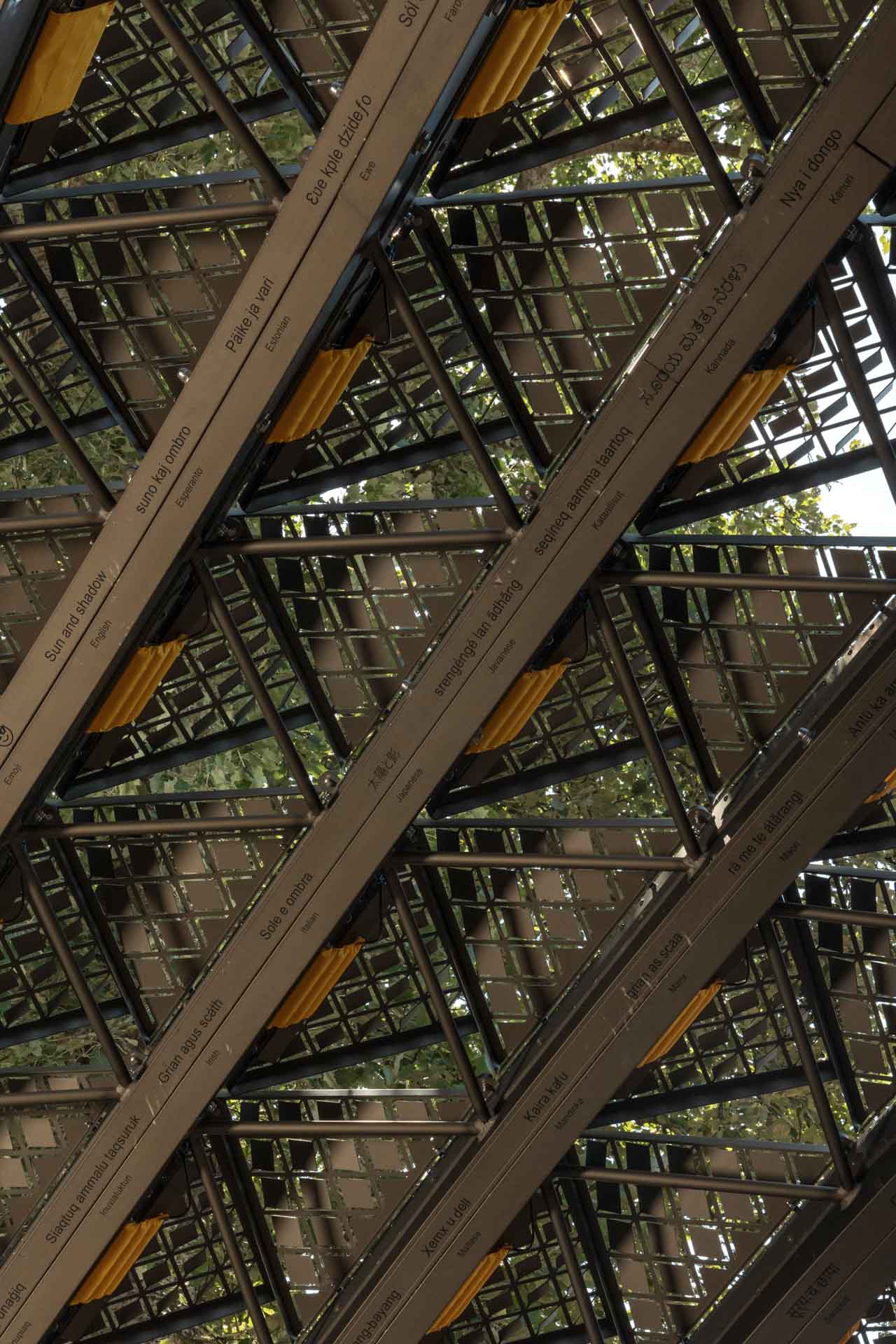
The words “Sun and Shadow” are engraved on the underside of the arches in over 200 languages. © Federico Vespignani
Homage to the sun
A number of details have been deliberately placed to emphasize the pavilion's dedication to the sun. An engraving in the round base plate shows the map of the sun's polar orbit. This serves as a template for the geometry of the pavilion. On the undersides of the arches are the words “Sun and Shadow” in over 200 languages – visitors should remember that “our relationship with the sun is a universal human experience”.
Architecture: MVRDV – Winy Maas, Jacob van Rijs, Nathalie de Vries
Management: Jacob van Rijs
Partner: Bertrand Schippan
Design Team: Yayun Liu, Alberto Carro Novo
Location: Giardini Marinaressa, Venedig (IT)
Brainstorming, coordination, co-engineering, production, assembly, testing, installation: Metadecor
Brainstorming, Airshade Technology patent holder, research, co-planning: Airshade Technologies
Research and production control: AMOLF Institut
Brainstorming, anodizing: Alumet
Mechanical engineering, color and sunlight studies: Arup
Bending: Kersten Europe
Structural engineering: Van Rossum Raadgevend Ingenieurs
Gallery


