
Innovative and affordable
Affordable Housing in Rotterdam by Powerhouse Company
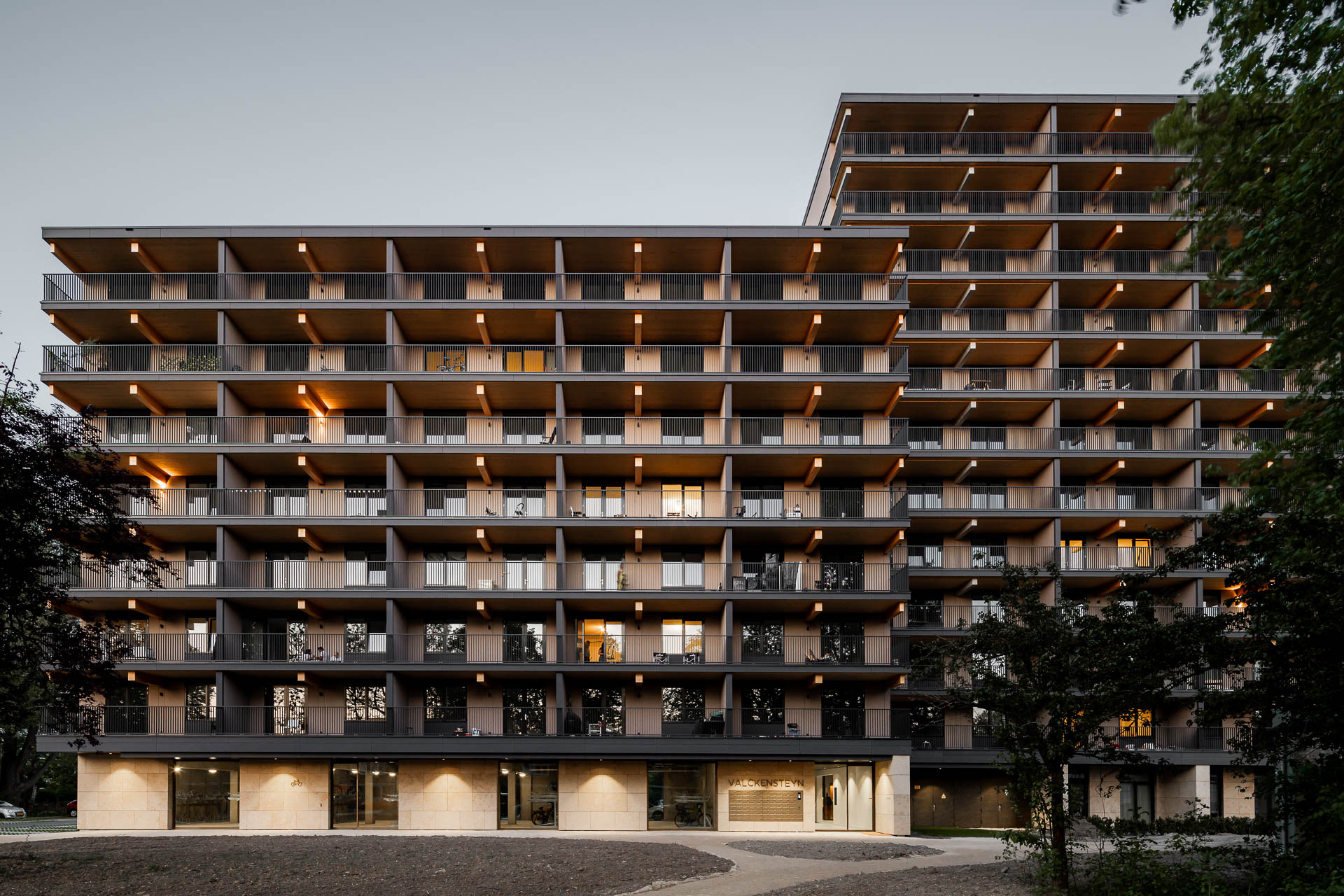
The new Valckensteyn building offers space for 82 flats. © Sebastian van Damme
Valckensteyn is a twelve-storey building constructed entirely from solid wood. It is the first building of its kind in Rotterdam dedicated entirely to the subsidised rental segment. The Powerhouse Company design focuses on the innovative use of timber. The project also has a social mission: it provides 82 affordable rental apartments for the post-war district of Pendrecht, which is now considered a problem area.
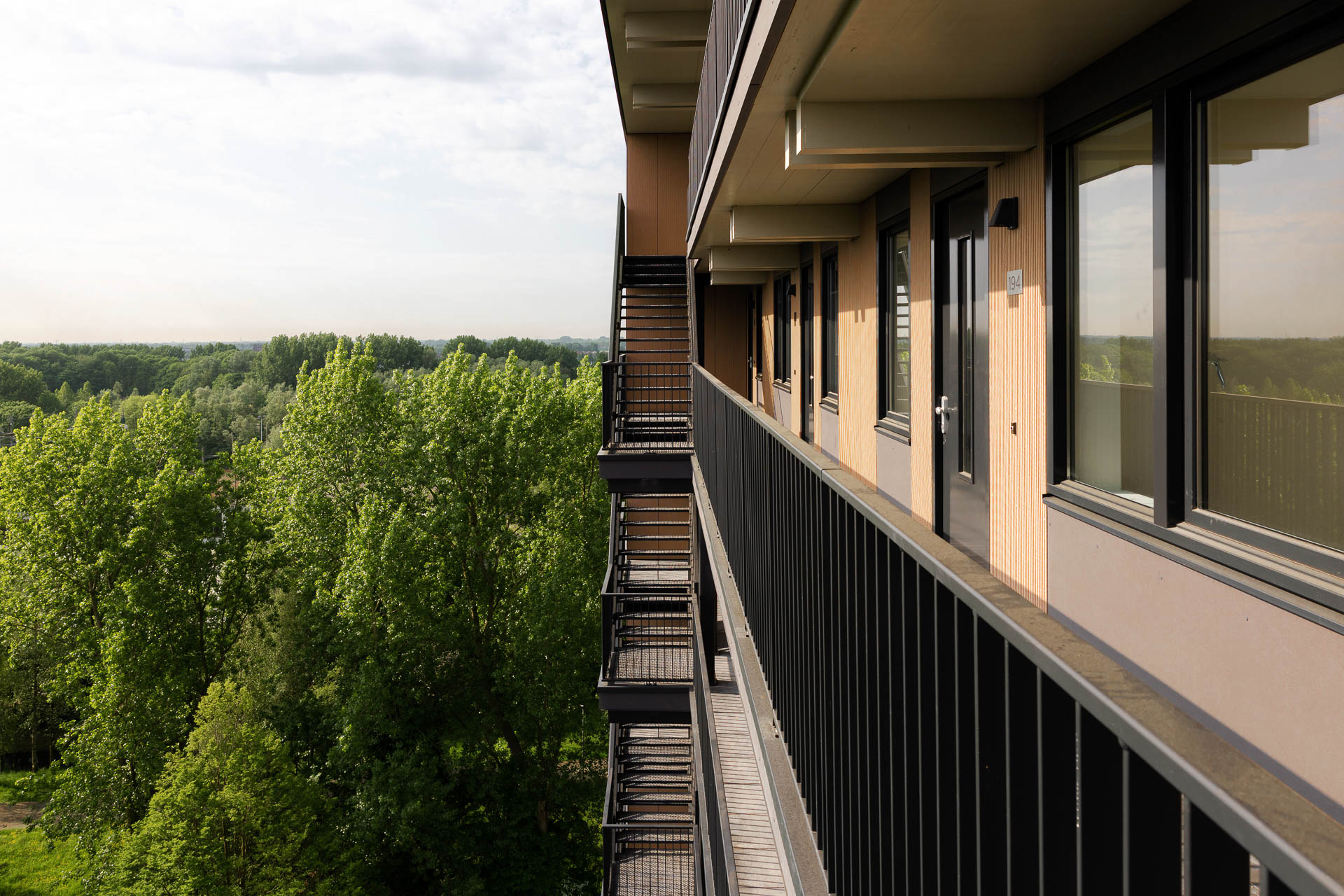
The flats are accessed via pergolas on the east side. © Sebastian van Damme
A new building that ties in with history
The 40-metre-high building stands on the site of the former Valckensteyn high-rise, which dominated the streetscape from 1971 to 2012. Designed by architect Kranendonk, the former building was considered unique due to its staggered ten- and fourteen-storey sections, and it contributed significantly to easing the strained housing market of the post-war period. Powerhouse Company has picked up on this characteristic staggered design. The new building is also based on the urban planning guidelines of German architect and urban planner Lotte Stam-Beese. She played a key role in the reconstruction of Rotterdam after the Second World War, shaping Pendrecht through the interplay of tall and low buildings surrounding shared green spaces. The new Powerhouse Company building blends into this open and spacious environment.
West-facing balconies offer sweeping views. © Sebastian van Damme
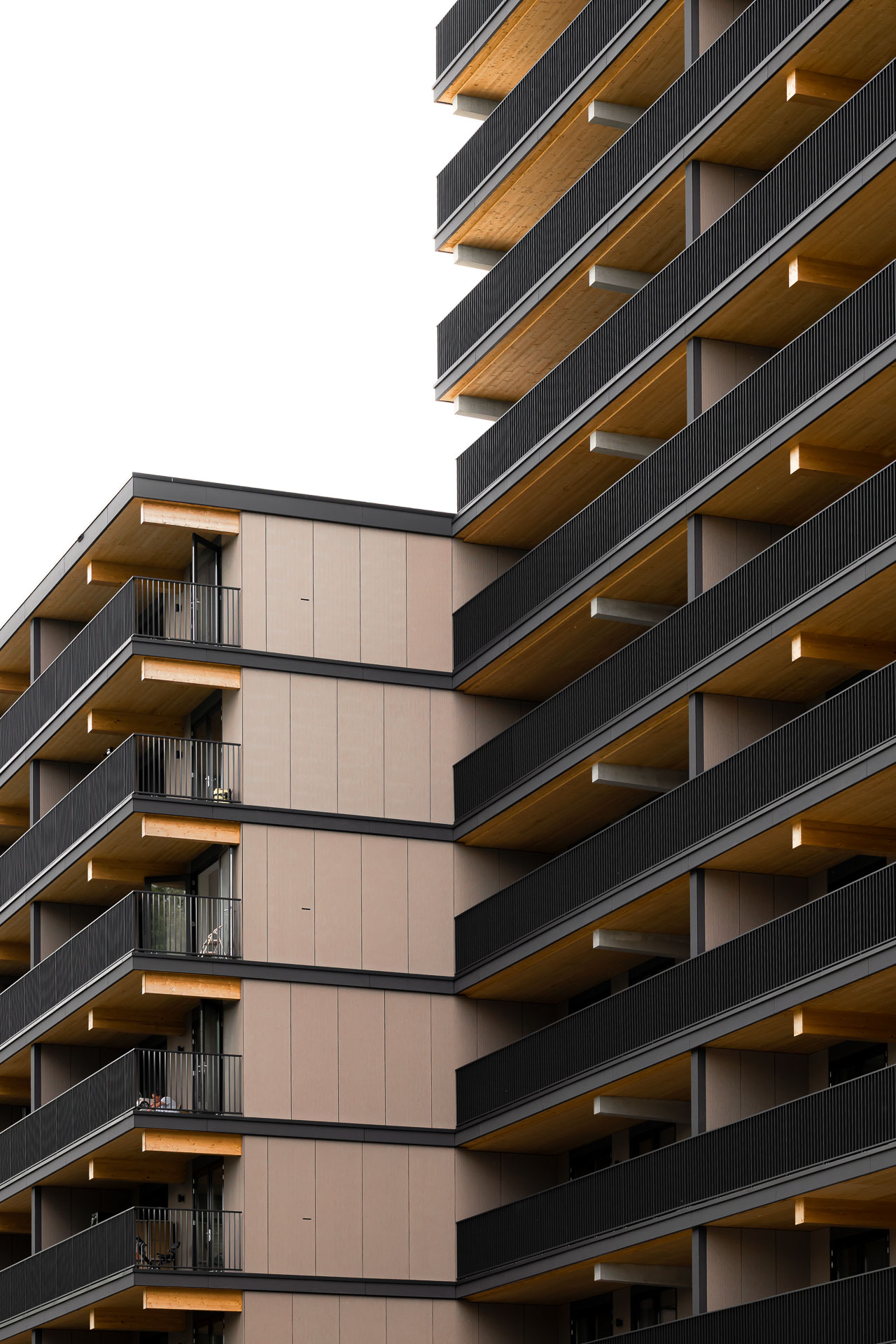
The staggered heights are a nod to the previous building. © Sebastian van Damme
Materiality in relation to the surroundings
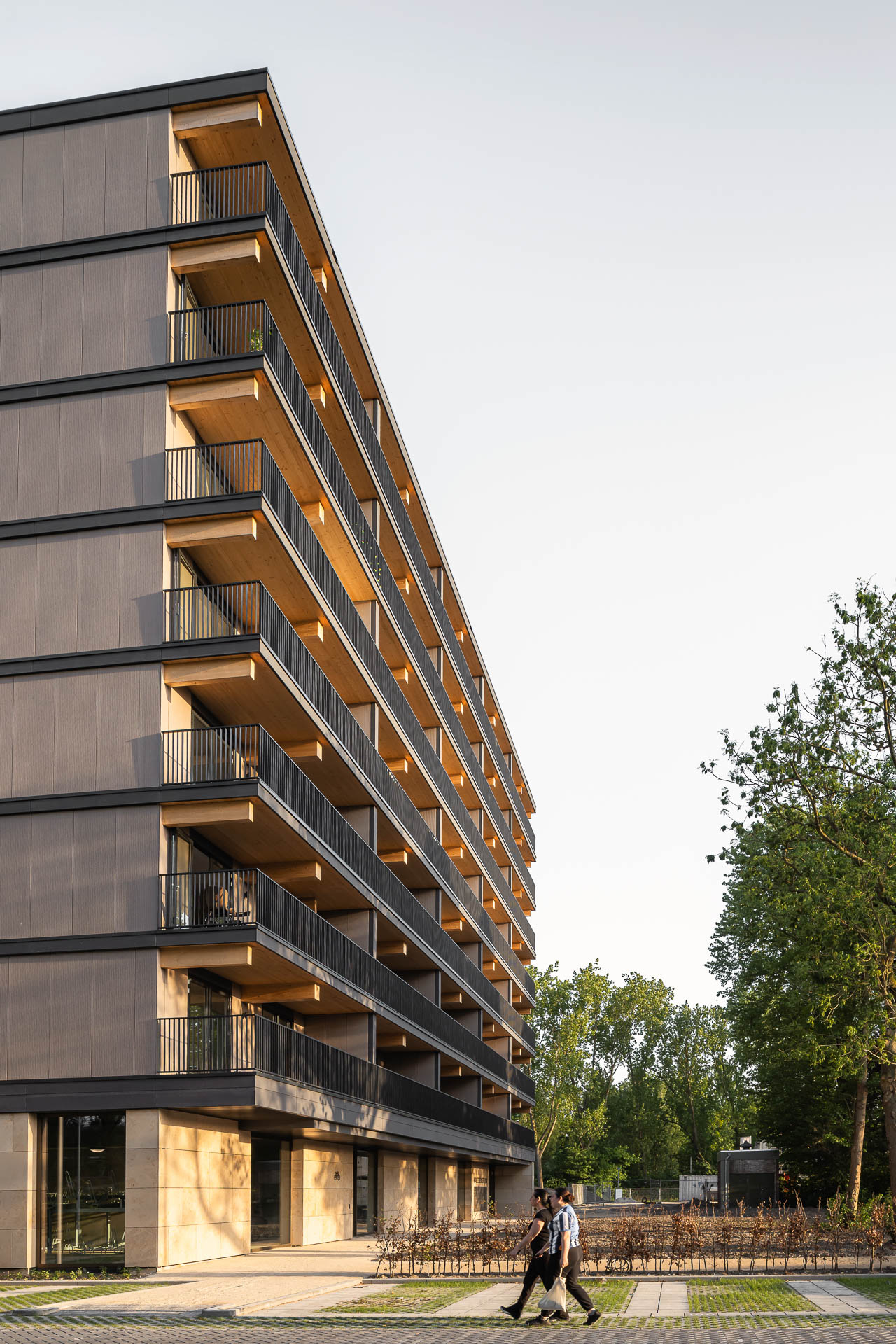
Apart from the ground floor, lift shafts and stairwells, the entire supporting structure is made of cross-laminated timber. This lightweight construction enabled the building to be constructed on the existing foundations of the former building. No adhesives were used in the construction process, meaning the building can be dismantled if necessary. In order to reduce material consumption and waste, the dimensions of the prefabricated timber elements were precisely coordinated, and they were then clad with plasterboard including insulation material. The base floor is clad with travertine, a robust limestone that is easy to work with and was frequently used in the post-war reconstruction phase. Above this are removable fibre cement panels in light brown and anthracite. These panels are durable and echo the appearance of the timber construction, emphasising the building's sustainable and circular nature.
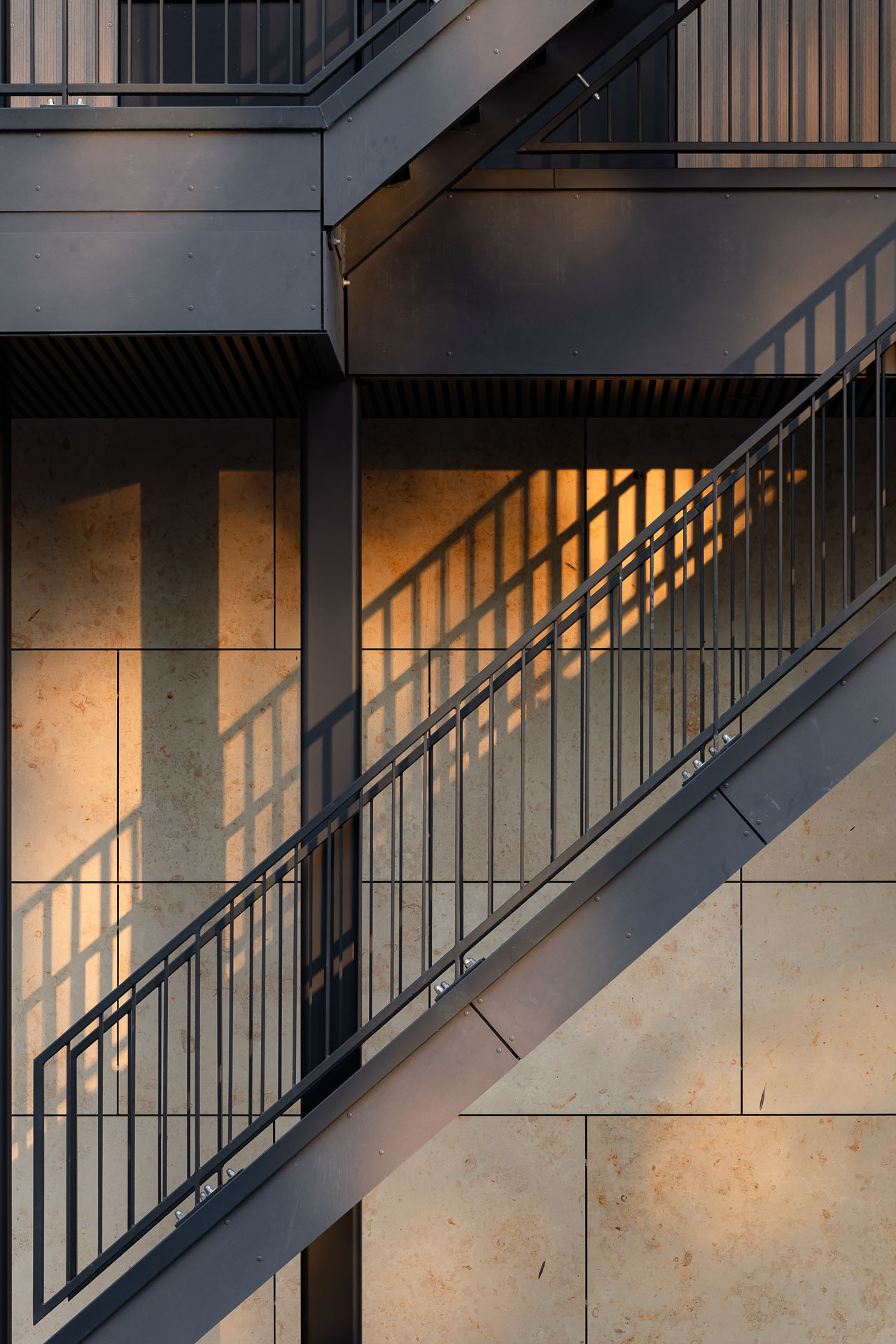
The ground floor is clad in travertine. © Sebastian van Damme
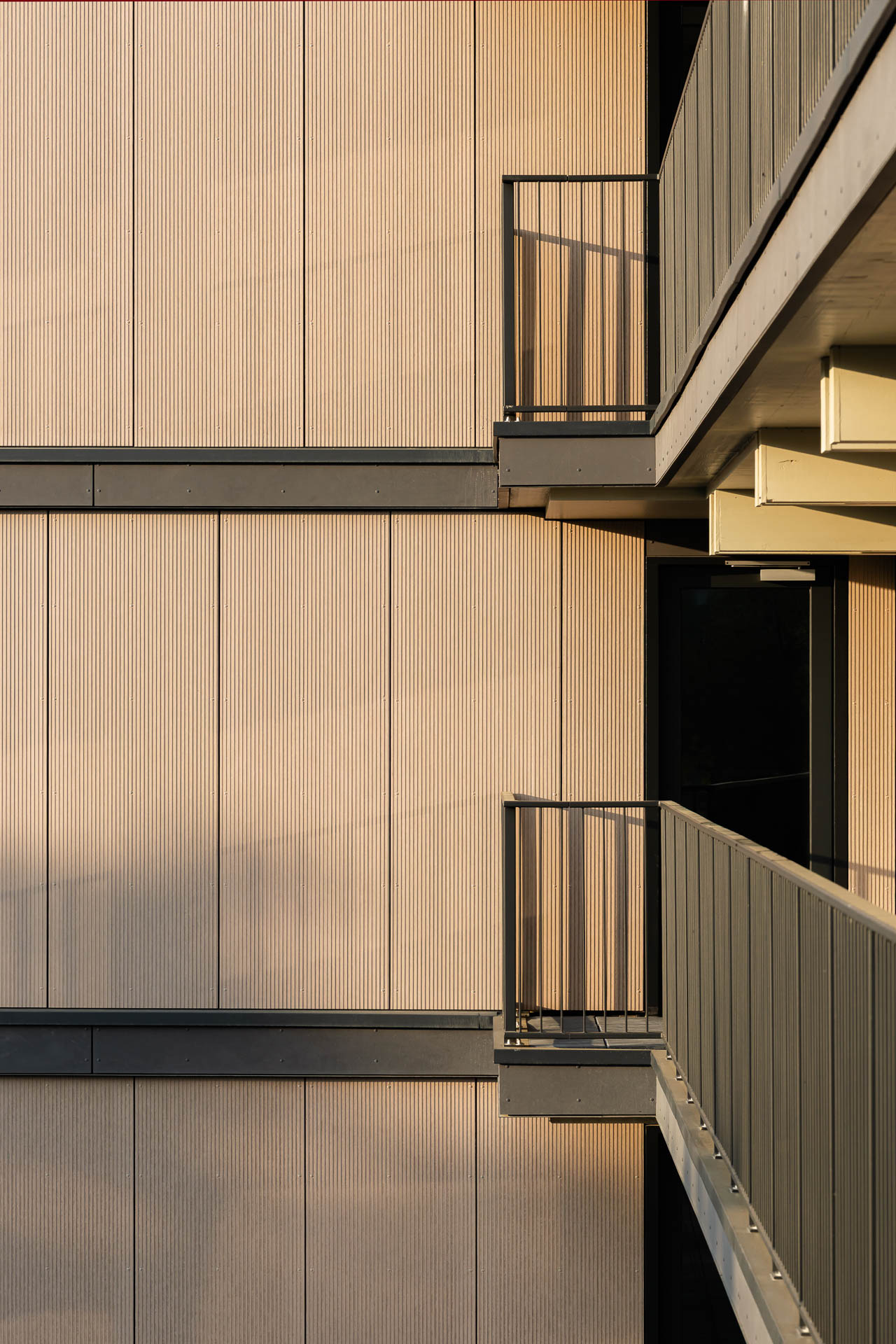
The upper floors are clad in removable fibre cement panels. © Sebastian van Damme
Connection to nature
The ecological approach is also evident in the outdoor area. A park-like garden, designed by LAP Landscape & Urban Design, surrounds the house. West-facing balconies offer sweeping views and strengthen the connection to nature. The building also promotes biodiversity. Nesting places for birds and bats have been incorporated into the facade. Valckensteyn demonstrates that affordable housing can be sustainable, innovative and economically viable.
Further information on sustainable construction can be found in our Detail Inspiration database: With the Floating Office Rotterdam, Powerhouse Company is realizing a fully reusable, energy-positive building on the water.
Architecture: Powerhouse Company
Project team: Stefan Prins, Daphne Delissen, Albert Takashi Richters, Daan Masmeijer, Kaan Kalak, Nick Huizenga, Stefan de Meijer
Bauherr: Woonstad Rotterdam
Standort: Burghsluissingel 100-510, 3086 VD Rotterdam (NL)
Generalunternehmer: Waal
Tragwerksplanung: Pieters Bouwtechniek
Holzbau: Binderholz
Holzbau (Ausführung): Linkwood
Gallery


