
Building bridges to nature
Santiago de Compostela Railway Station by Estudio Herreros
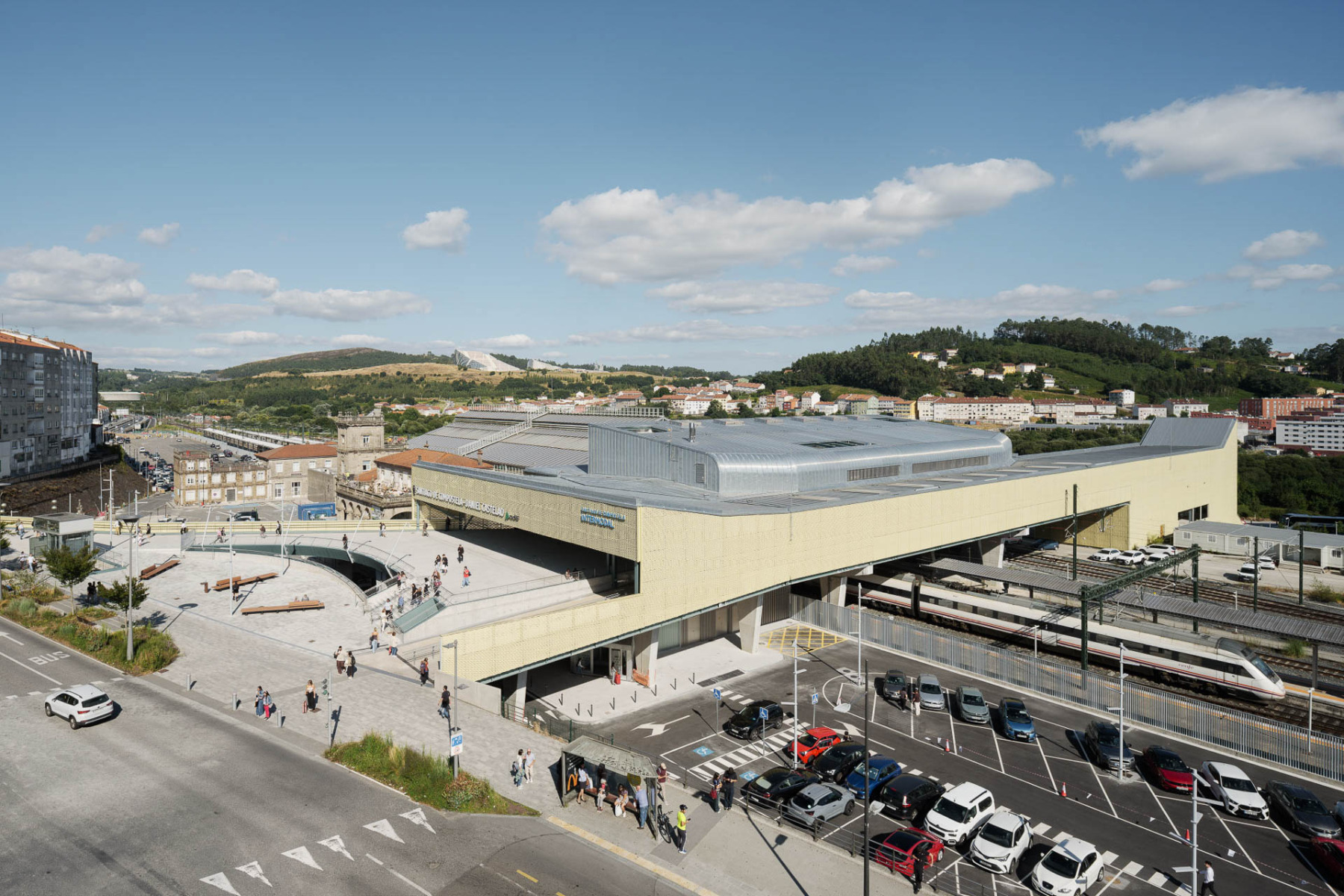
Overall view of the new station building from the west. The old station building can be seen in the background on the left, with the Ciudad de la Cultura above it in the background. © Luis Diaz Diaz
For around seventy years, the railway line to the south of the city centre formed an almost insurmountable barrier between the city centre and the southern suburbs. This limited urban growth, which had both advantages and disadvantages. On the one hand, the area around Peter Eisenman's Ciudad de la Cultura remained cut off from the rest of the city. On the other hand, however, the valuable Las Brañas de Sar nature park was largely spared from development.
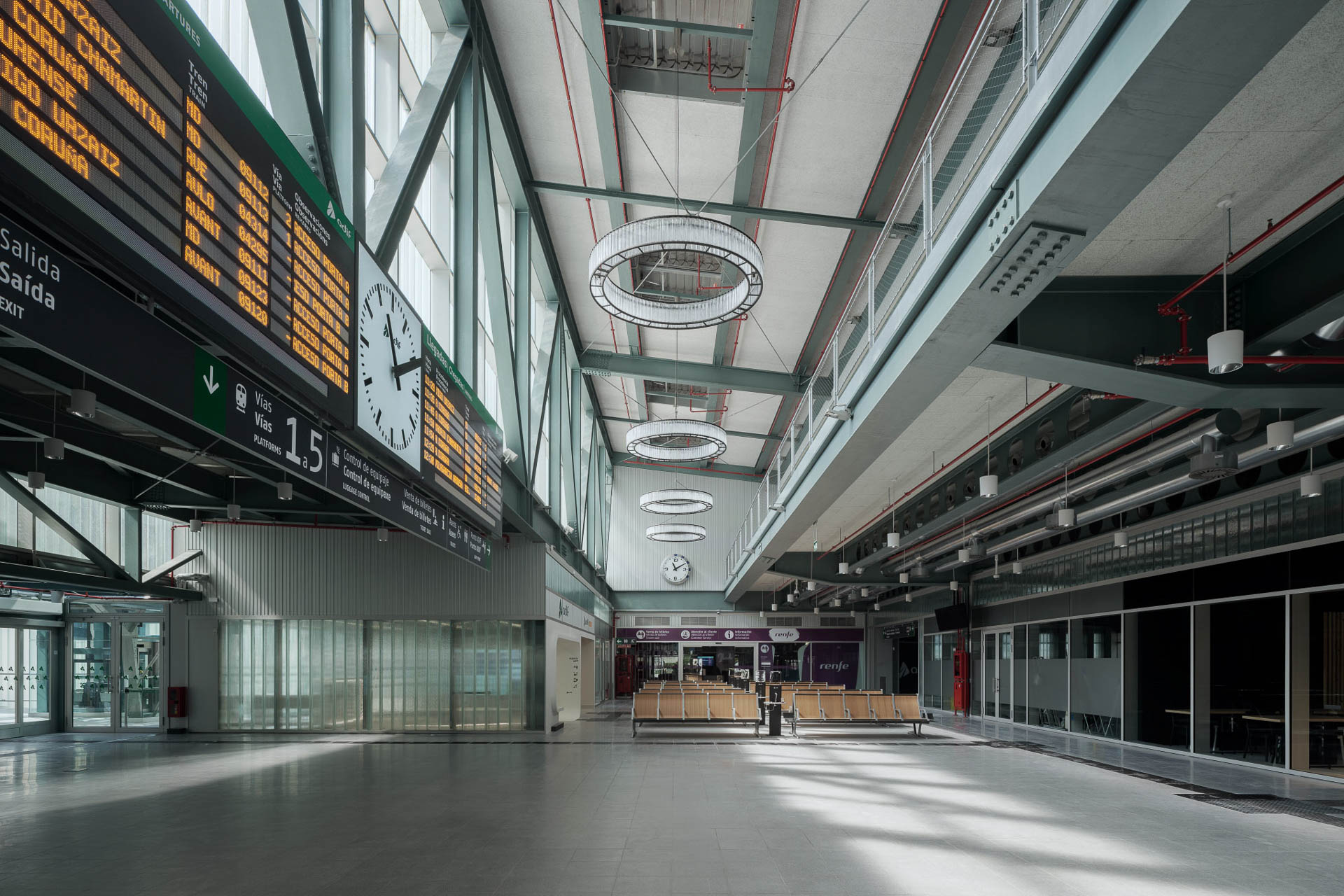
A wing with shops, ticket offices and offices connects the historic station concourse with the footbridge. © Luis Diaz Diaz
New entrance for high-speed traffic
Since 2011, a pedestrian bridge has connected the historic station building in the city centre with the bus station further south. Almost 15 years later, the extension to the main station designed by Madrid-based firm EstudioHerreros has now been completed. The project, which won a competition organised by Spanish railway company ADIF, was intended to provide a fitting entrance to the city, particularly for Spain's new high-speed trains and their passengers.
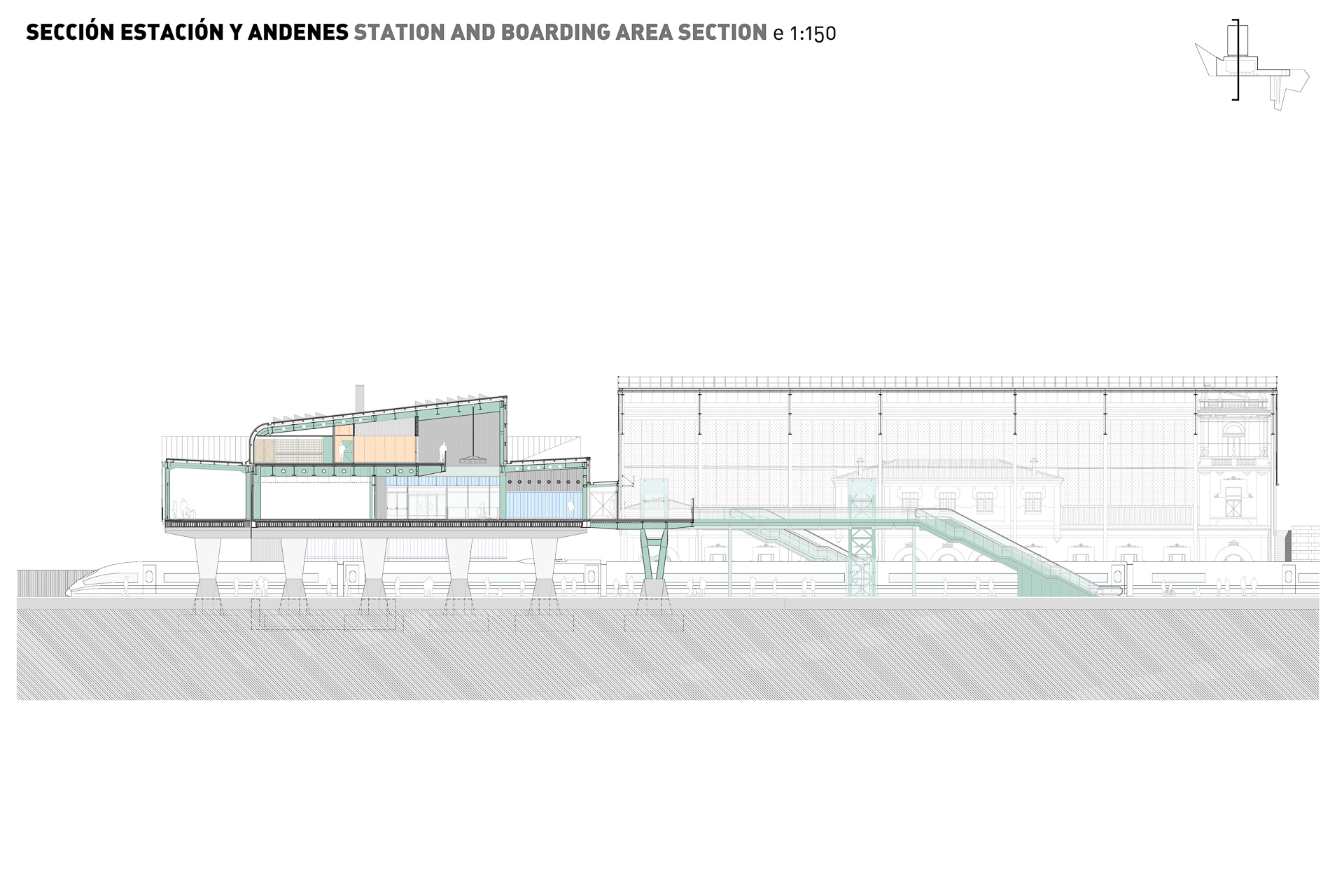
Longitudinal section, Graphic © estudioHerreros
Separate levels
Most passengers still travel to the station by public transport or on foot. Car traffic plays only a secondary role in comparison. The planning team therefore based its station extension on an access system familiar from many airports: taxis and private cars arrive on a lower level, while pedestrians from the city can access the building directly and barrier-free on the upper level.
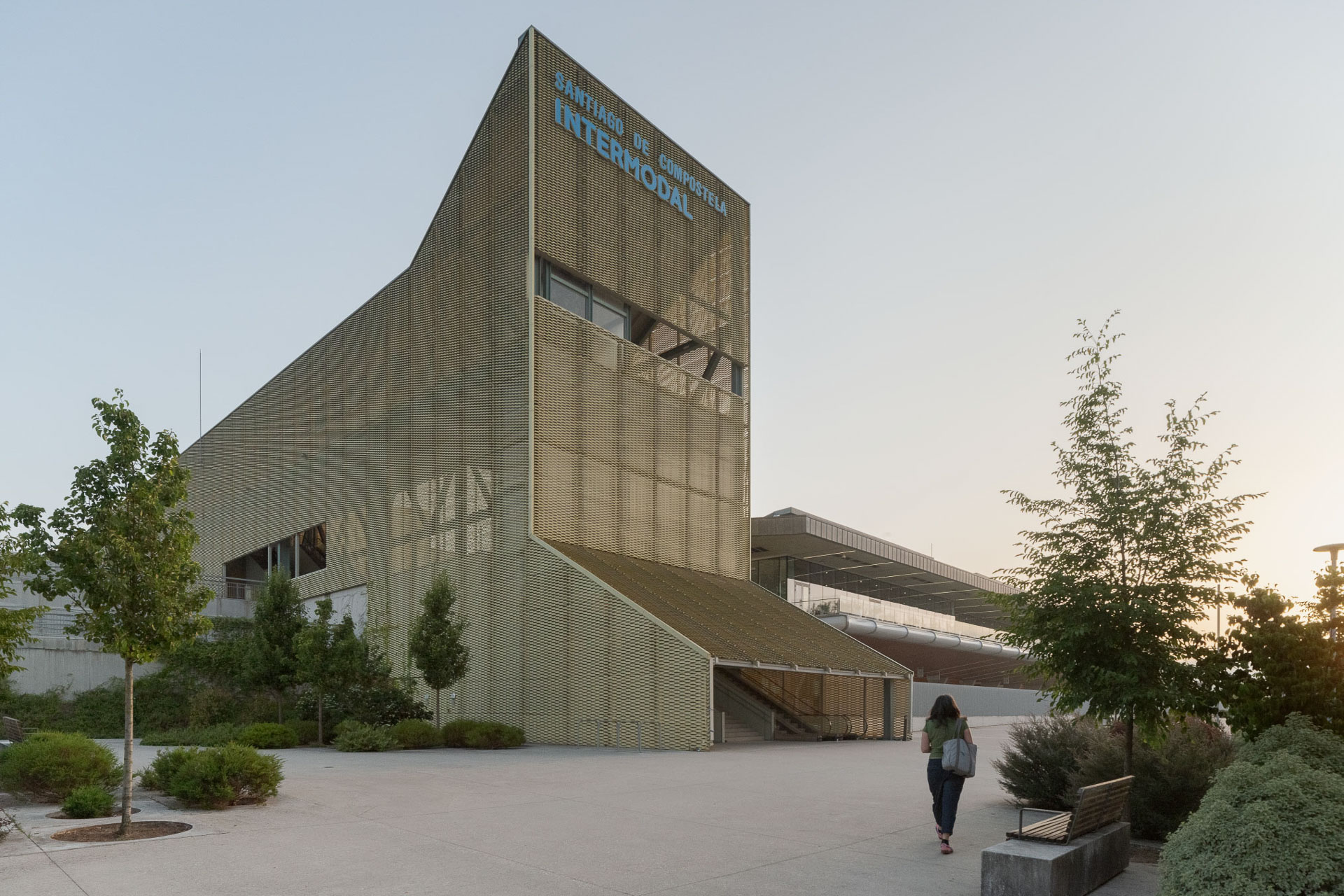
On the south side, the footbridge ends at a newly constructed forecourt named after the Spanish politician Clara Campoamor. The bus station can be seen in the background. © Luis Diaz Diaz
Expanded metal, steel and textured glass
To the west, a long station walkway clad in expanded metal provides a clear and unobstructed view of the building. To the east, it adjoins the historic station concourse. On the bus station side, it is flanked by an extension containing escalators, which EstudioHerreros has given a translucent facade made of textured glass. The planning team chose the same material for the two-storey facade of the shop and office wing at the junction between the walkway and the old station concourse. The coming years will reveal the impact that the station's new bridge will have on urban development. Following the fiasco surrounding the Ciudad de la Cultura — an architecture competition held in 1999, construction of which was halted in 2012 due to constant cost overruns, followed by the partial conversion of the half-finished buildings — the pilgrimage metropolis and capital of the province of Galicia would certainly welcome a success story.
Architecture: ADIF (Administrador de Infraestructuras Ferroviarias)
Client: estudioHerreros
Location: Rúa de Santiago del Estero, 75, A, 15702 Santiago de Compostela, A Coruña (ES)
Engineering planning: Prointec, BACBCB
Site management: INECO
Contractor: UTE Copasa + Taboada y Ramos
Gallery


