
The tree in the house
Boathouse in Scotland by Barboza Blanco Office
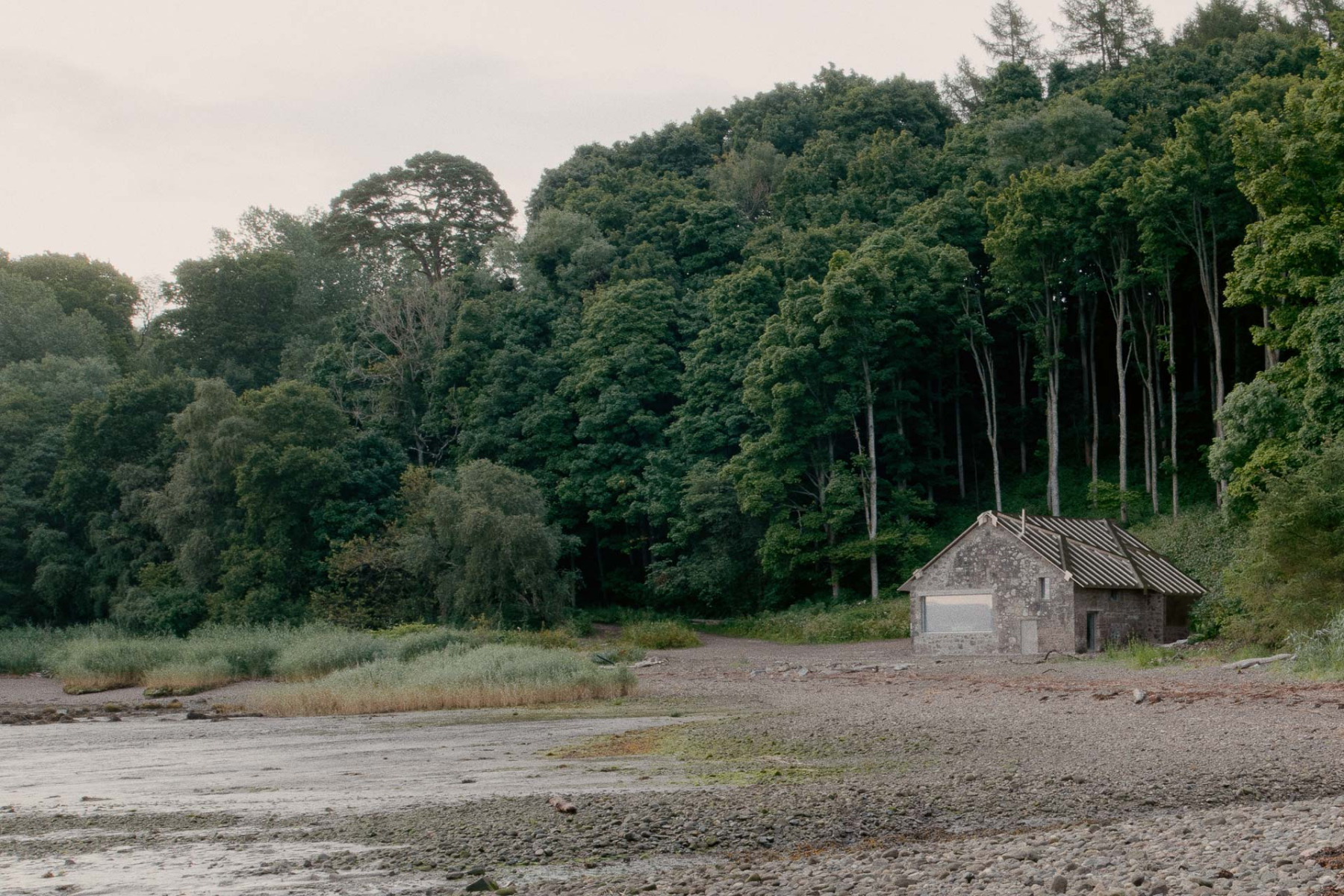
The unusual roof construction of the boathouse is evident even from the outside. © O.C. Photography
It sounds like an architectural love story: the client found a ruined four-walled structure without a roof on the banks of the Tay and decided to renovate it as a weekend home for guests. During the project, he became so fond of the building that he decided to use it as his own summer residence. Little is known about the house's history. However, its exterior walls, which are up to 6 m high and 60 cm thick, suggest that it was used for more than just storing fishing nets. While the location is unique, it is not very practical for everyday life, with water at the front and a dense forest at the back. There is no official road to the property. The nearest large town, Dundee, is an hour's drive away. Even Cupar town centre, in whose district the house is located, is more than 10 km away.
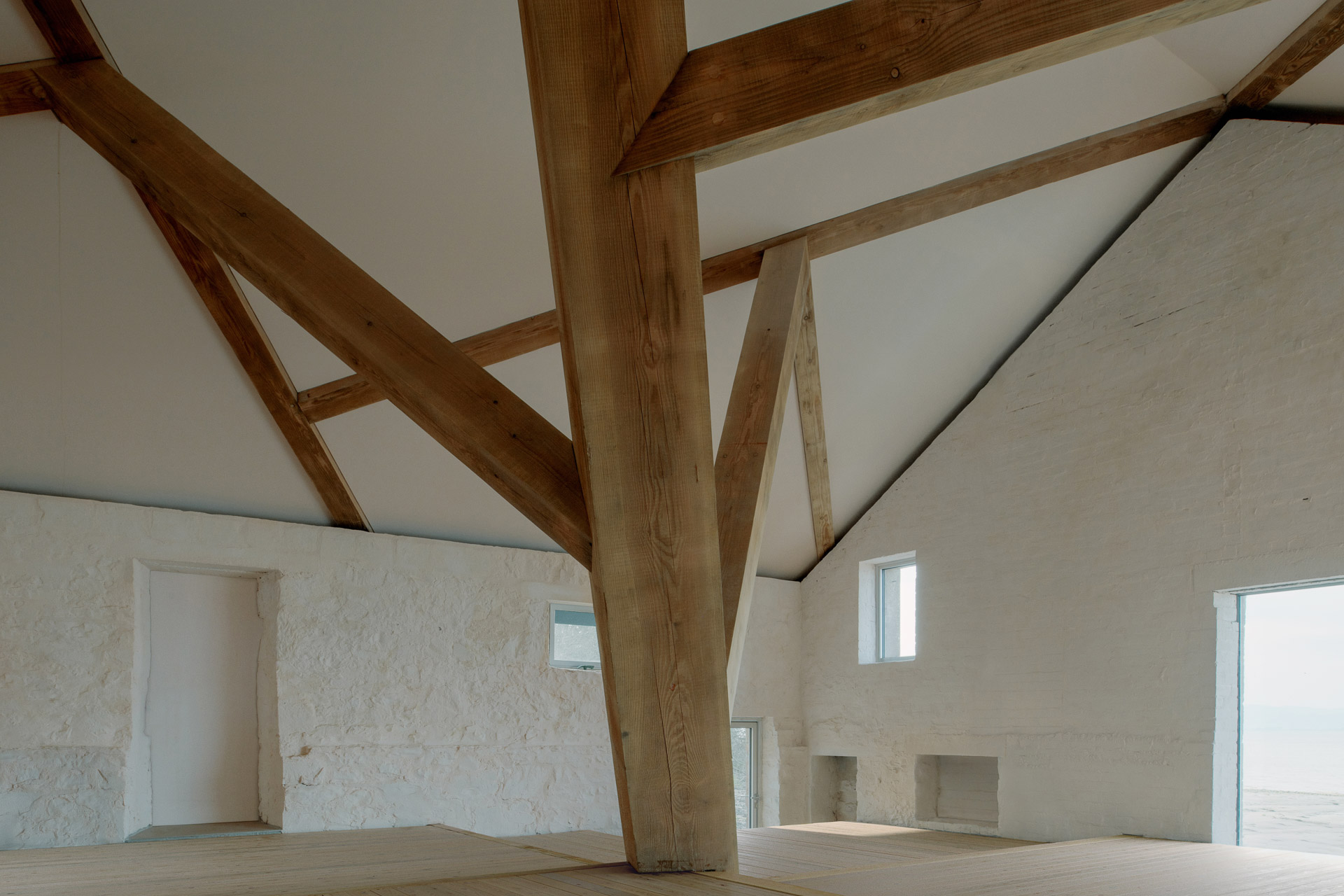
A single tree trunk, positioned in the centre of the room, supports both the roof and the floor. A large window offers a view of the Firth of Tay. The bathroom is located behind the bricked-up opening on the left. © Rohan Strathie
International cooperation, local resources
This was the first construction contract for the office of Brazilian architect Caio Barboza and his Spanish partner, Sofia Blanco, who had previously worked mainly in north-western Spain. Due to the remote location of the building site, Barboza Blanco opted to utilise local resources. They were able to make use of the fact that the wooded area behind the house was going to be cleared anyway. However, using the heavy equipment normally employed for this task would have unnecessarily compacted the forest floor. The architects therefore enlisted the help of local forestry workers and logging horses to harvest the tree trunks needed for the supporting structure of the new roof.
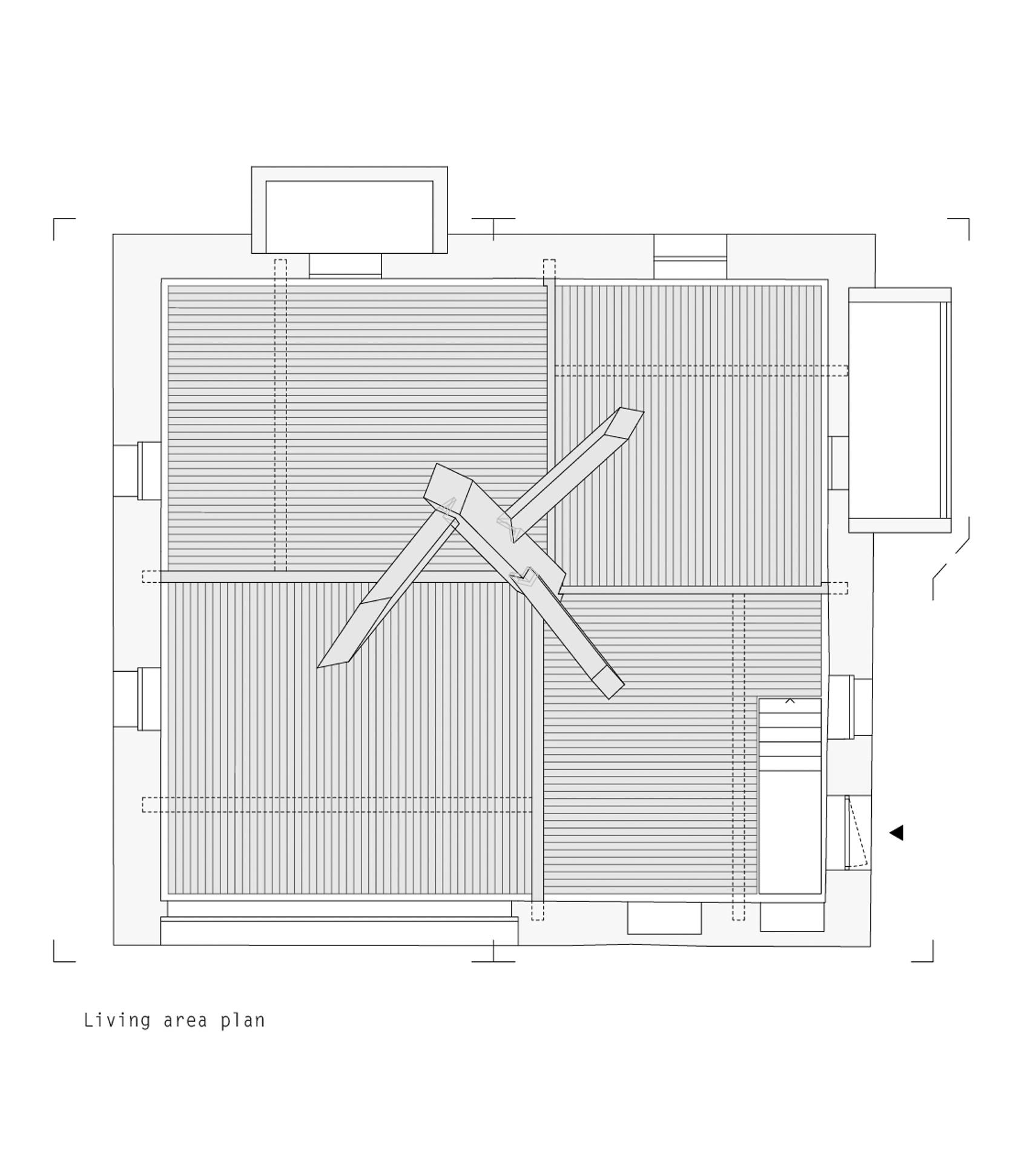
Floor plan of the boathouse, Graphic © Barboza Blanco Office
One trunk supports the entire house
Part of this wood now forms a new tree support in the middle of the house. This supports both the roof and the new wooden floor. Barboza Blanco used traditional mortise and tenon joints to attach the “branches” to the “tree trunk”. The floor is divided into four platforms of different heights to avoid weakening the central support unnecessarily. These platforms subtly zone the interior without the need for partition walls. The entrance to the house is located at the corner of the building, with a few steps leading up to a level that is safe from flooding and damp.
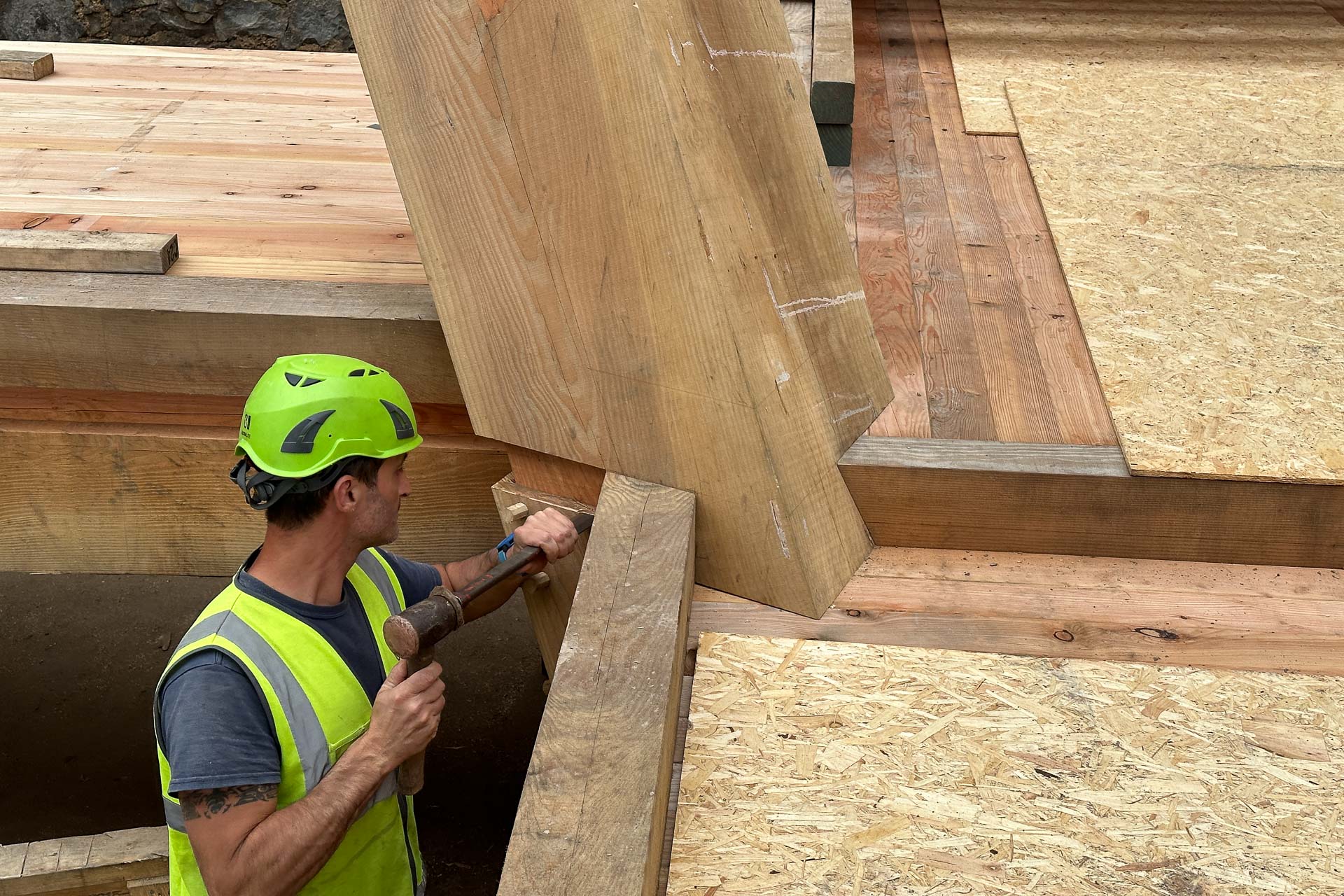
The wooden structure's branches were constructed using only carpentry techniques, without nails or screws. © Barboza Blanco Office
Fireplace heating, kitchenette and outdoor bathroom
Given its spartan aesthetic, it is almost surprising that the house provides everything necessary for a one-person household. A complete kitchenette runs along one long wall, and a bathroom with a utility room can be accessed separately from the outside. Barboza Blanco made use of the ample space beneath the floor slab for the water and sewage pipes. The boathouse is heated by a wood-burning fireplace in the outer wall next to the entrance. According to the architects, the client now spends most of the year here, by the water. So it seems that this love story is far from over.
Architecture: Barboza Blanco Office
Client: private
Location: Cupar (GB)
Carpentry business: Carpenter Oak
Gallery


