
New address with a striking effect
Busch & Takasaki Architects Create Wood and Copper Sculpture in Hamburg
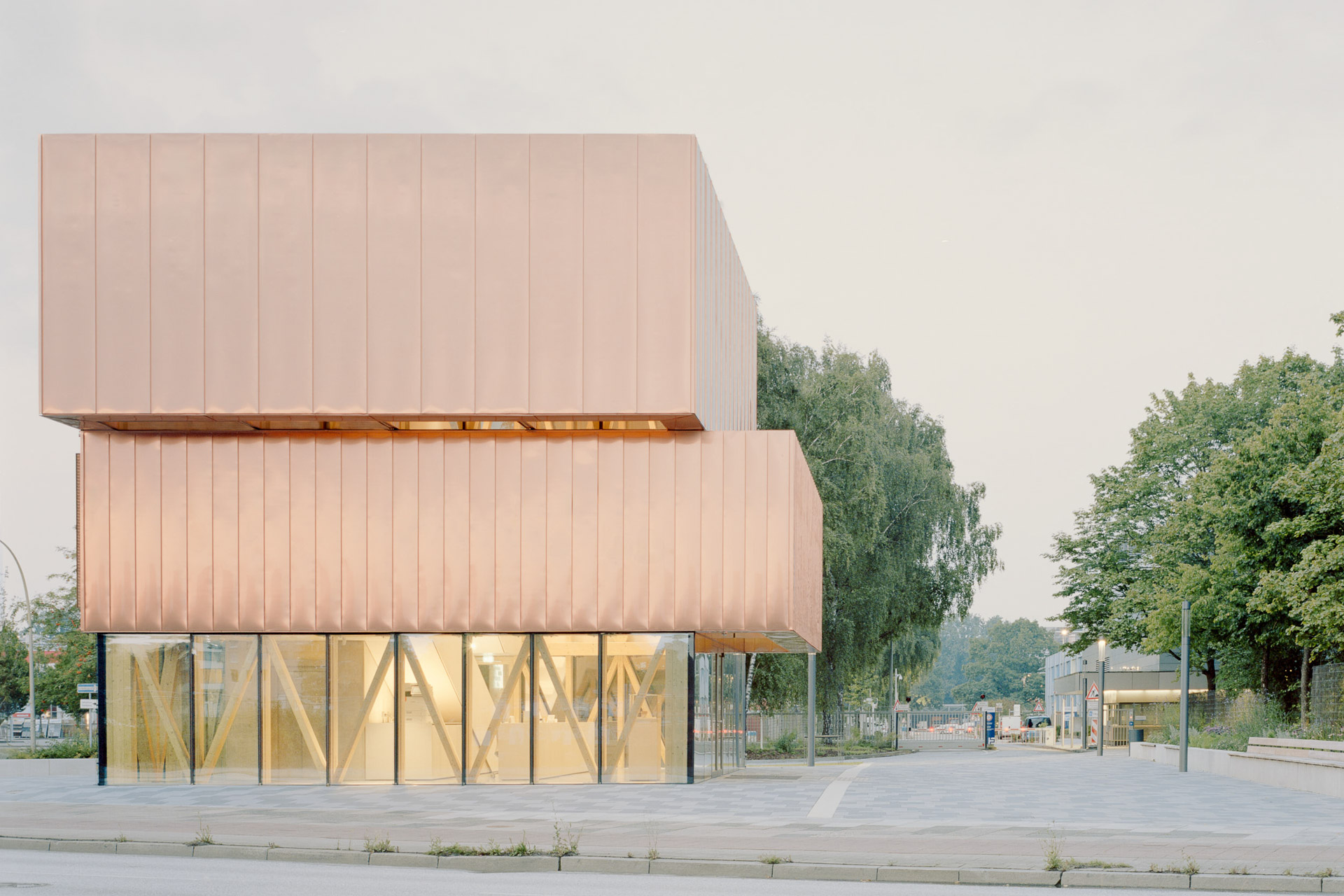
The design is characterised by a stringent sustainability concept. The central design idea is the use of resource-saving materials for the supporting structure and shell. © Bryn Donkersloot
On Bramfelder Chaussee, where there was no clear address to mark the location of the Hamburg Energy Networks campus previously, the sculptural pavilion now makes a visible statement. The three-storey building is set back from the street and can be seen from afar. It serves as a reception area, exhibition space, and meeting place for employees and guests. Busch & Takasaki Architects were responsible for the design, while gmp Architects oversaw general planning and construction management. The aim was to create a building that provides orientation, signals openness, and expresses the company's values of innovation, sustainability, and energy through its architecture.
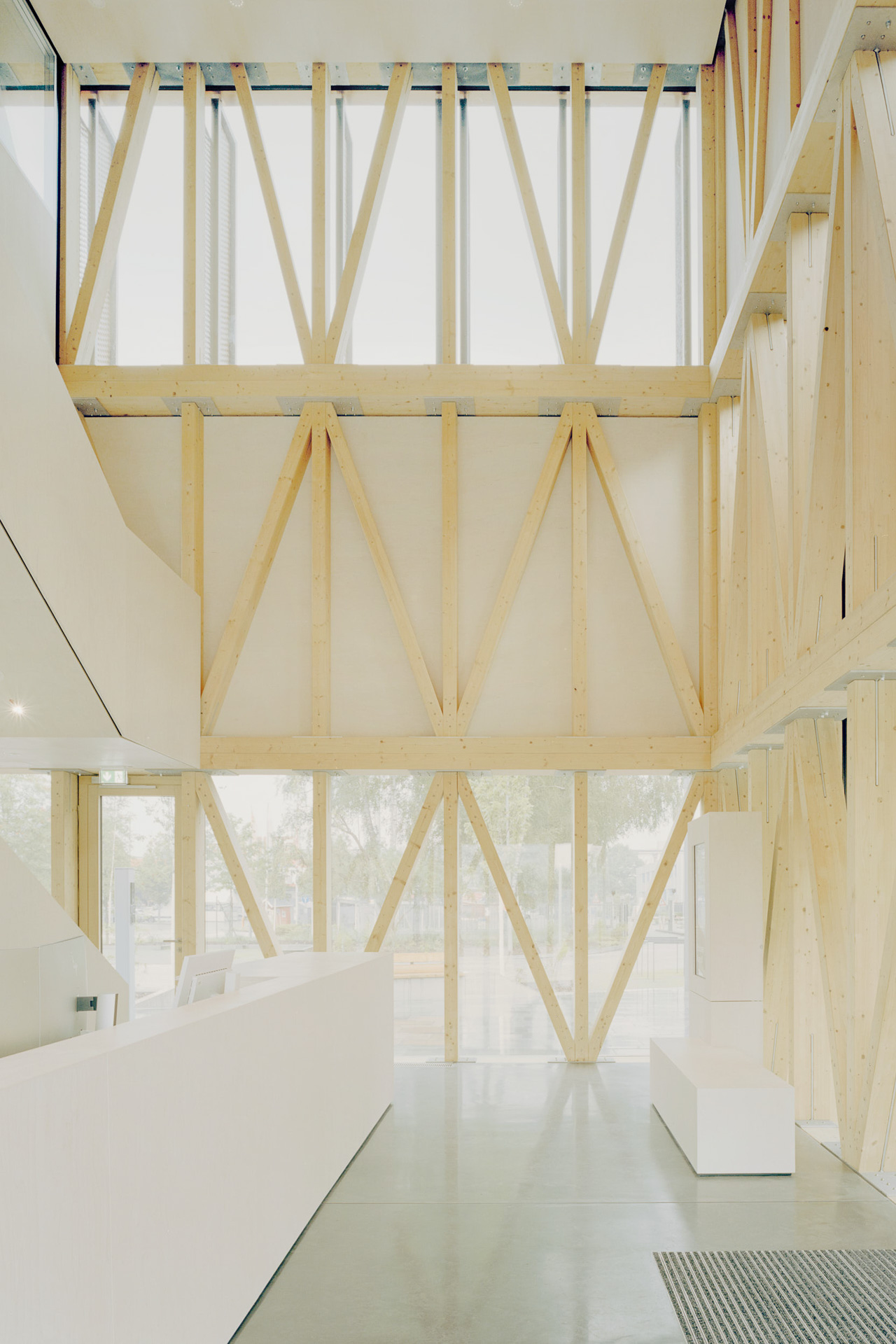
High-quality, linear staircases connect the various levels and emphasise the verticality of the exhibition space. © Bryn Donkersloot
Sculptural form and clear spatial structure
Designed as a vertical spatial sculpture, the pavilion is clearly distinguishable from the surrounding commercial and office buildings. Its various functions – reception, exhibition, meeting and break areas – are stacked compactly on top of each other and connected by an open staircase. Large glazed areas on the ground floor create transparency and link the interior and exterior spaces. Subtle projections in the facade direct the gaze and intuitively guide visitors to the entrance. Depending on the viewing angle, the building appears different: sometimes closed and monumental, and at others light and open – a clear yet changeable presence in the urban landscape.
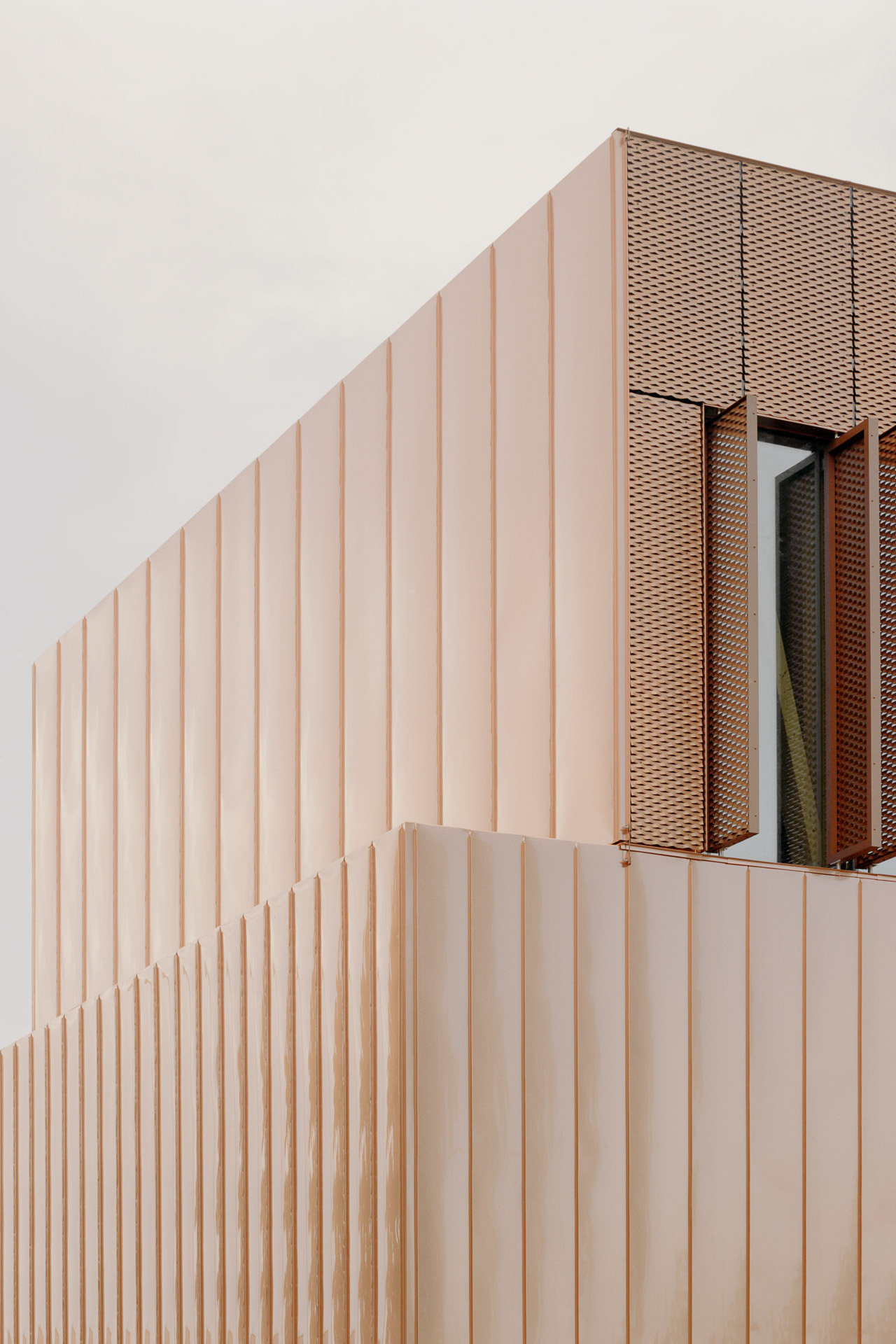
The copper facade serves as the shell, making it a highly visible, communicative and identity-creating material. © Bryn Donkersloot
Wooden structure and copper facade as identity carriers
The construction is based on a visible timber framework that forms the supporting and spatial structures. This creates a warm atmosphere, making it clear that sustainability is a design principle as well as a technical one. While the ground floor is fully glazed, the upper levels are clad with a copper facade. The vertical structure with standing seams and perforated elements creates depth and texture. During the day, the copper reflects the changing light, and at night, the building shines from within, creating a vibrant landmark on Bramfelder Chaussee.
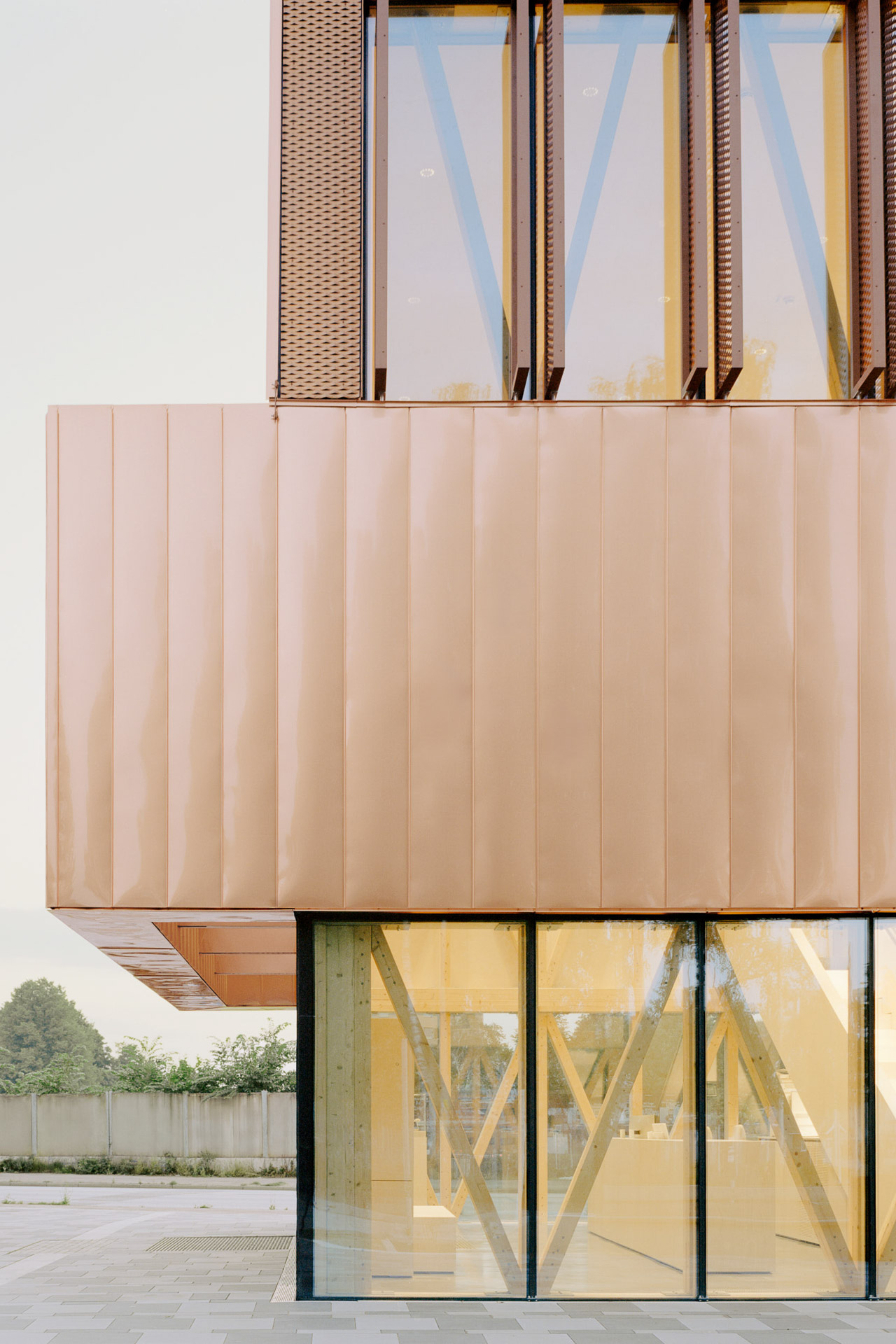
The ground floor is fully glazed, allowing the timber frame construction to be seen from the outside. © Bryn Donkersloot
Guiding principle: sustainability
The project follows a well-thought-out energy concept. A photovoltaic system on the roof supports electricity generation and heat is supplied via district heating. Underfloor heating ensures efficient operation. The ventilation system uses heat recovery. Active cooling has been dispensed with. The pavilion meets the highest accessibility requirements and is aiming for DGNB Gold certification. With its timber construction, use of recyclable materials, and avoidance of harmful substances, the building promotes responsible construction and establishes a new, distinctive presence for Hamburg's energy networks.
Design architects: Busch & Takasaki Architekten BDA
General planning, implementation planning, project supervision: gmp · Architekten von Gerkan, Marg und Partner
Client: Hamburger Energienetze GmbH
Location: Bramfelder Chaussee 130, 22177 Hamburg (DE)
Landscape architecture: gm013 Landschaftsarchitektur (LP 1-4), Bruun & Möllers / BBS (LP 5-9)
Gallery


