
Venice Architecture Biennale 2025
The Biennale, A Construction Site?
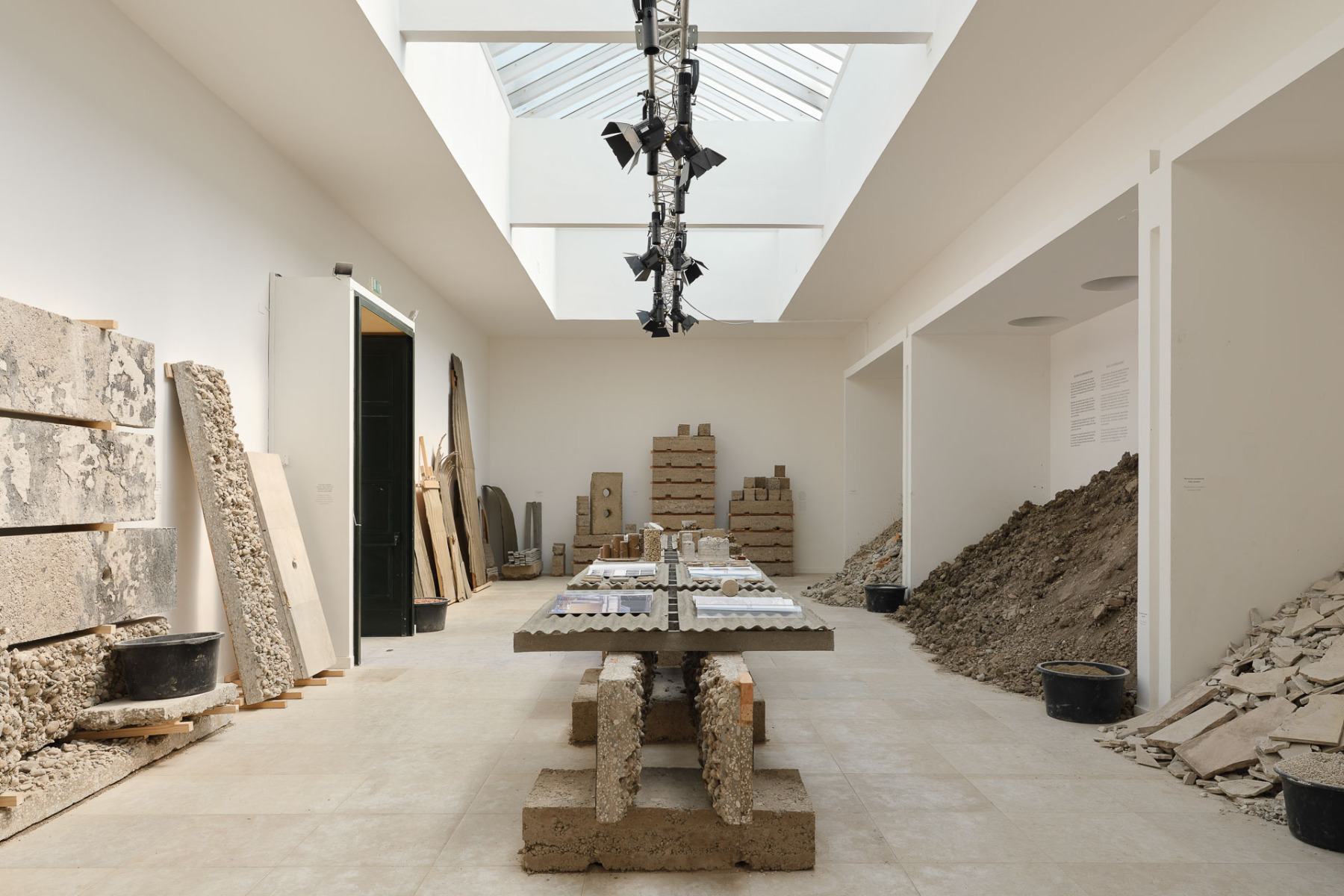
Architect Søren Pihlmann is turning the renovation of the Danish pavilion into an experiment and examining every detail. © Hampus Berndtson
Venice in spring 2025 appears as one vast construction zone. Facades are crumbling, cranes tower over luxury hotel renovations, and on Piazza San Marco (St. Mark’s Square) – the city’s lowest point – small excavation pits expose water just centimetres beneath the ancient paving stones. Here, drainage meets the reality of the lagoon. Flood seasons and relentless waves of tourism have left deep scars on the city’s architectural fabric.
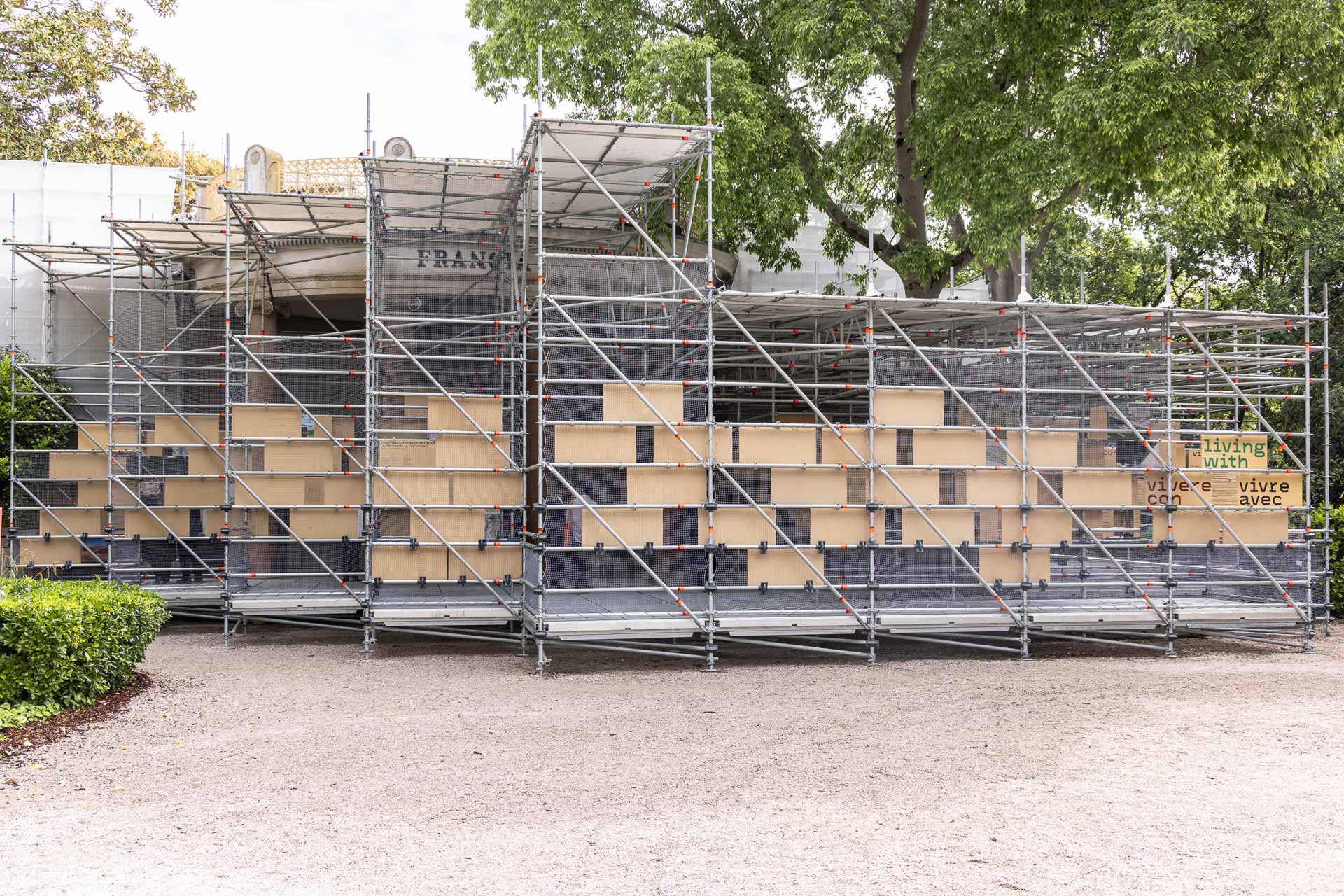
Scaffolding as statement: With the pavilion closed for renovation, Jakob+MacFarlane stage France’s contribution on the scaffolding outside. © Marco Zorzanello
Under construction
This context offers a unique opportunity for the Architecture Biennale. Renovation works are affecting not just Venice’s hotels but also the Giardini, where several national pavilions are currently closed. The Central Pavilion remains entirely off-limits due to construction. France’s response, “Living With/Vivre Avec” by Jakob+MacFarlane, is a temporary exhibition constructed on scaffolding outside the shuttered French pavilion. Denmark, meanwhile, turns restoration into reflection: Søren Pihlmann’s “Build of Site” transforms the ongoing refurbishment of the Danish Pavilion – originally designed by Carl Brummer in 1932 and extended by Peter Koch in 1958 – into an active field of investigation. With 95 % of the materials sourced from the original structure and site soil, it champions circular, resource-conscious construction.
Technology park meets natural building materials
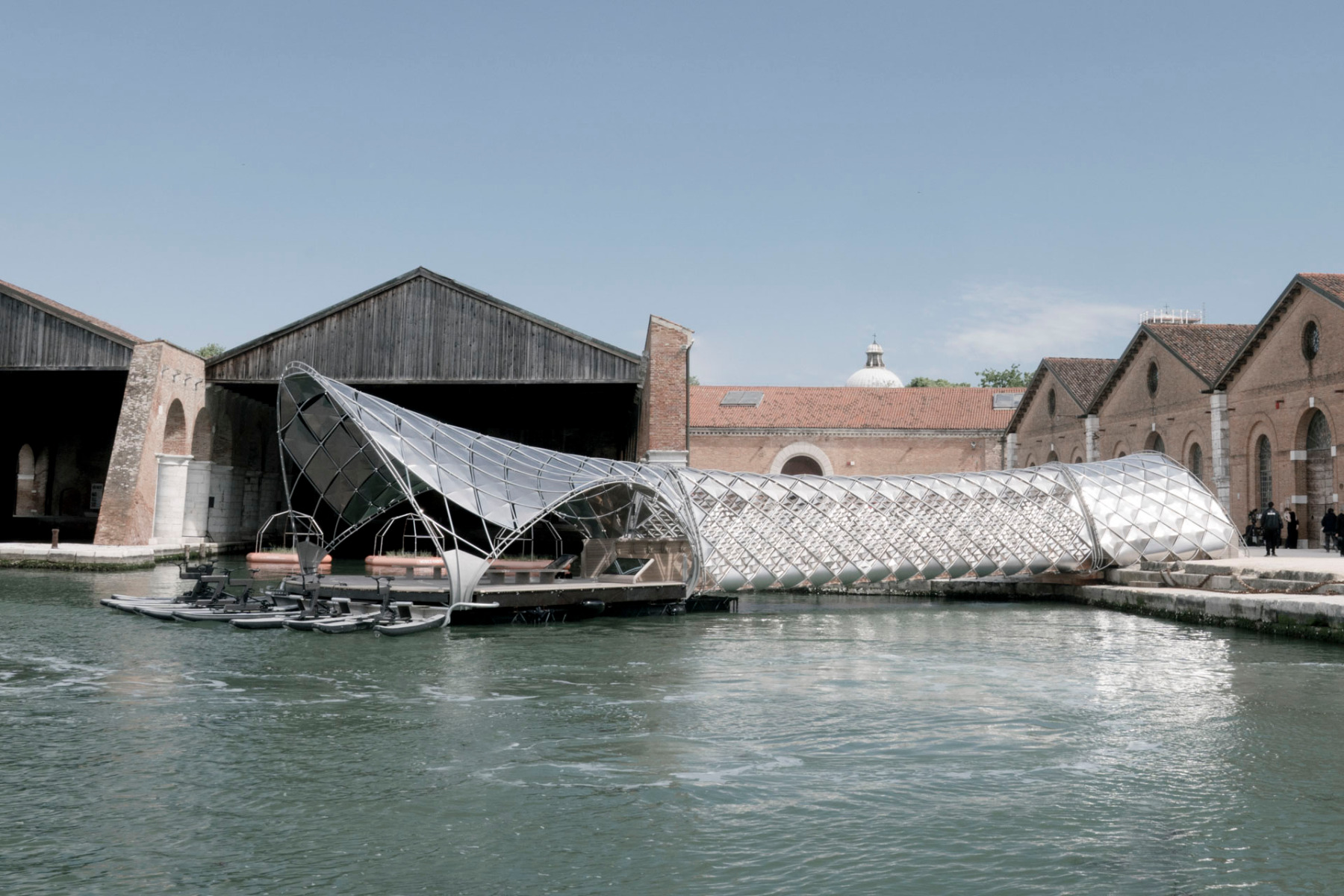
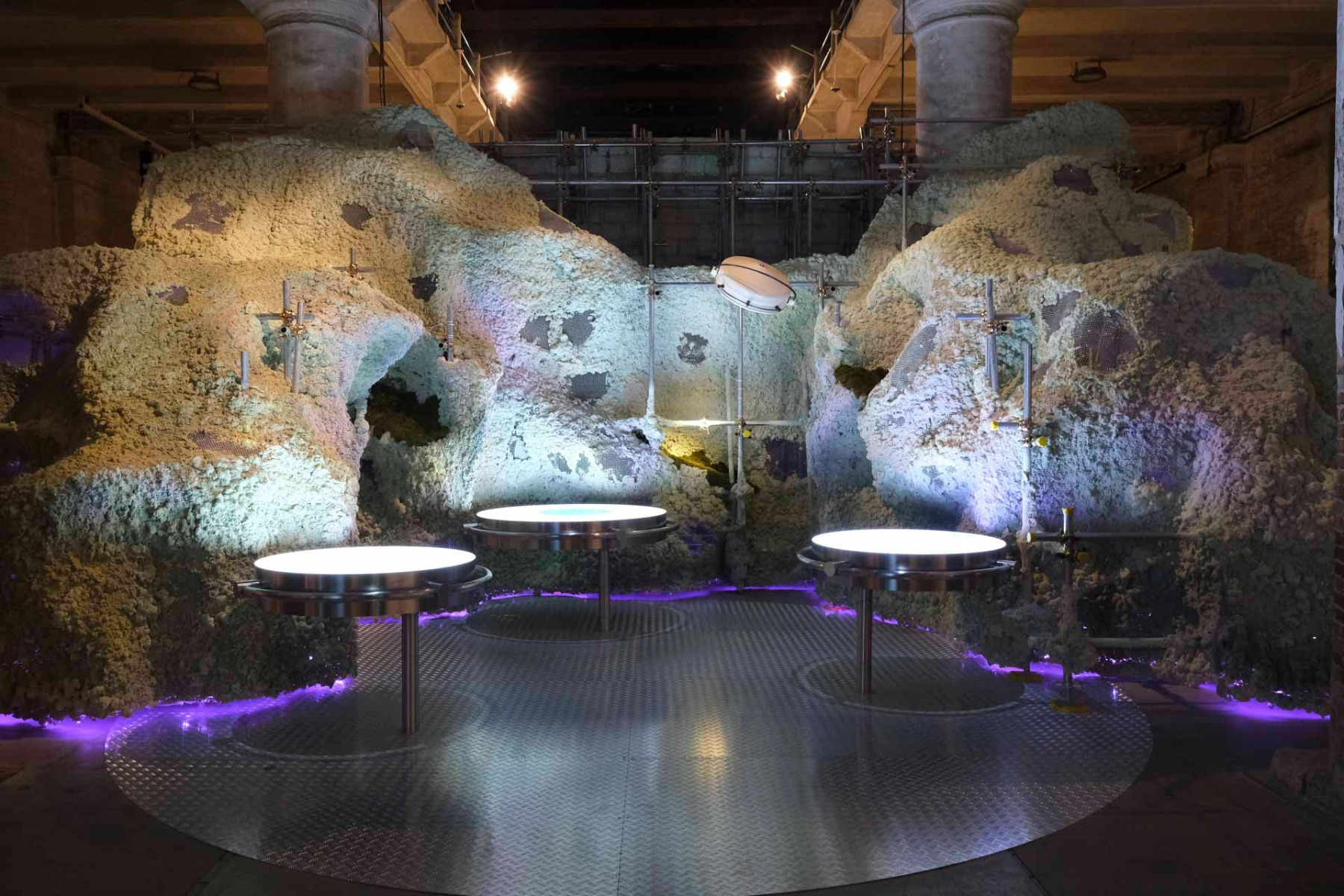
Elsewhere, the pavilions of Russia, Venezuela, and Israel remain closed in 2025. Their silence prompts uneasy questions about a Biennale that sees itself, at least in part, as a reflection of global affairs. How relevant are these nation-based exhibitions today? In the Arsenale, Carlo Ratti presents a sprawling techno-landscape where AI intersects with timber and earthen construction techniques – such as a woodcarving robot developed in collaboration with BIG – Bjarke Ingels Group. Beyond the main exhibition, visitors encounter other visionary proposals, including Norman Foster’s water bikes and docking bridge, as well as Bahrain’s “Heatwave” installation, which was awarded the Golden Lion.
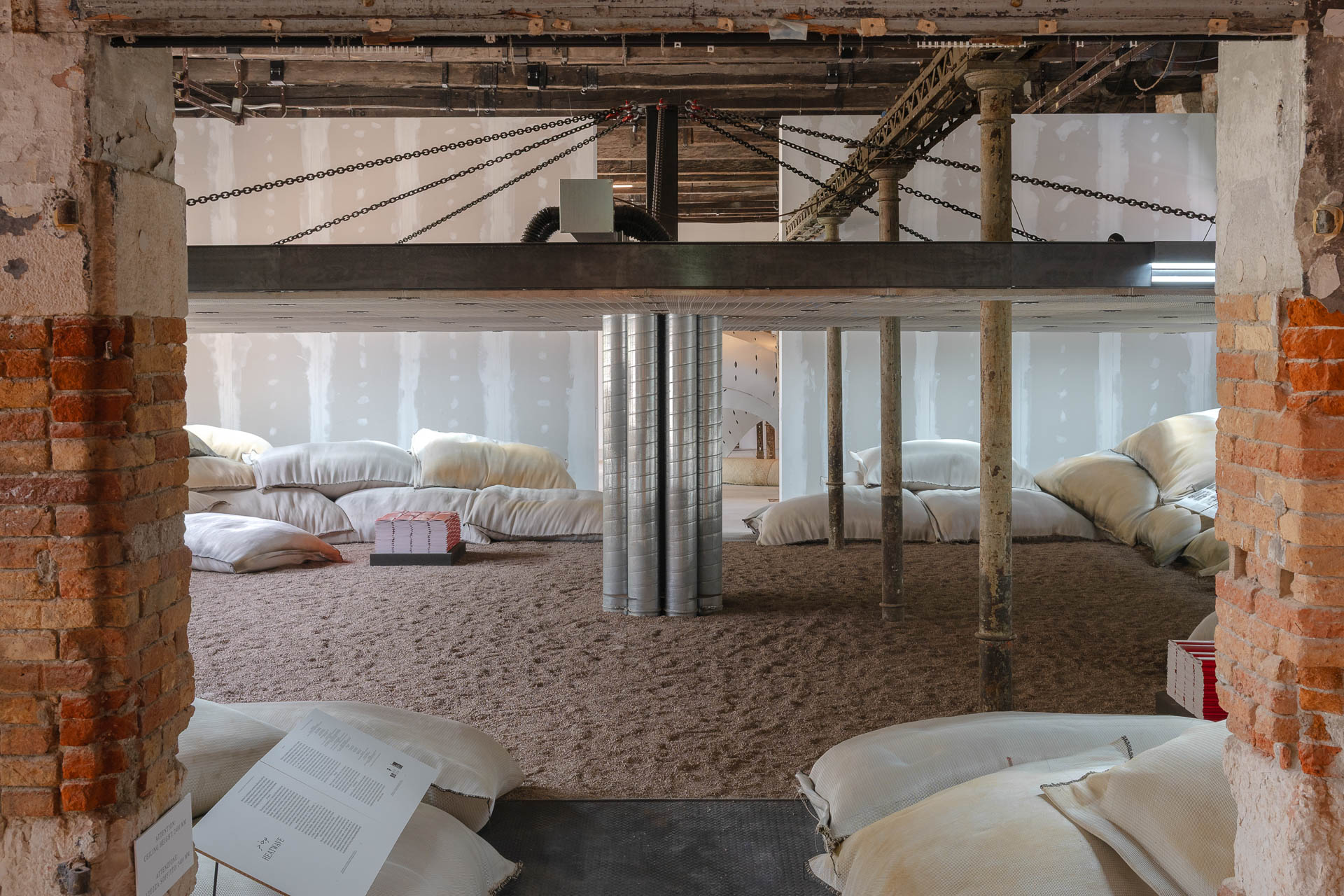
The installation ‘Heatwave’ from the Kingdom of Bahrain has been awarded the Golden Lion. © Ishaq Madan
Territorial balance
Spain’s “Internalities: Architectures for Territorial Equilibrium” in the Giardini demonstrates contemporary relevance with analytical clarity and aesthetic precision. The exhibition shows how decarbonisation and economic revival can be strategically aligned. In the Spanish Pavilion’s central space, 16 suspended models represent projects clearly in balance with their environments – grouped by region and by the local materials they utilise. “Each time we build one place, we deconstruct another”, emphasise curators Roi Salgueiro and Manuel Bouzas. Their focus is on the often-overlooked origins of building materials and the need for a more holistic understanding of resource use, including extraction – a topic the architecture and construction industries rarely confront.
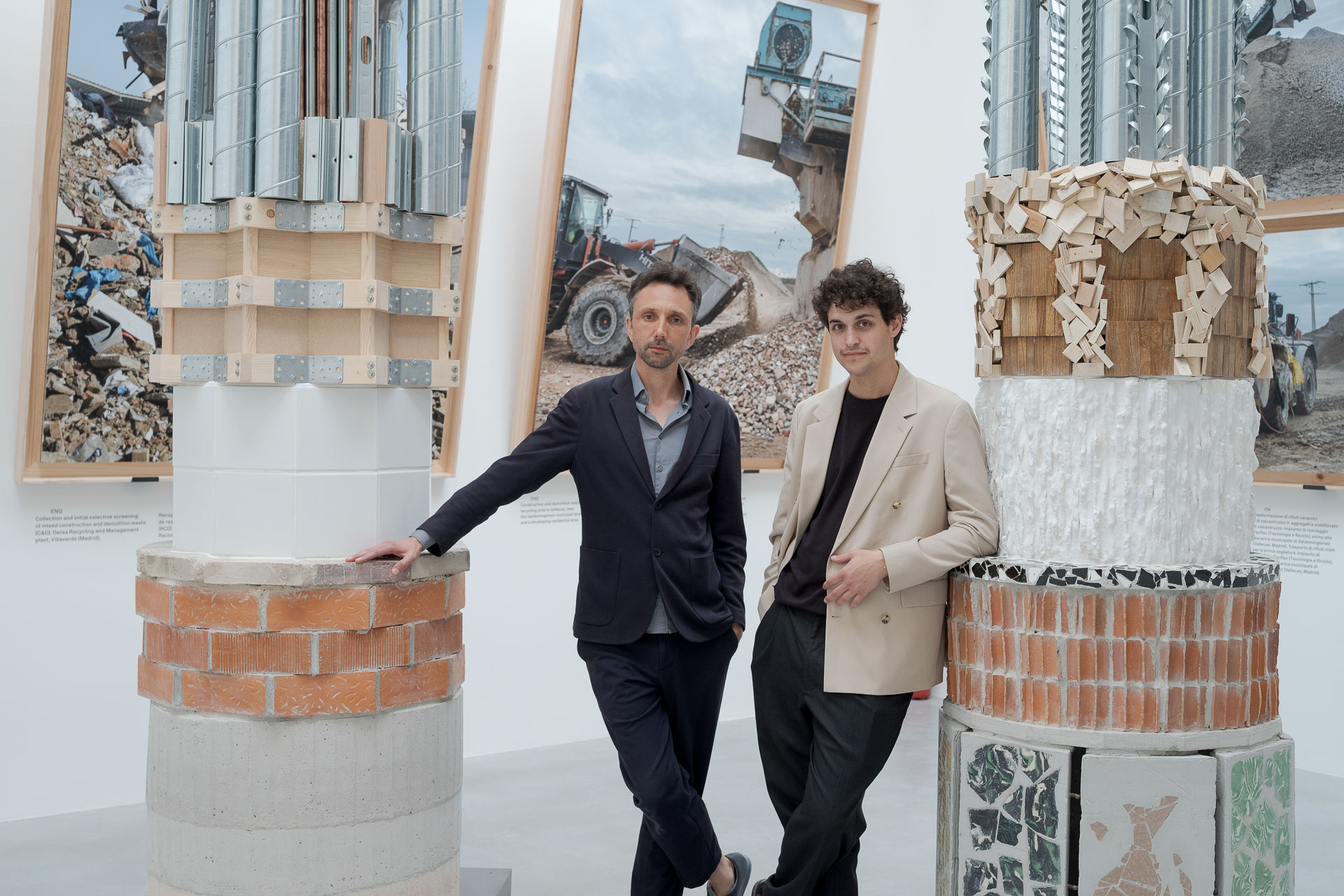
Roi Salgueiro (left) and Manuel Bouzas (right) address the decarbo-nisation of construction. The columns display building materials and their residual waste. © Luis Díaz Díaz
Technological change in the construction industry
Slovenia’s “Master Builders”, curated by Ana Kosi and Ognen Arsov (KIP, Ljubljana) in the Arsenale touches a different nerve: Who builds today’s world, and under what conditions? Four sculptural totems, each dedicated to a family of master artisans, highlight the paradoxes of technological change in construction. Has progress delivered better buildings? How do new technologies affect construction sites, processes, and professions? Kosi and Arsov argue for renewed collaboration between architecture and craft to achieve appropriate design results delivered with fair labour and proper compensation.
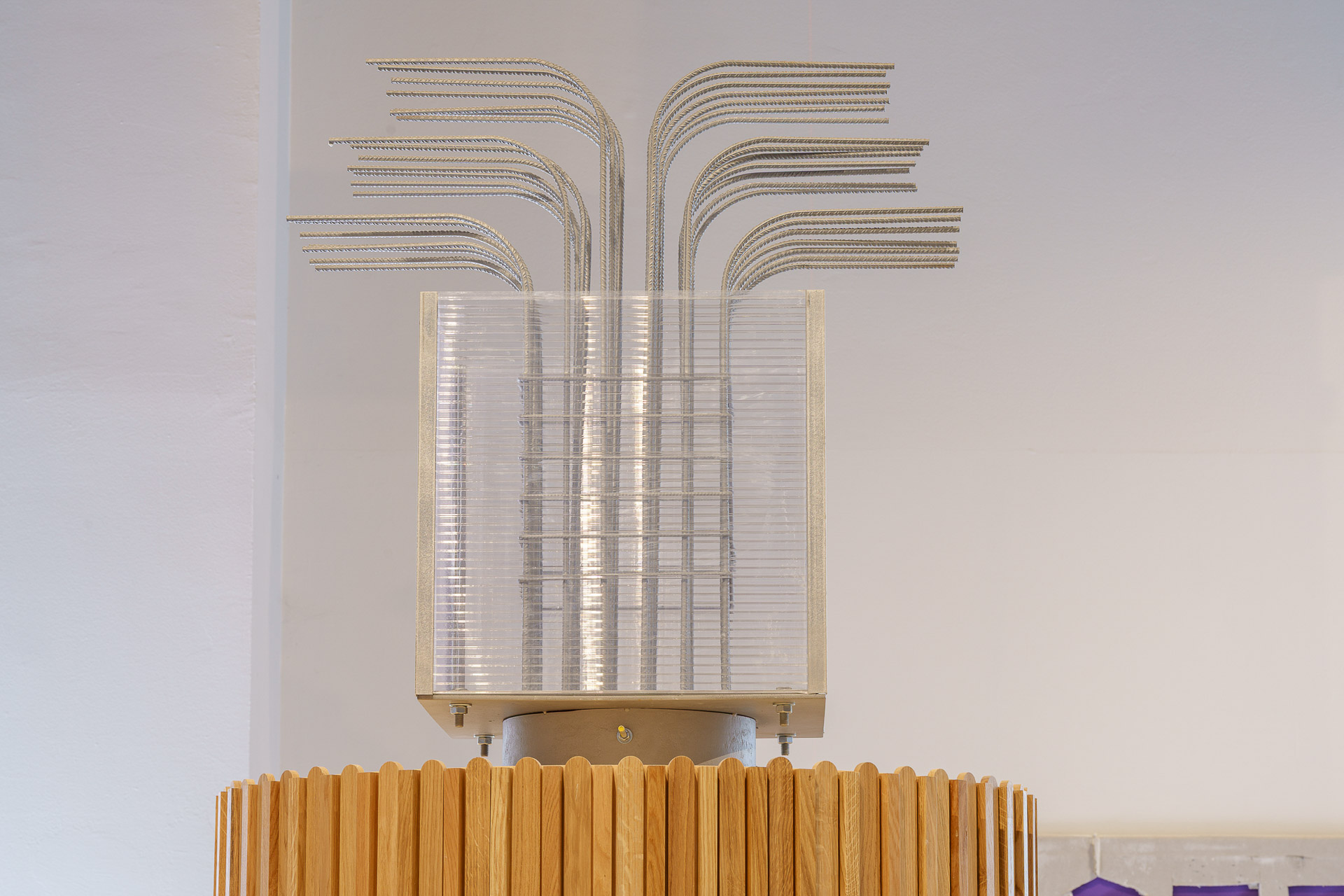
Master Builders: With sculptural totems of construction materials, the Slovenian contribution honours the vanishing role of skilled craft in contemporary building culture. © Andrea Avezzù
Desire and reality
Poland and Estonia both challenge building standards – in very different ways. Estonia’s “Let me warm you”, curated by Keiti Lige, Elina Liiva, and Helena Männa, exposes the absurdity of externally applied thermal insulation through the image of a corner house clad in ETICS. Poland’s “Lares and Penates”, curated by Aleksandra Ke¸dziorek with Krzysztof Maniak, Katarzyna Przezwan´ska, and Maciej Siuda, explores the notion of security in architecture and how it is perceived. The curators juxtapose standard props of the fear industry – surveillance cameras, fences, steel bars – with mystical protectors: saints, herb bundles, and other cultural talismans. The concept succeeds brilliantly, perhaps offering this year’s clearest example of how strong ideas can do more than big budgets.
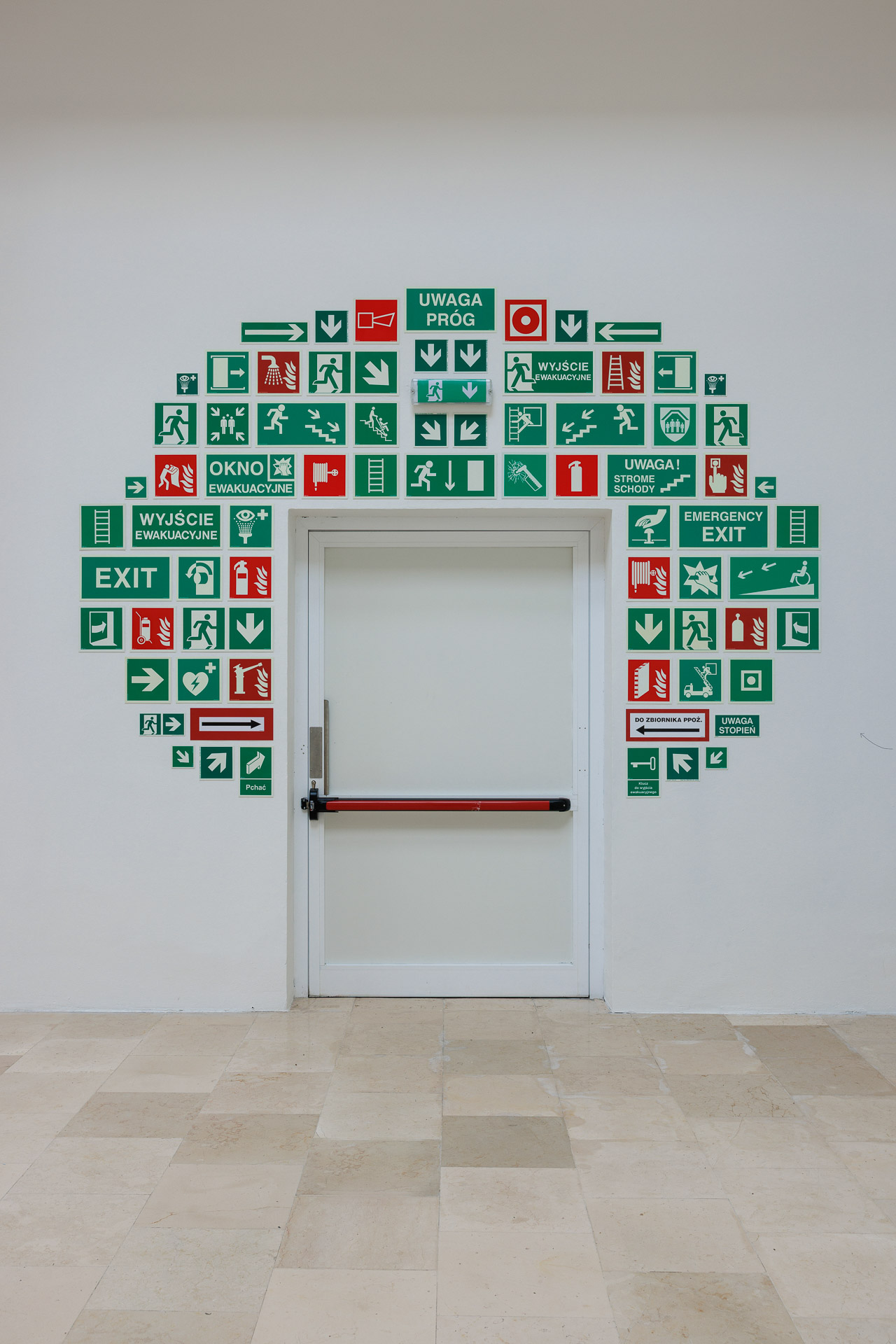
The Polish entry, Lares and Penates, questions building standards. © Jacopo Salvi, Zachęta archive
Japanese Pavilion: In-between worlds and realities
Curated by Jun Aoki, Japan’s contribution “In-Between” delves into the interplay of reality and liminal space through immersive architectural interventions both beneath and within the pavilion. Discrete building elements – windows, pillars, a void in the floor – are personified, engaging in dialogue with an AI that has “learned” their roles. The playful exchanges that unfold recalibrate our architectural awareness, making a bold step towards hybrid exhibition formats that draw insight from both AI and the Biennale.
Exhibition: 19. Biennale Architettura 2025
Exhibition venue: Venice (IT)
Exhibition duration: 10th of May until 23rd of November 2025
Opening hours: daily except Mondays, 11 am – 7 pm
Further Information: labiennale.org
Gallery


These articles might also interest you
-
Future of mobility
Gateway to Venice's Waterway by Norman Foster and Porsche
“Gateway to Venice's Waterway” is a joint research project of the Norman Foster Foundation and Porsche at the Architecture Biennale 2025. The prototype studies alternative urban mobility solutions.
-
Architecture Biennale 2025 in Venice
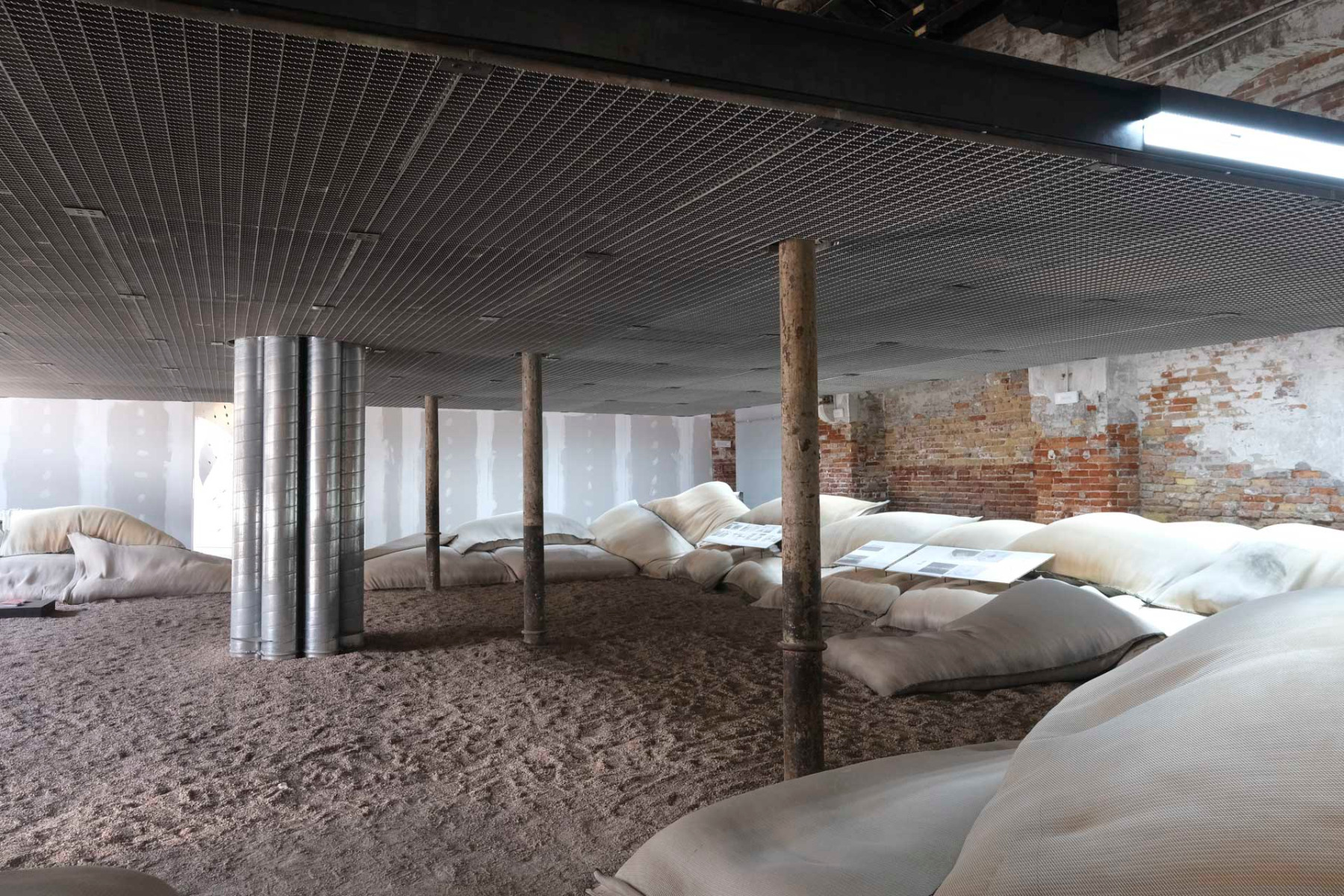
What Helps to Combat the Heat in Cities?
Global warming is most noticeable in the world's cities. At this year's Architecture Biennale, it is not only the German pavilion that is focusing on urban heat islands. The solutions presented range from tree planting to cooling ceilings for urban open spaces.
-
Architecture Biennale 2025 in Venice
Saving the World Out of the 3D Printer?
Material experiments using 3D printers are booming at this year's Architecture Biennale. But what real problems of our world are they supposed to solve – and by when?