
A duo of rammed earth and wood
Gässli 5 in Grabs by Allen + Crippa
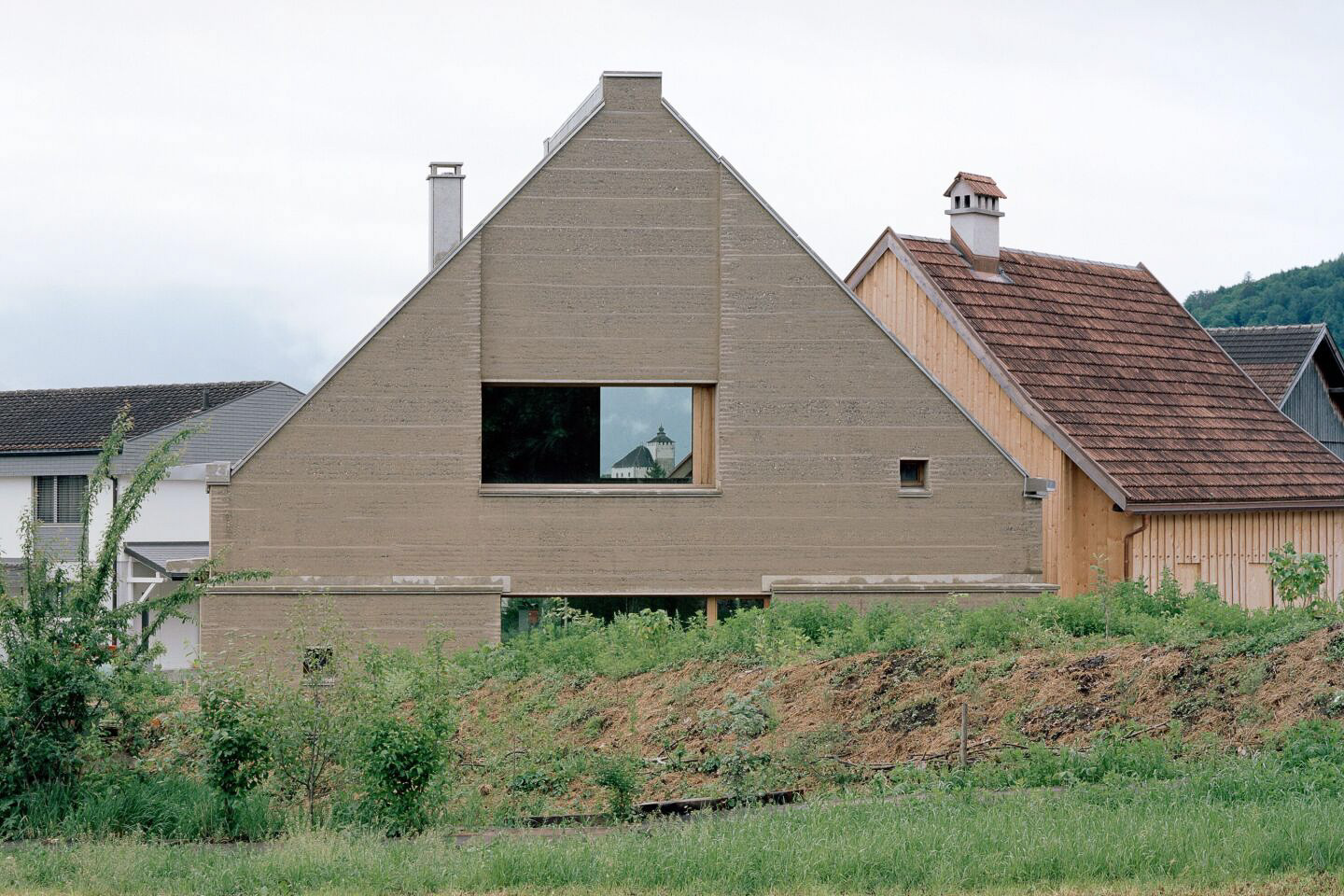
The new rammed earth building is connected to the historic half-timbered building across the corner. © Rory Gardiner
The historic half-timbered building in Grabs, a village in the canton of St Gallen, had been threatened with demolition. Uninhabited since 1968, the farmhouse was falling into disrepair. Despite its authentic character, it was eventually removed from the list of protected buildings and was due to be demolished.
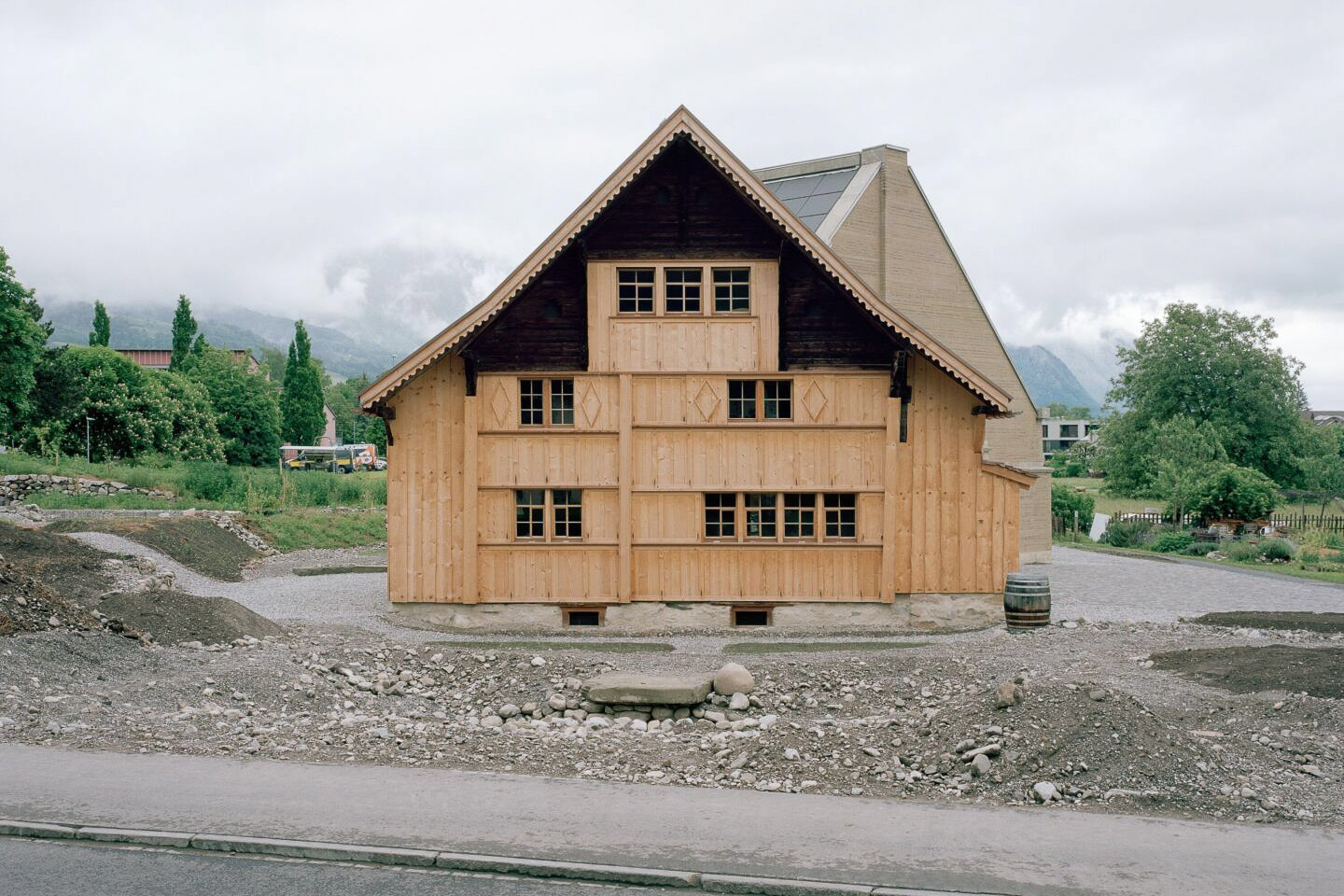
The Gässli in its new location. The panelling was brittle and had to be replaced over a large area. © Rory Gardiner
Rescue
The villagers were very fond of the Gässli, as the house was known for short. In order to save it, a ten-person project group purchased the building for a symbolic franc. Among the group were Ronan Crippa and Timothy Allen, who were architecture students at the time. Together with local craftsmen, they relocated the Gässli 700 m away to a plot of land owned by the wife of one of the group members, where she runs a village garden. “During the reconstruction, it was important to us not to make any changes to the structure that would destroy the atmosphere,” explains Crippa. The architects therefore refrained from technical interventions such as insulation, water or electrical installations.
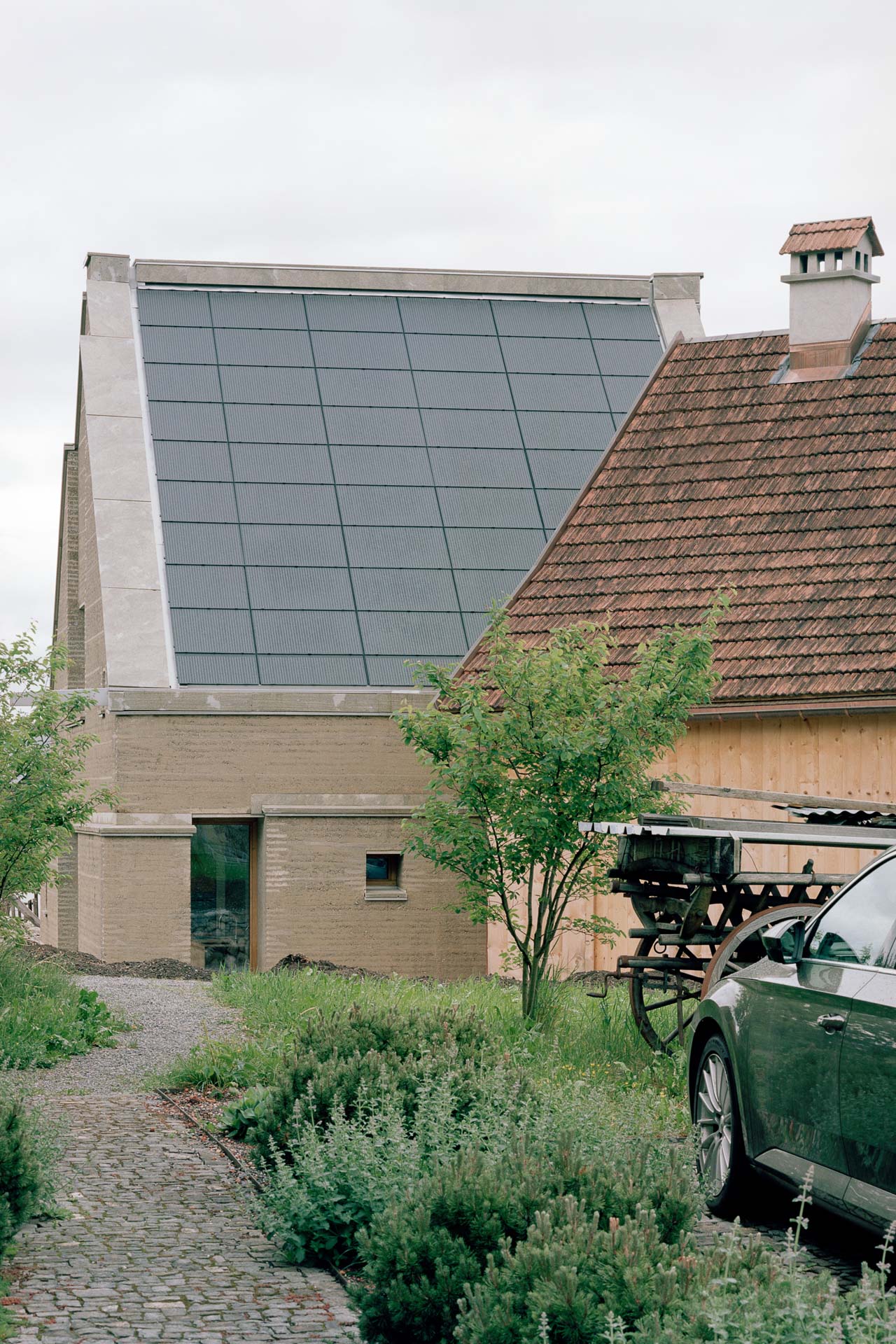
The roof of the new building is covered with solar panels. © Rory Gardiner
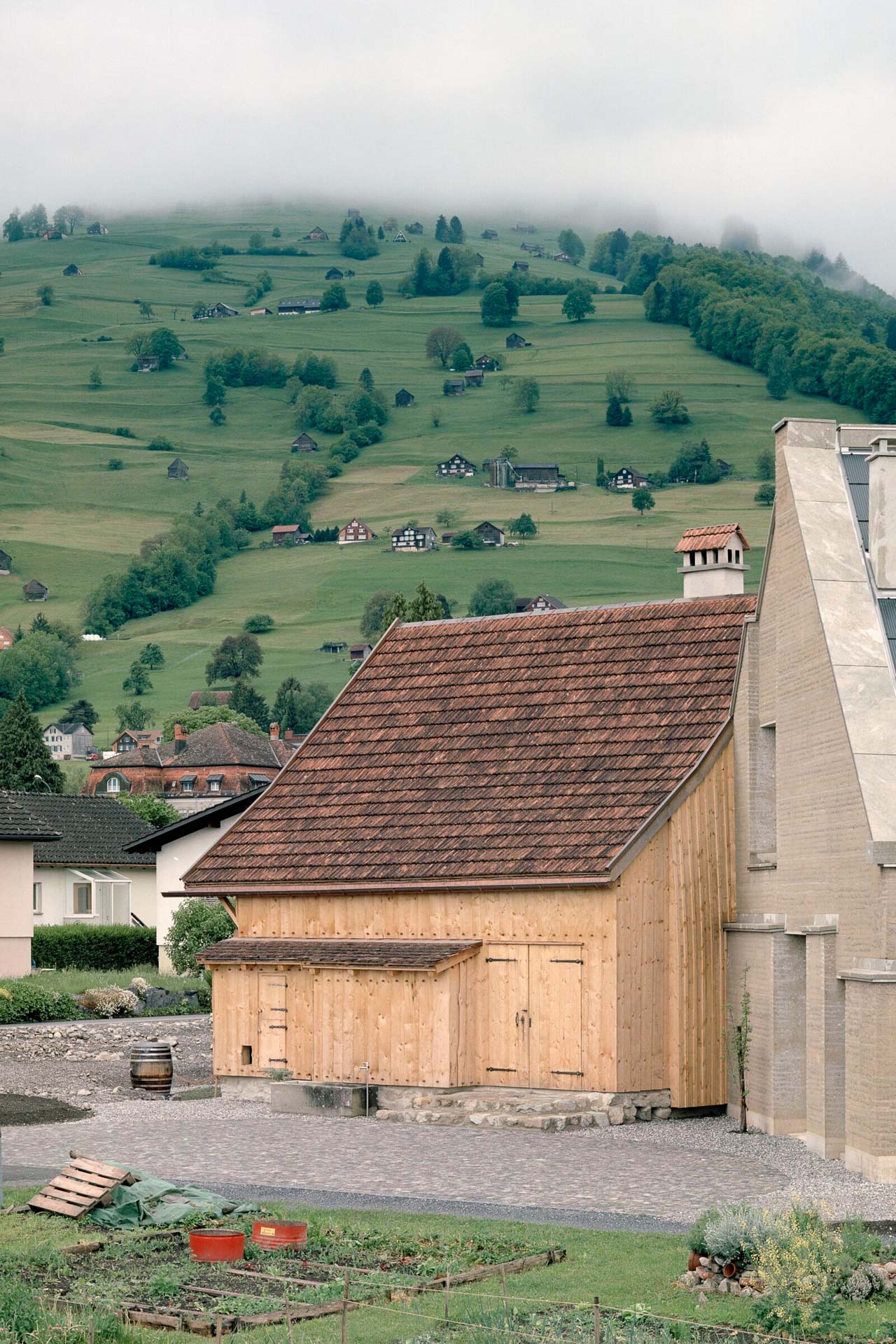
The hollow tiles from the Gässli have been reused. © Rory Gardiner
Layering and stacking
In order to make it suitable for contemporary use as a kitchen, toilet and heated studio, a new building made of prefabricated rammed earth elements was added. Allen + Crippa positioned it across the corner of the northern facade of the historic Strickbau building. It consists of around 200 clay elements up to 85 cm thick, manufactured by a company in Vorarlberg. The new building stands heavy and solid next to the Strickbau's delicate structure. However, the visible layers of rammed earth mirror the stacked structure of the historic log walls, creating a dialogue between old and new. Offsets in the facade emphasise the weight of the material. Lintels and ring beams made of reinforced concrete stabilise the rammed earth facade. The roof is entirely covered with solar panels and framed by natural stone slabs at the eaves and verges.
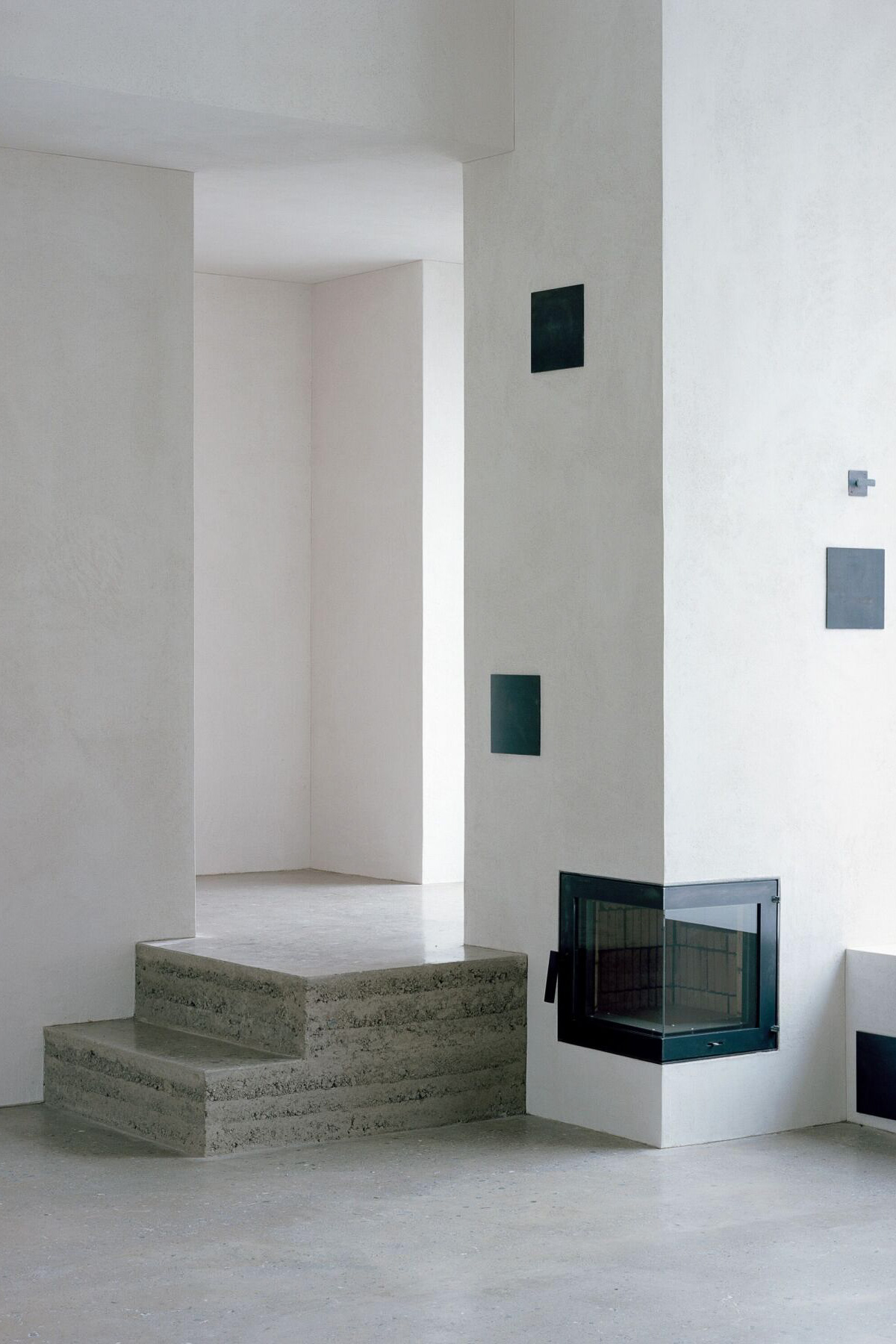
Light, natural materials characterise the interior of the new building. © Rory Gardiner
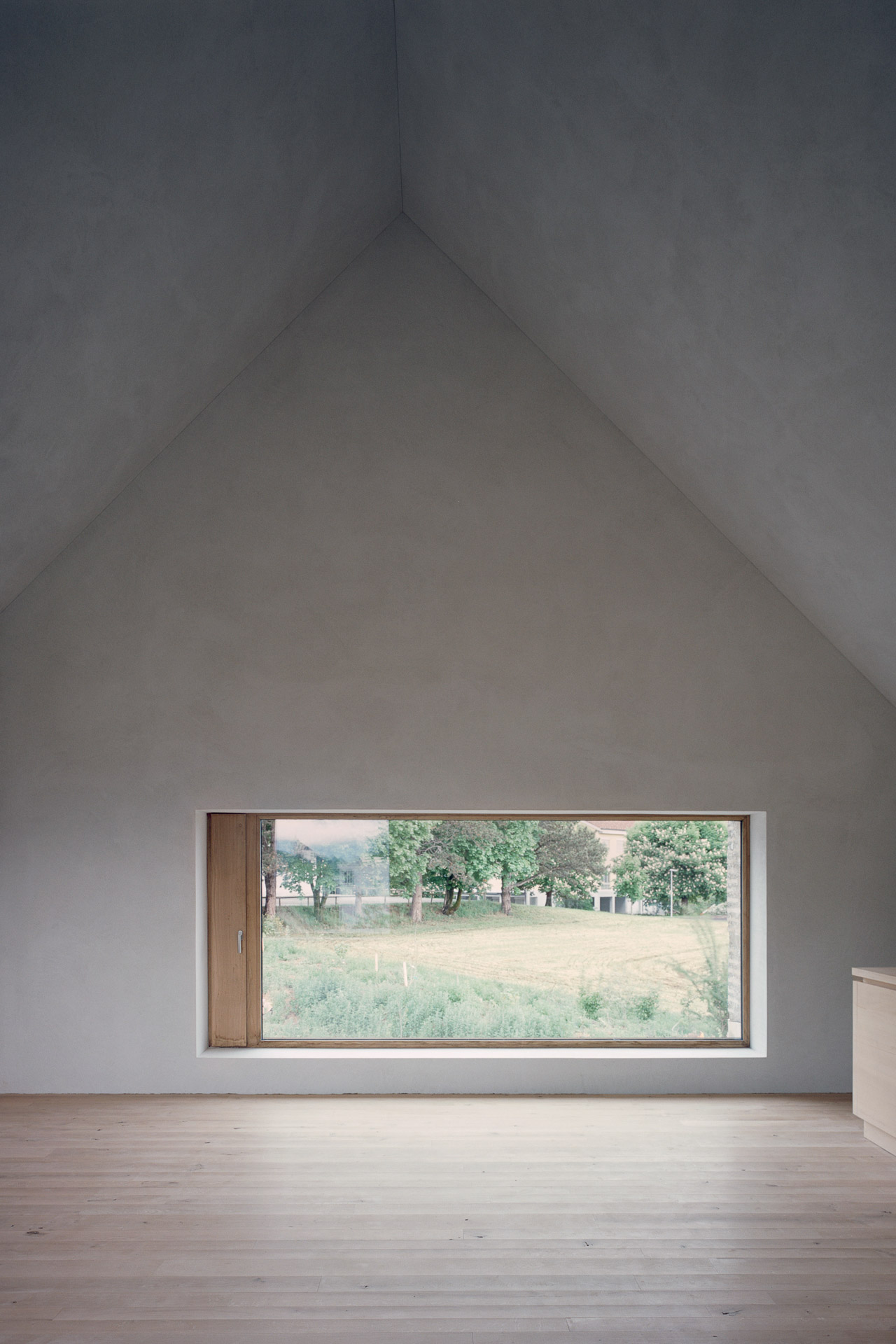
© Rory Gardiner
Natural and circular
Inside, the architects also opted for natural, recyclable materials. The rooms are characterised by ceilings made of unglued wooden beams, hemp lime insulation, lime plaster made from recycled brick dust and local clay tiles, and rammed earth flooring. The ground floor houses a communal area with a kitchen, while the upper floor contains a yoga studio and a small bathroom.
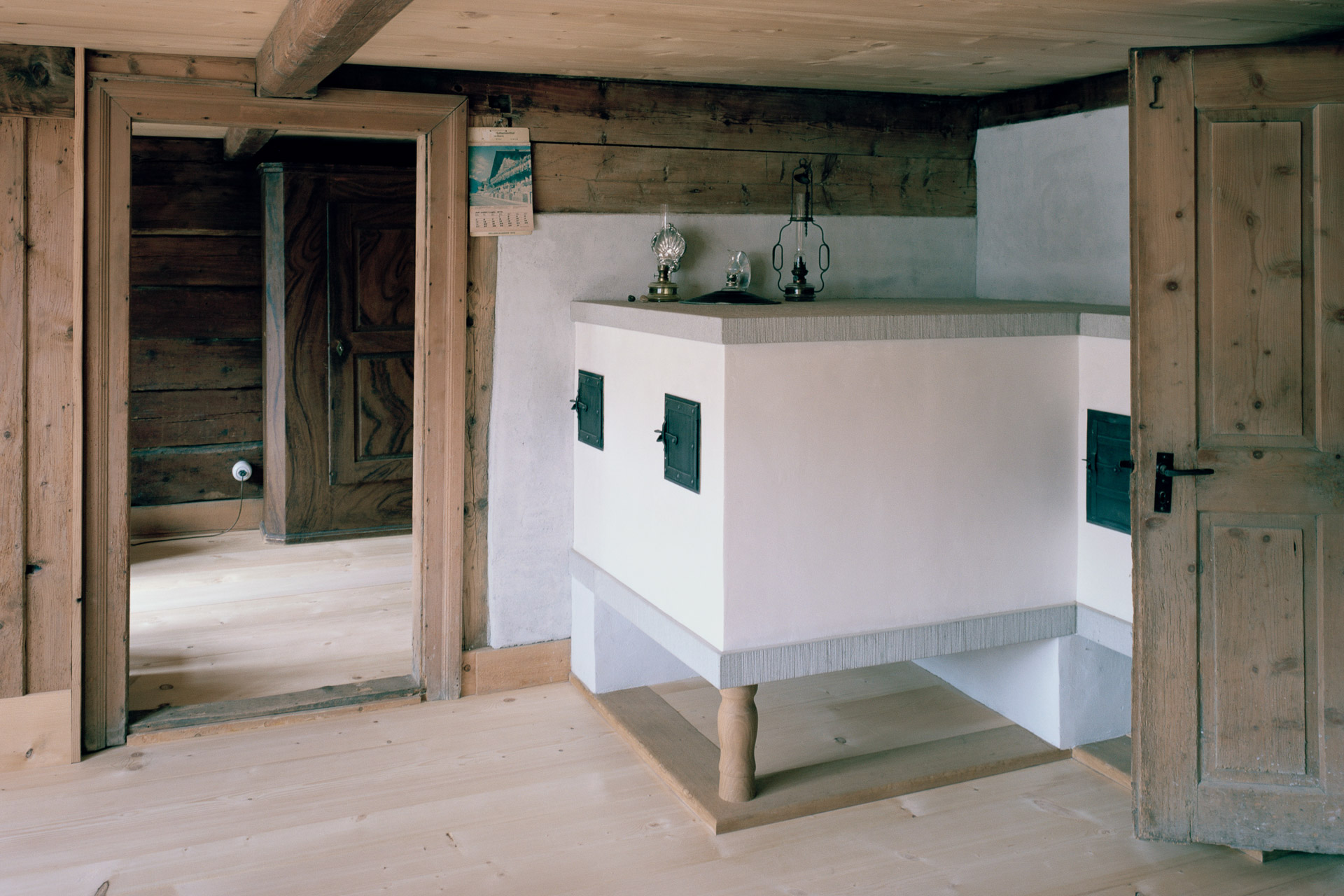
The traditional Strickbau stove has been rebuilt. It heats the main room and the adjoining room. The rooms are only 1.8 m high. © Rory Gardiner
Overnight stays
The gardening association has created a permaculture garden around the new building, complete with edible plants, ponds, and dry areas. In front of the block building, a traditional cottage garden has been created. Guests who want to experience life as it was 200 years ago can stay overnight in the Gässli and enjoy the new rammed earth house's amenities.
You can find out more in Detail 3.2026 and in our Detail Inspiration database.
Architecture: Allen + Crippa Architektur
Client: private
Location: Grabs (CH)
Structural engineering: merz kley partner
Landscape architecture: Isabelle Saluz
Technical planning and construction of earthen buildings: Lehm Ton Erde
Gallery


