
A village on the roof
Children’s Hospital in Zurich by Herzog & de Meuron

The door is always open, with two steel-concrete frames filled with wood emphasising the entrance. They cannot be moved. © Maris Mezulis
The Eleonorenstiftung’s premise for the construction of the new Children’s Hospital in Zurich’s Lengg healthcare cluster was that “the new building should function like a state-of-the-art clinic, but it shouldn’t look like one”. The design team at Herzog & de Meuron separated the research infrastructure from clinical operations, creating two distinct structures: A cylindrical research tower and a sprawling, low-rise acute care hospital. With its delicate timber facade, the hospital nestles into the parkland, which features 250 newly planted fruit trees. With its abundance of timber and closeness to nature, the hospital is entirely focused on healing.
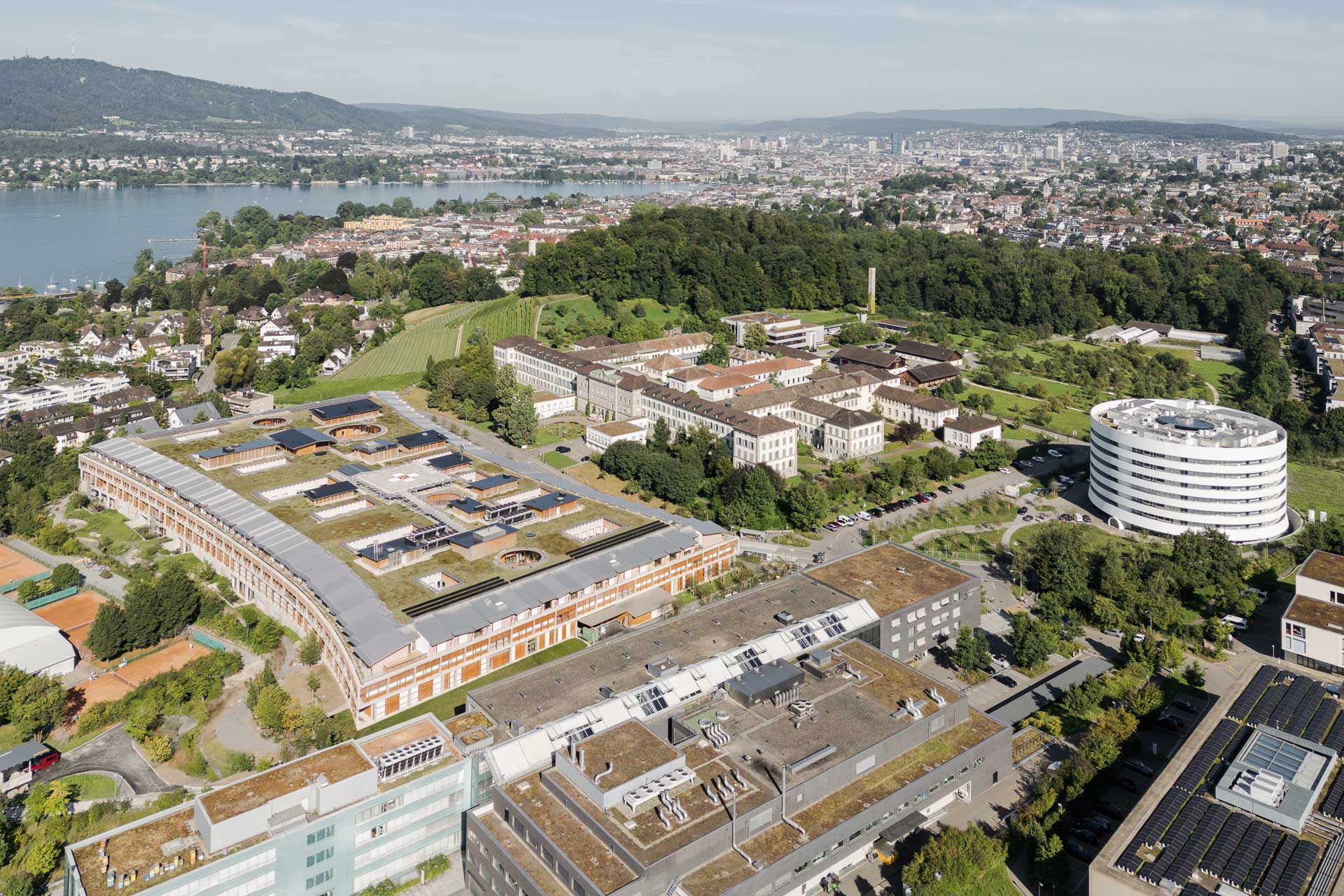
Research and clinical operations are kept separate. To the right, the white, cylindrical research tower rises, and to the left, the acute care hospital nestles into its green surroundings. © Maris Mezulis
Human scale
With just three storeys above ground, the building remains on a human scale. The north and south facades curve dynamically inwards in a concave line. With its Douglas fir facade, the steel-framed structure could be mistaken for a timber building at first glance. The designers have used timber in different ways on each level. On the ground floor, for example, reinforced concrete panels structure the recessed, perforated facade with floor-to-ceiling formwork at irregular intervals. On the upper floor, the grid pattern shifts to a more regular rhythm. A wooden layer with brise-soleil screens shields the offices behind the post-and-beam facade from prying eyes. The ward block on the top floor is constructed using timber panelling. With its pitched roofs at varying angles, the rooms resemble a small village.
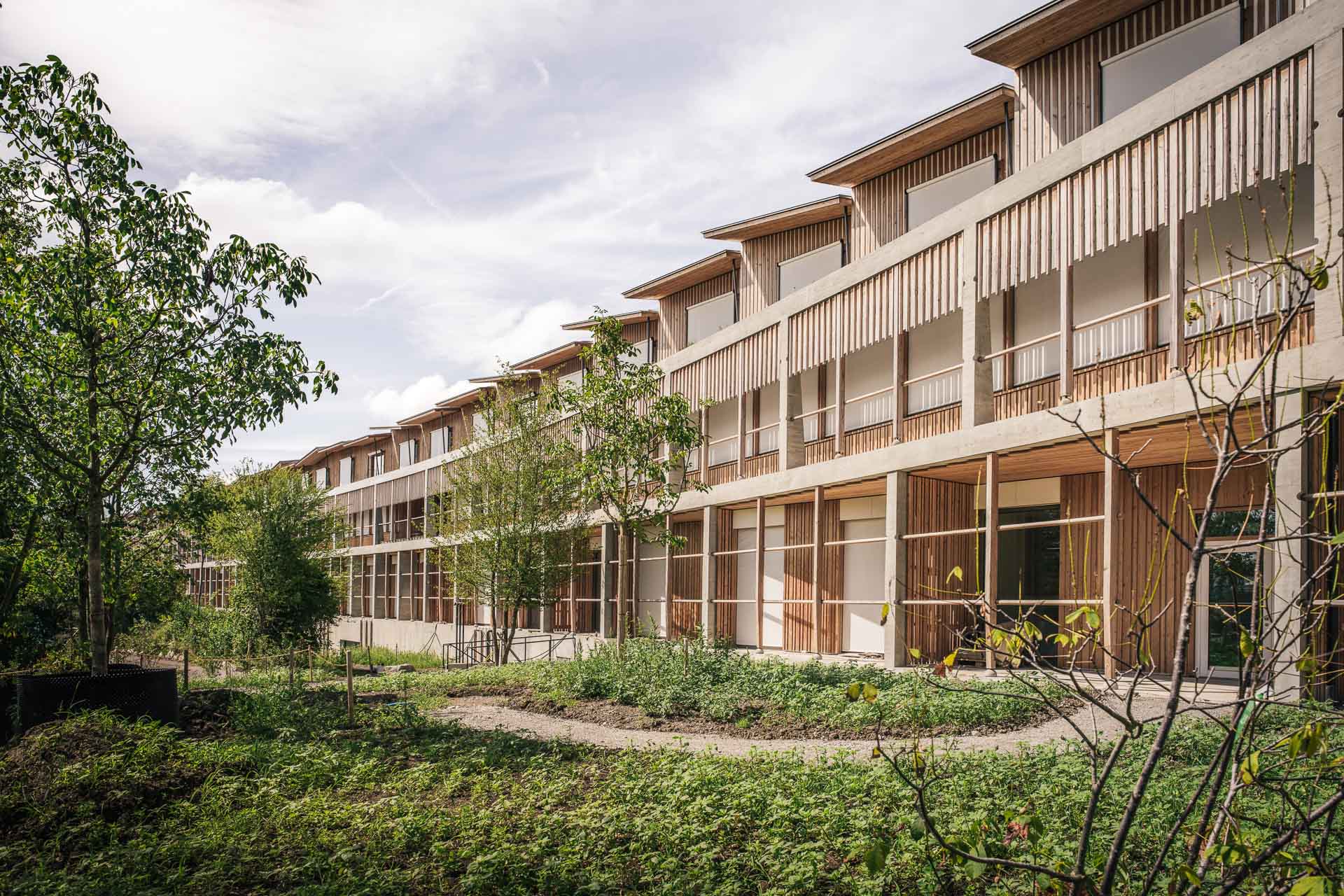
The function of the rooms can be seen from the facade. There are treatment rooms on the ground floor, offices on the first floor, and patient rooms in the attic. © Michael Schmidt
Playful art
The path to the hospital winds through two huge open doors and along a low passageway to the circular courtyard. A curving path between tall acacia trees and boulders, which were exposed during the excavation of the rocky subsoil, leads to the main entrance. Abstract marble sculptures reminiscent of rabbit ears invite children to climb on them. This piece by artist Claudia Comte is one of five artworks that bring a touch of playfulness to the building. Raphael Hefti’s "Star Beans" bathe the spiral staircase in neon light; Roman Signer’s red canoes appear to plunge into the depths of a courtyard; Haegue Yang’s "Sonic Droplets – Amber" can be heard in the Room of Silence; and James Turrell’s "Skyspace Sustenance" opens up as a light-filled space towards the sky in dry weather.
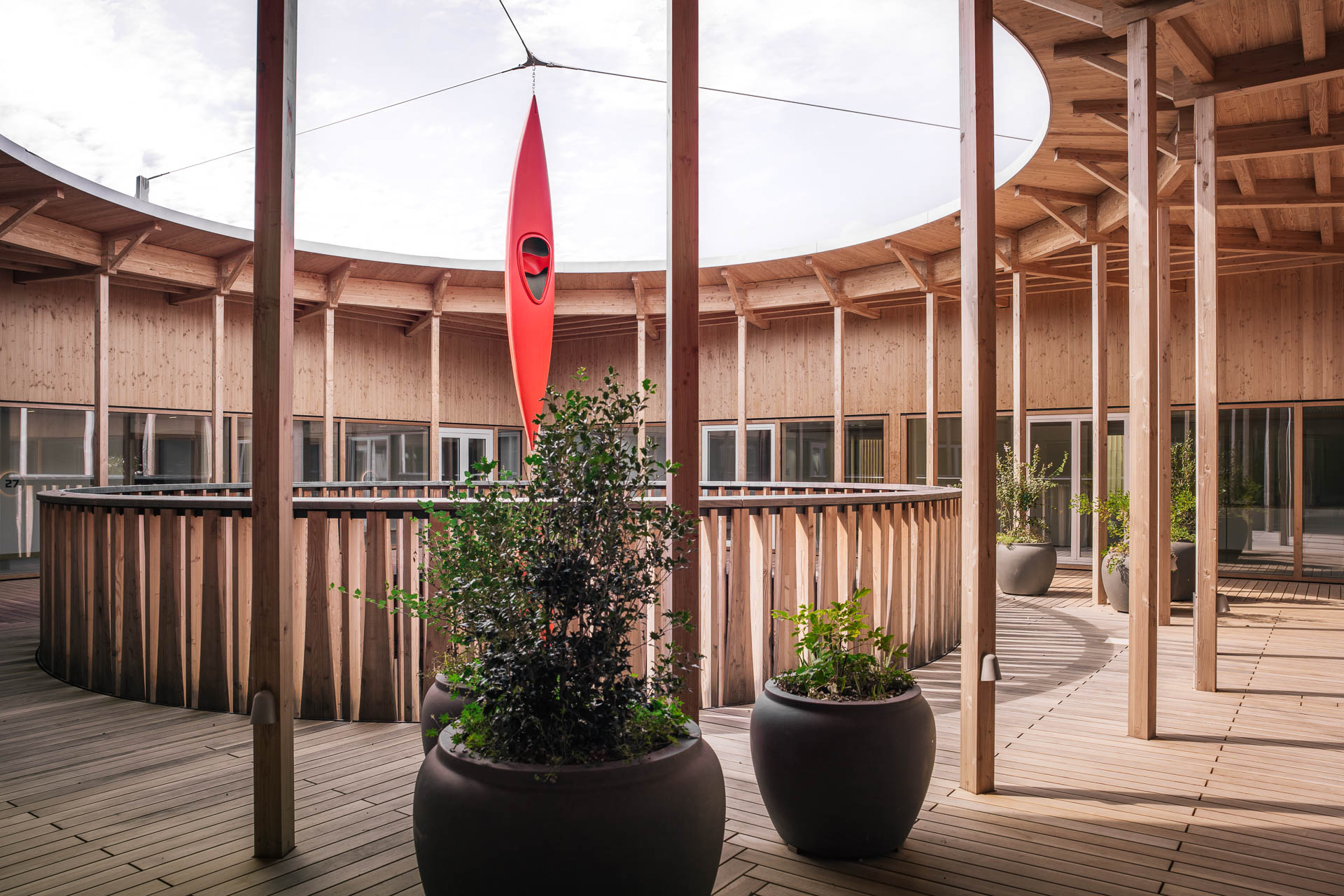
Red canoes seem to be plunging into the depths. © Michael Schmidt
Light and greenery
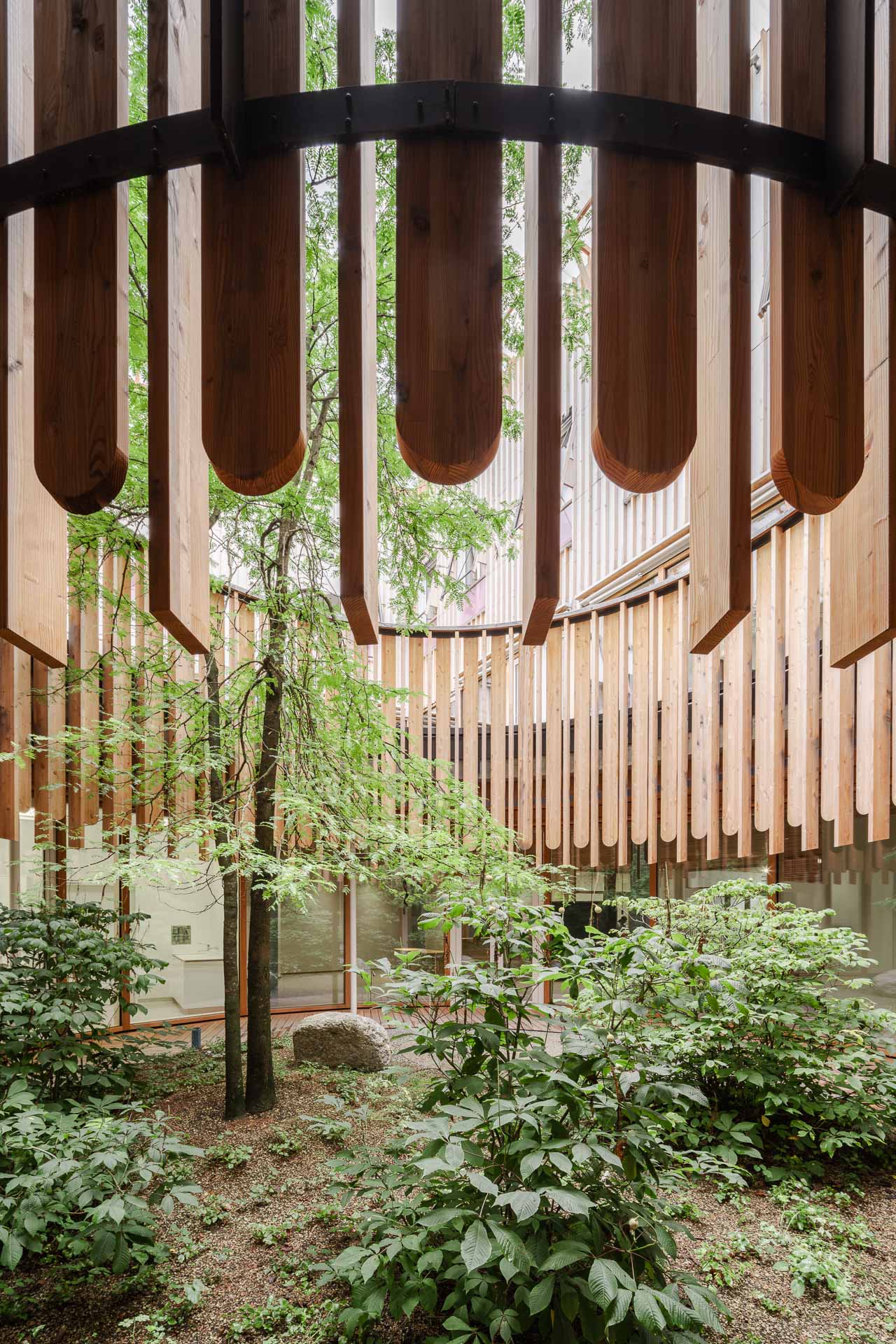
Inside, Herzog & de Meuron have organised the spaces along a 200-m-long boulevard. A cast screed floor and a ceiling soffit of wooden slats characterise the public areas. In the side streets, white metal ceilings and grey linoleum mark the transition to the semi-private zones. A total of 16 courtyards break up the expansive floor plan, filling the hospital with light and greenery. These courtyards are framed by facades of varying designs. This creates a sense of intimacy reminiscent of a city’s backstreets.
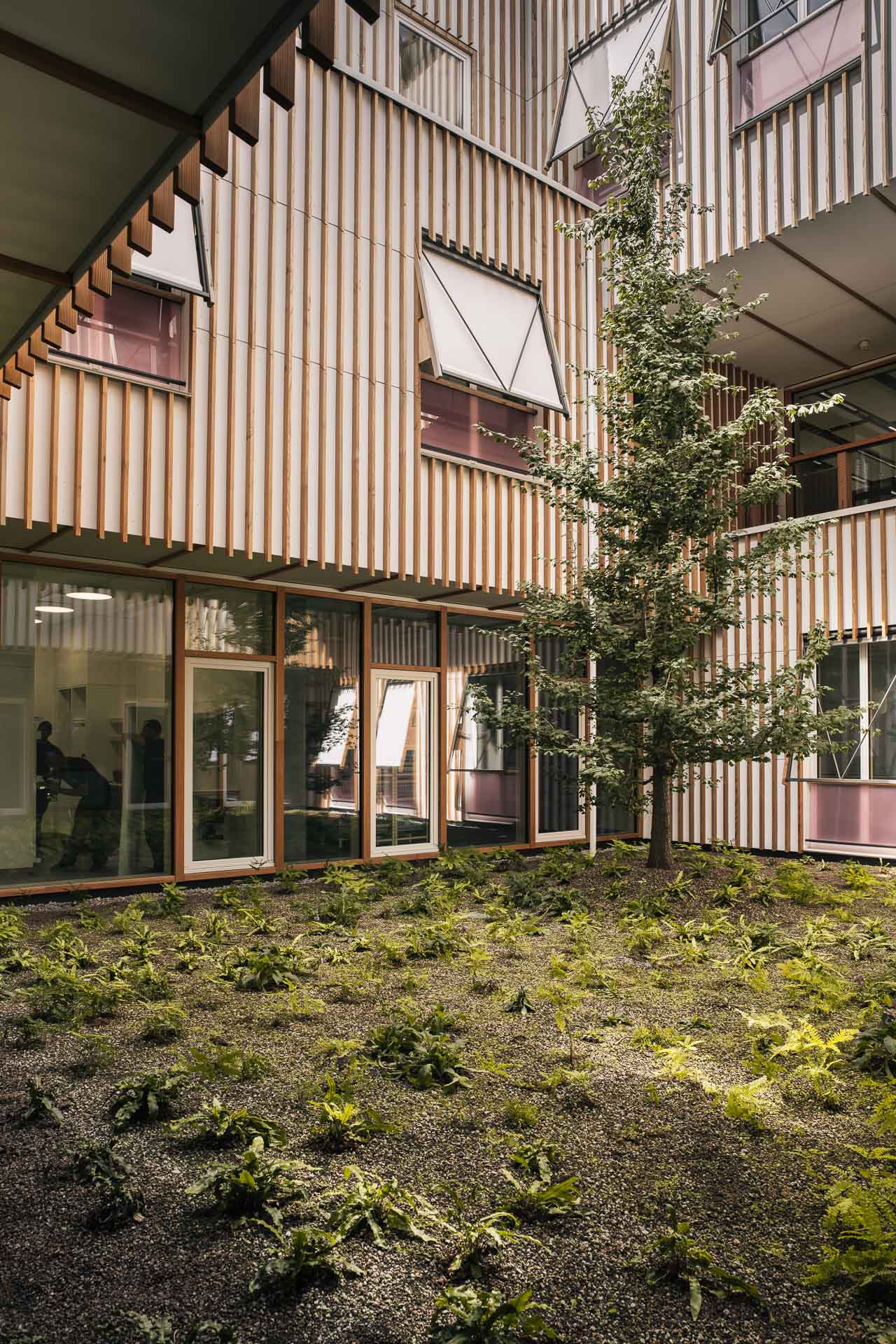
Inner courtyards of various designs bring light and greenery into the building. © Michael Schmidt
© Maris Mezulis
A temporary home
On the top floor, there are 114 rooms arranged like small huts along the facade, where children and young people who need to stay in hospital for longer periods live. They can look out through large windows towards the greenery, the lake or the helipad of the neighbouring clinic. The bench can be converted into a bed, enabling parents to stay overnight with their child. The children can open the porthole windows themselves to let in some fresh air. This enables them to experience the wind and sounds from outside the hospital directly. Wood-panelled ceilings, oak parquet flooring, and modern furniture made from multilayer panels help create an environment that allows them to forget the clinic's daily routine for a while.
Read more in Detail 4.2026 and in our Detail Inspiration database.
Architecture: Herzog & de Meuron
Client: Kinderspital Zürich/ University Children`s Hospital Zurich
Location: Lenggstrasse, Zürich (CH)
Structural engineering: ZPF Ingenieure, Basel (CH)
Landscape architecture: August + Mergrith Künzel Landschaftsarchitekten, Binningen (CH); Andreas Geser Landschaftsarchitekten
Building services engineering: Gruner, Basel (CH)
Facade: Pirmin Jung Ingenieure, Rain (CH); Buri Mueller Partner, Burgdorf (CH)
Gallery


