
Experimental Research Building
PAKK Pavilion in Tallinn
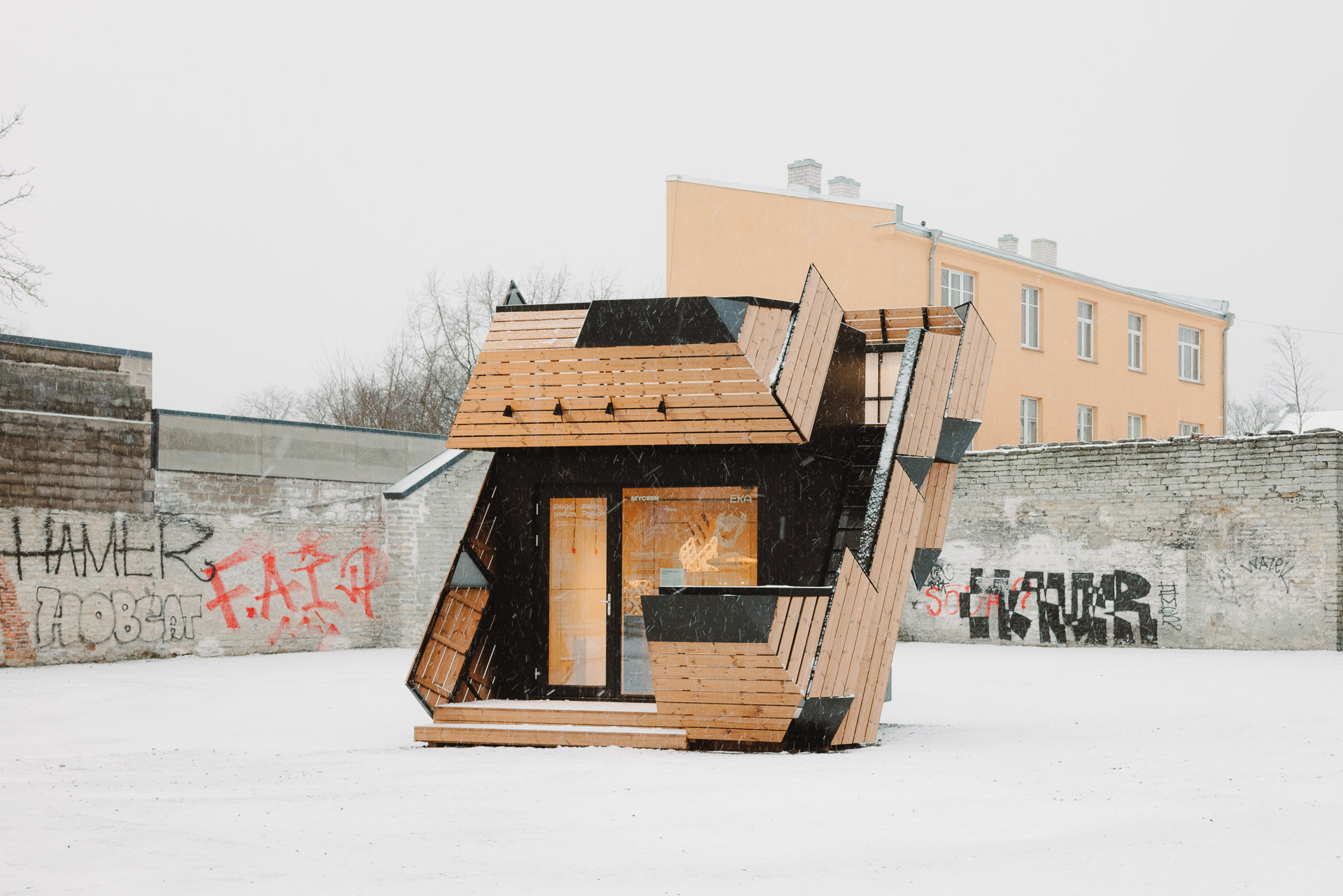
The PAKK Pavilion, located at the Estonian Academy of Arts' Timber Architecture Research Centre, explores innovative building materials, structural systems, and facade prototypes. © Tõnu Tunnel
Located in the heart of Tallinn, the PAKK Pavilion is part of the Estonian Academy of Arts' Timber Architecture Research Centre. This experimental building brings together three ongoing projects from different research groups, who are testing building materials, analysing structural systems, and developing facade system prototypes. The 9 m² interior is used as a gallery for temporary exhibitions.
Modular timber construction and facade system under test
The pavilion is constructed from dead ash wood. Wooden planks form the cladding of the modular timber construction system, and insulation boards made from mycelium are used as thermal barrier. The test building combines two ongoing EKA PAKK projects: Pattern Building and sLender. Pattern Building is an open-source industrial construction system based on modular and circular design principles. This system can be dismantled, modified and expanded as required.
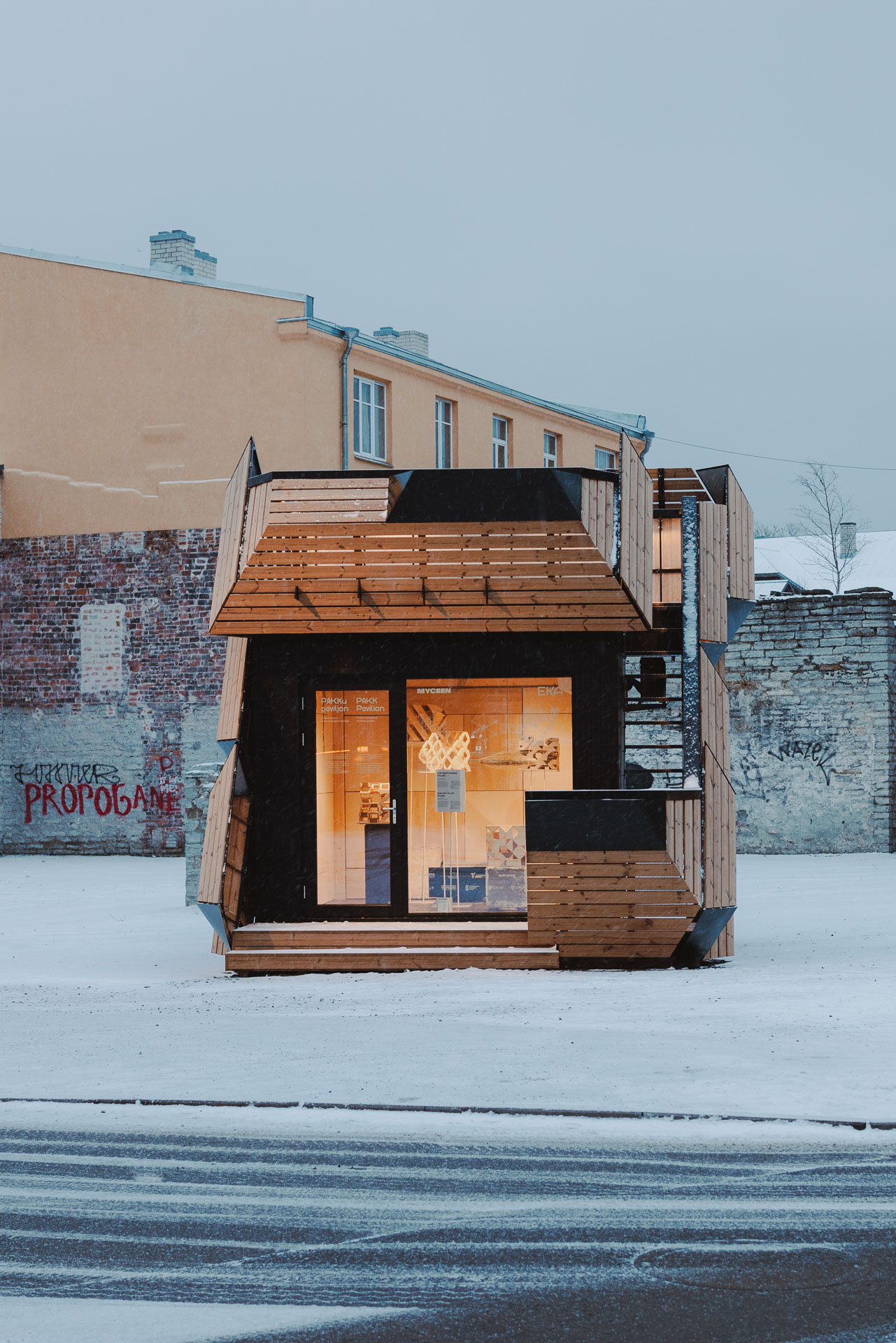
The PAKK Pavilion features the sLender facade system on the terrace at the front of the building and on the side staircase. © Tõnu Tunnel
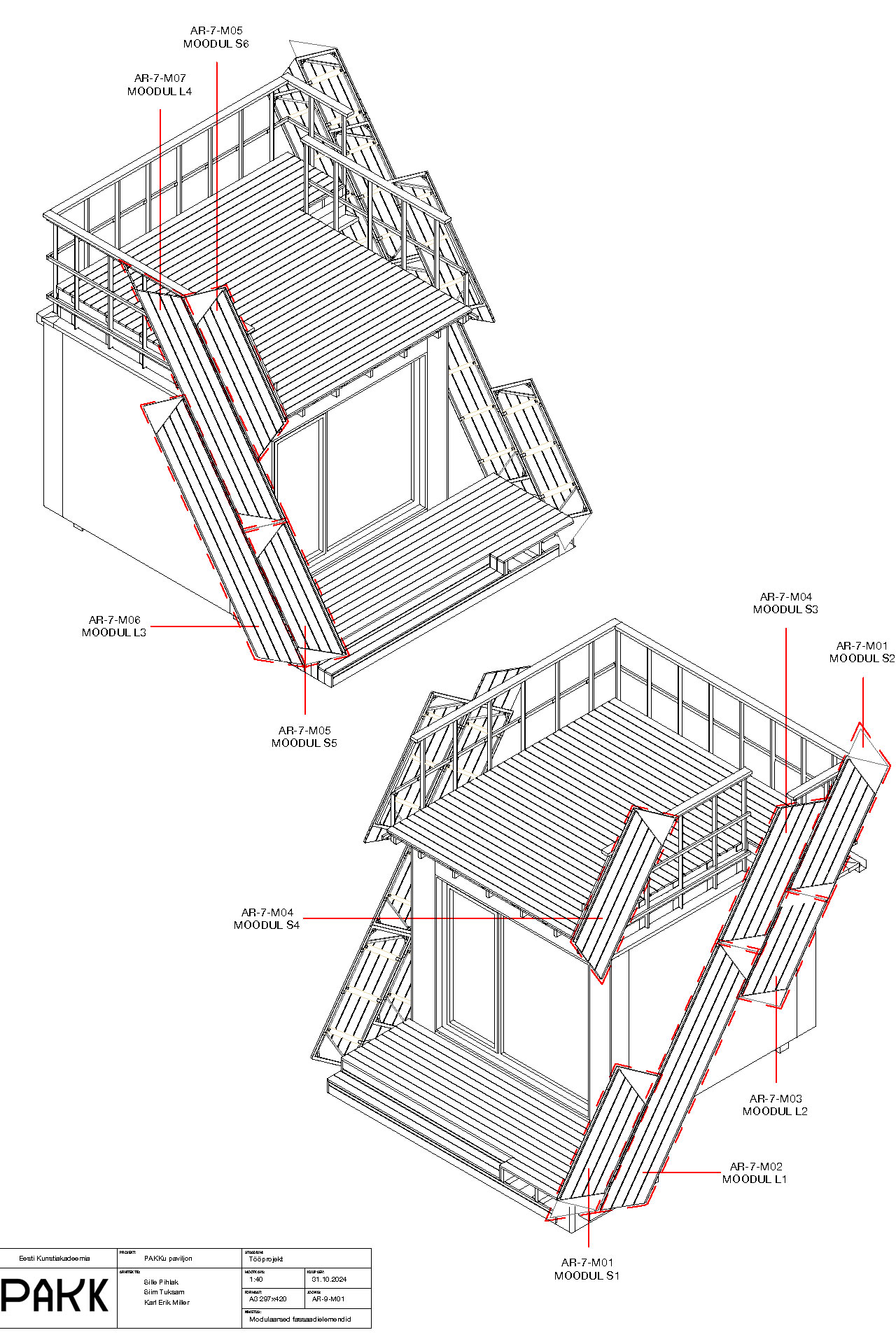
Modular facade elements, axonometric projection, Graphic © Sille Pihlak, Siim Tuksam, Karl Erik
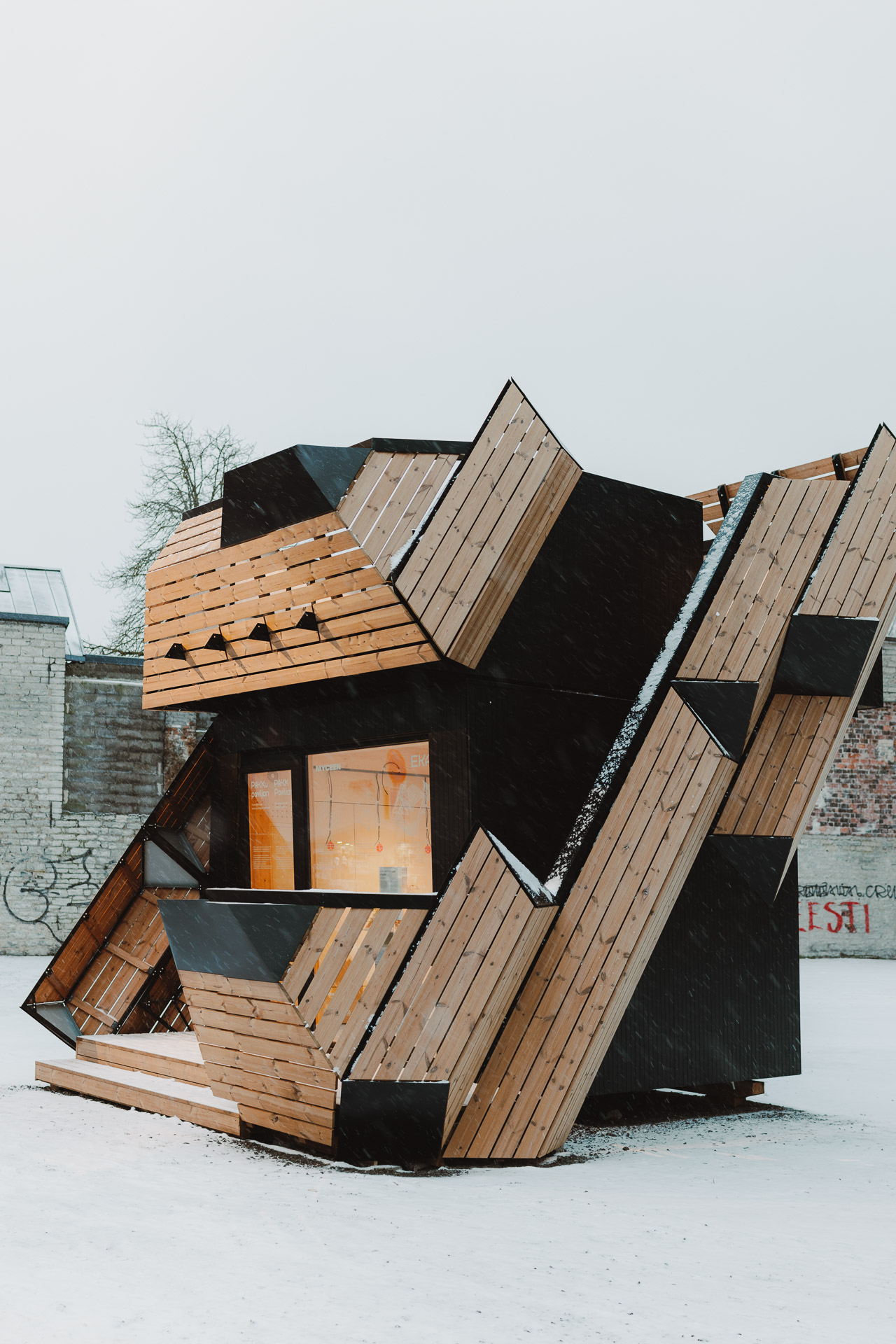
The sLender facade system explores the spatial possibilities of energy-efficient renovations. The study aims to enhance daylight, accessibility, and communal areas in apartment buildings in need of renovation. A specially developed digital platform makes it easy to configure the modular facade system for different projects. The diamond-shaped wooden elements are designed to clad existing buildings and enhance their thermal insulation. They are also intended to serve as balconies, as well as lift and stairwell modules. These modules can be found on the terrace at the front of the PAKK pavilion and on the stairs leading up to a roof terrace.
The interior of the PAKK Pavilion is used as a gallery for temporary exhibitions. © Tõnu Tunnel
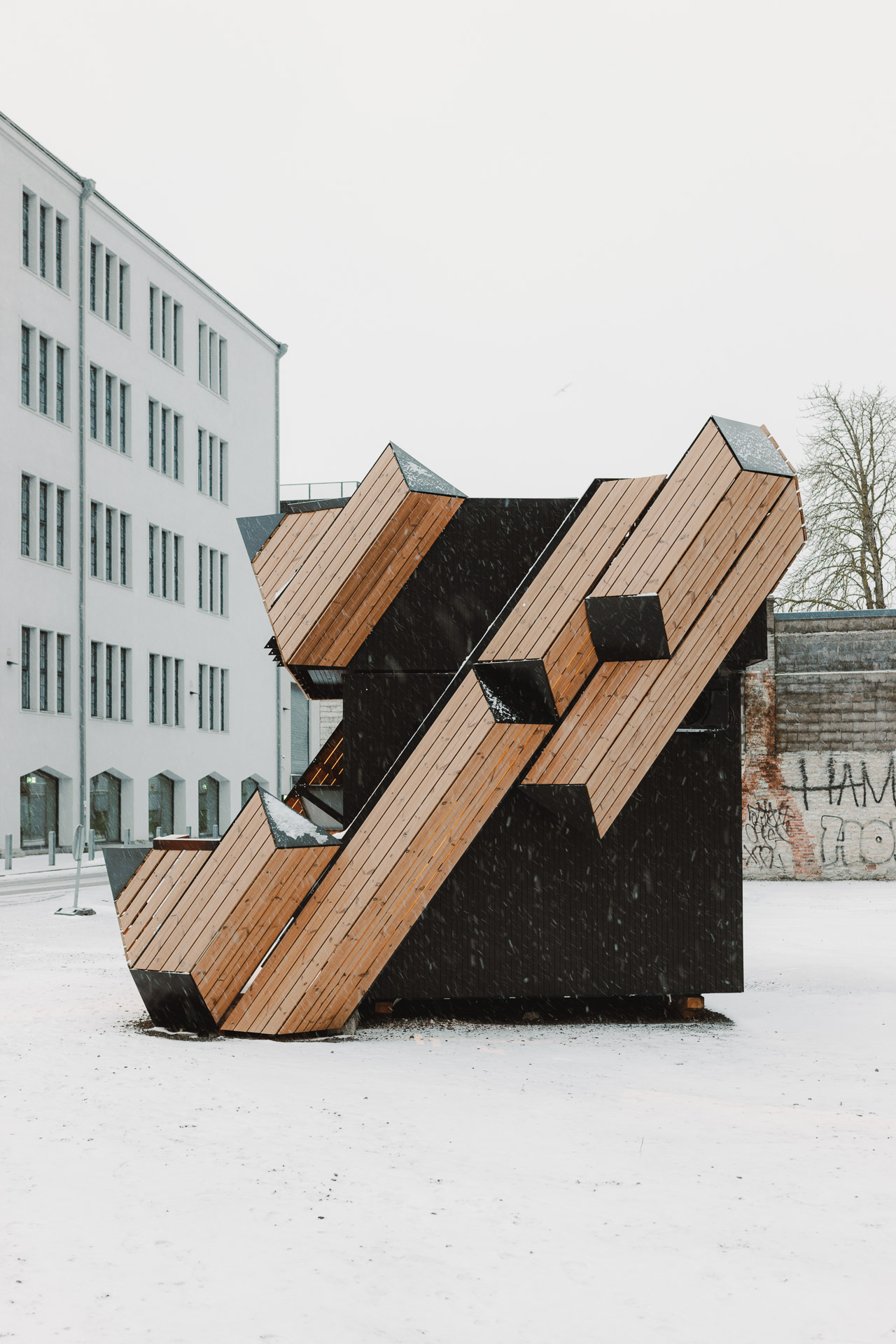
Diamond-shaped wooden elements clad the PAKK Pavilion. © Tõnu Tunnel
New materials based on fungal mycelium
The pavilion is one of the first buildings in the world to use and study mycelium-based insulation. Sensors monitor the performance of the materials used in the building's foundations and exterior walls. The insulation consists of a combination of organic industrial waste and fungal mycelium. In Estonia, sawdust is the main raw material used. The mycelium binds these residues together to create a new, high-performance material that offers improved insulation, acoustic and fire resistance properties. The data collected is used to compare the performance and durability of this fabric with that of conventional insulation materials.
Research: Dr. Siim Tuksam, Dr. Sille Pihlak, Dr. Renee Puusepp
Architecture: Siim Tuksam, Sille Pihlak, Karl Erik Miller, Renee Puusepp
Interior design: Siim Karro, Kermo Ausin
Project organizers: EKA PAKK, Myceen OÜ
Duration: October 10, 2024 – October 9, 2026
Funding: European Union and Estonian Research Council as part of the PUUSTER project TEM-TA80, EKA development funding, Estonian Academy of Arts, Myceen OÜ
Gallery


