
Visible layers of time
Renovation and Extension of the Stralsund Maritime Museum by Reichel Schlaier
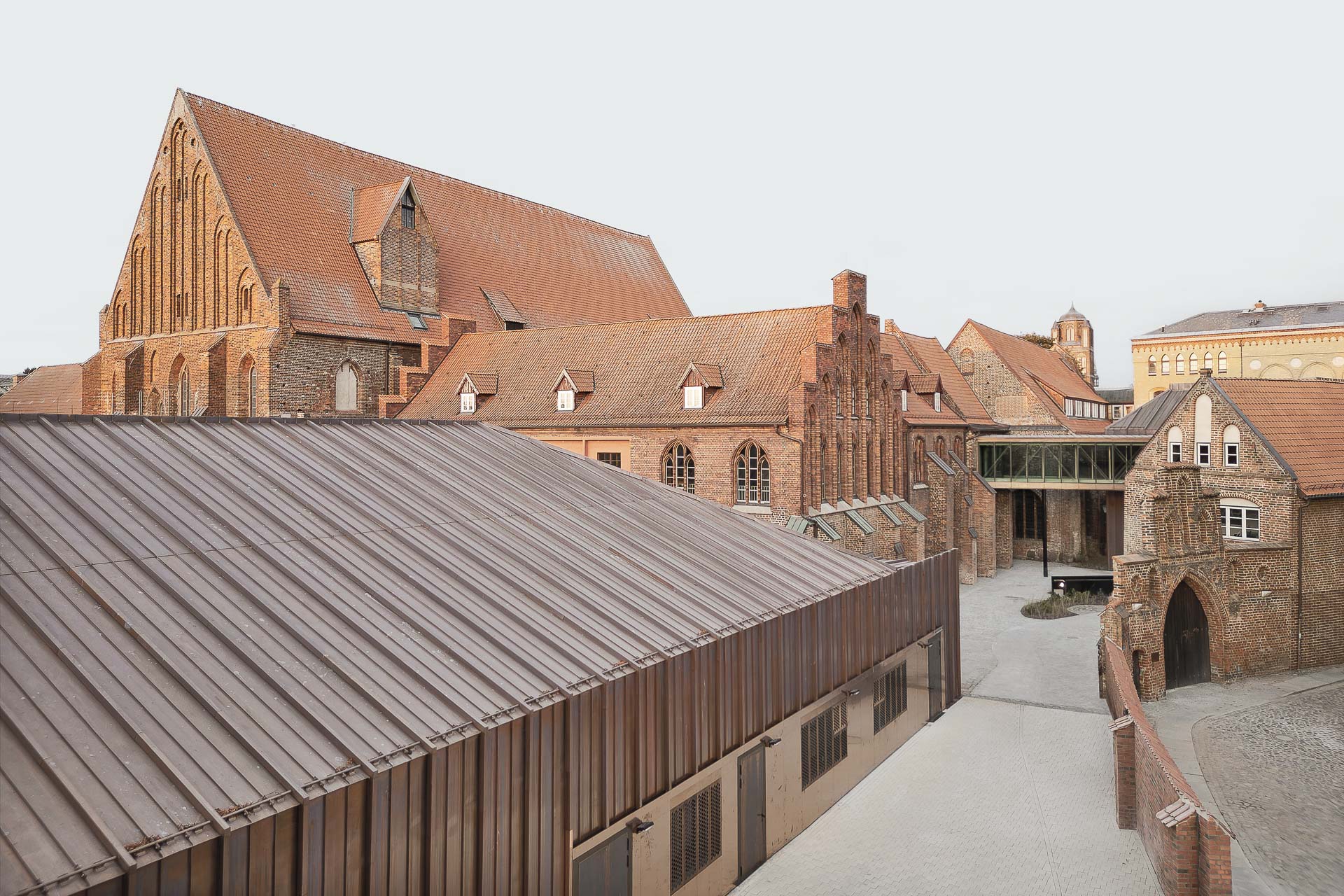
Three new structures have been added to the Oceanographic Museum. © Brigida González
Reichel Schlaier Architekten have successfully combined monument preservation, functional renovation and contemporary museum architecture in their careful transformation of the German Maritime Museum's main building in St. Catherine's Monastery. The competition, which the firm won in 2017, aimed to clarify the spatial layout of the Stralsund complex, which had evolved over centuries, and to upgrade it for future requirements.
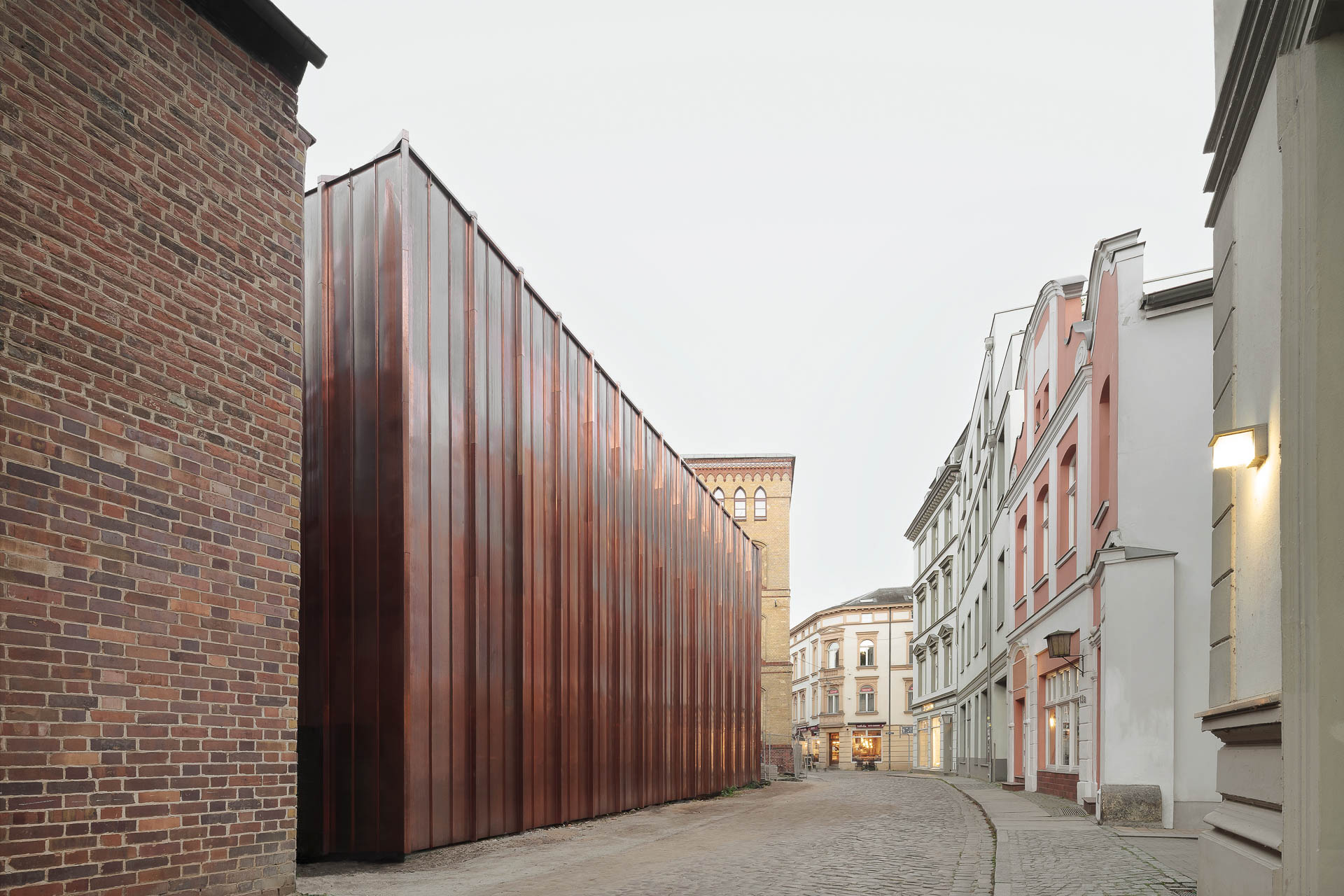
The minimalist design of the new large aquarium's copper shell blends into the ensemble. © Brigida González
Differentiated Intervention
The former 14th-century Dominican monastery had undergone numerous conversions and changes of use. Rather than undertaking radical demolition, the planning team adopted a more nuanced approach: additions of lesser historical significance were removed, while valuable features, such as the truss structure from the GDR era in the nave, were retained. This process allowed the original monastery structure to re-emerge more strongly. Exposed areas such as the 'long corridor' and the west courtyard enable visitors to experience the historical spatial relationships once again. Archaeological finds, including the foundations of a previous church and medieval cellars, have been incorporated into the exhibition concept.
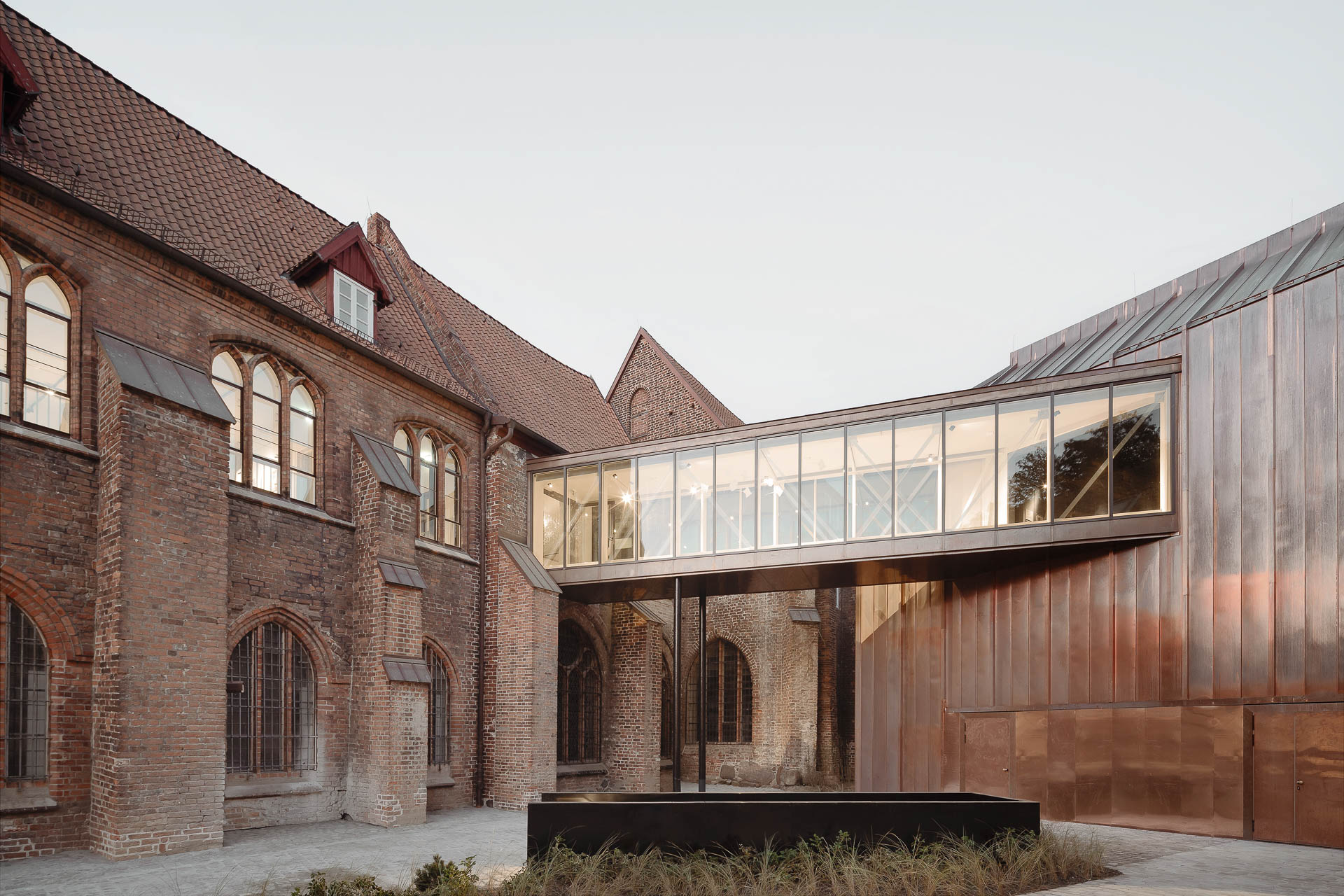
Monastery walls with new large aquarium, © Brigida González
Old and new in dialogue
The design is guided by the principle of clearly legible layers of time, in accordance with the Venice Charter. The new structures do not appear historicising, but blend into the ensemble with a minimalist design. A copper shell with handcrafted battens gives the new buildings a calm presence, referencing the roof landscape of Stralsund's brick churches. Glazed joints connect the existing and new buildings, opening up specific views of the Gothic structure. This is particularly evident in the west courtyard, where a transparent connection reveals the gable end of the nave.
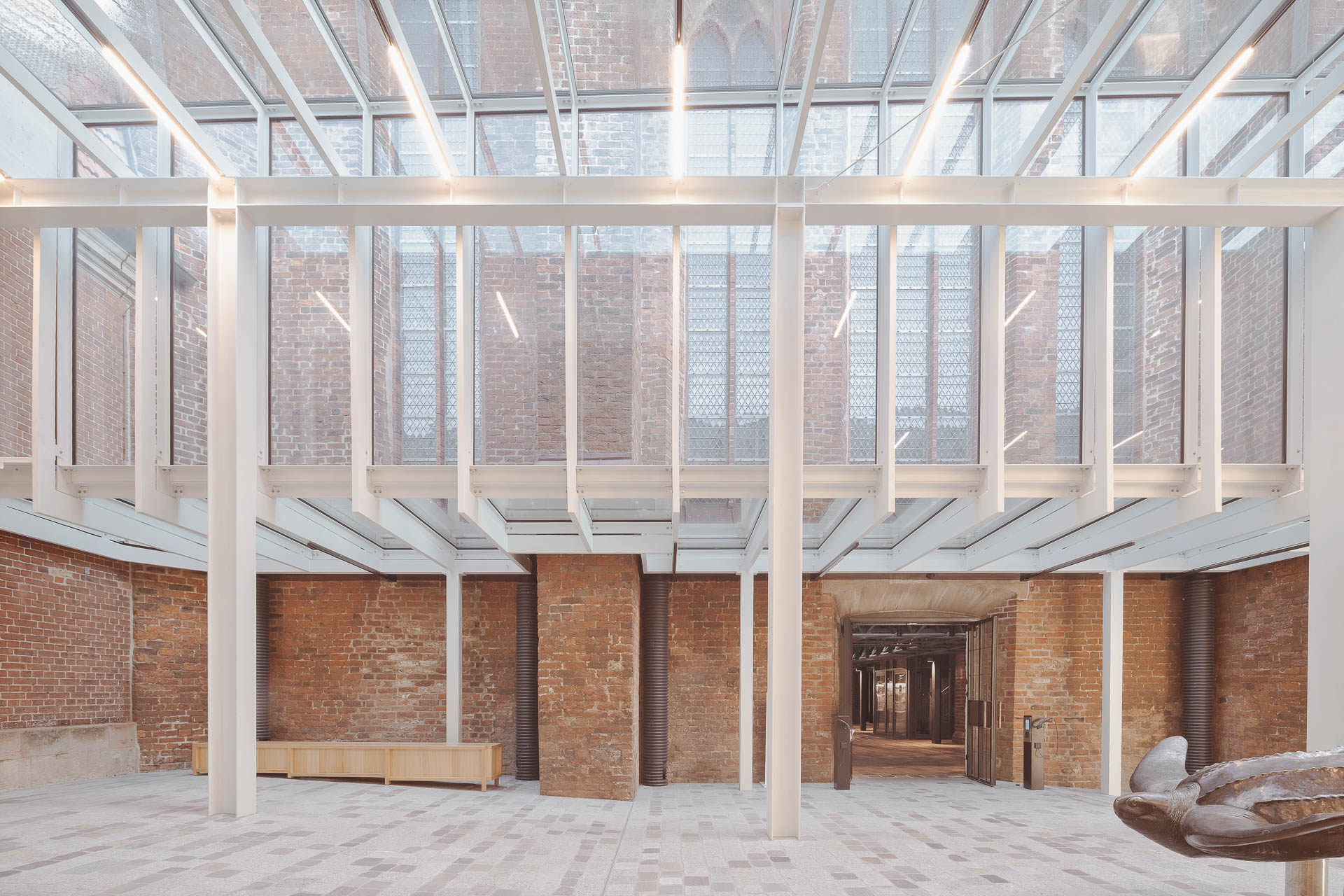
The small west courtyard has been completely rebuilt and now serves as a central access area. © Brigida González
Reorganised visitor guidance
One of the key objectives was to improve orientation. The new main entrance is the converted forum in the north courtyard, which houses the ticket office and information desk. From there, visitors are guided through the open west courtyard to the Katharinenhalle, which is now accessible via its historic portal once again. A bridge then leads to the new, large aquarium. This 80 m² tank can be viewed from three levels and is a major attraction. The tour concludes with a visit to the sea turtles before leading back to the starting point via the “Long Corridor”. Despite the varying height levels, accessibility has largely been achieved through the use of sloping floors and walkways, thereby keeping the number of lifts required to a minimum.
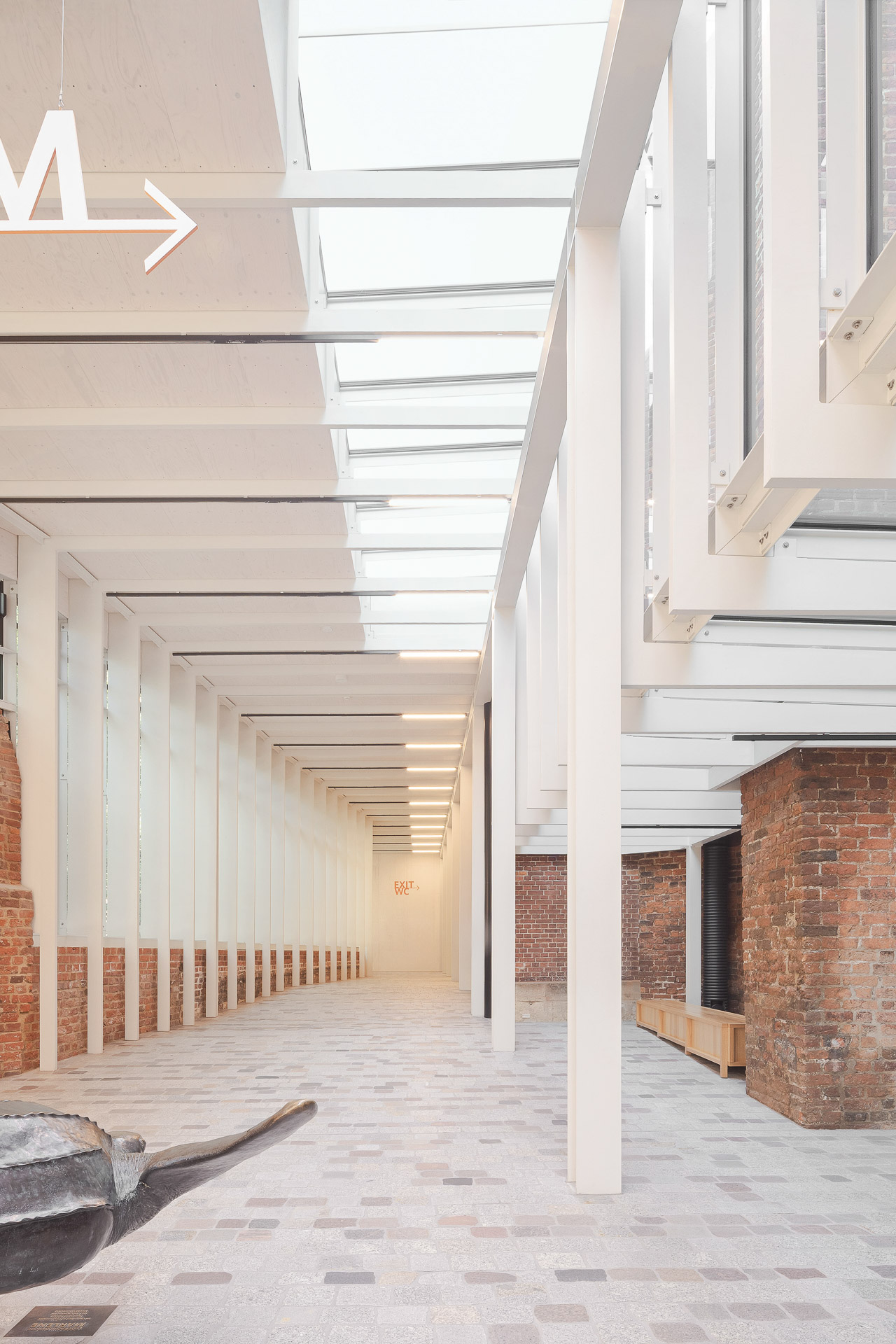
The flooring in the courtyard consists of historic granite stones. © Brigida González
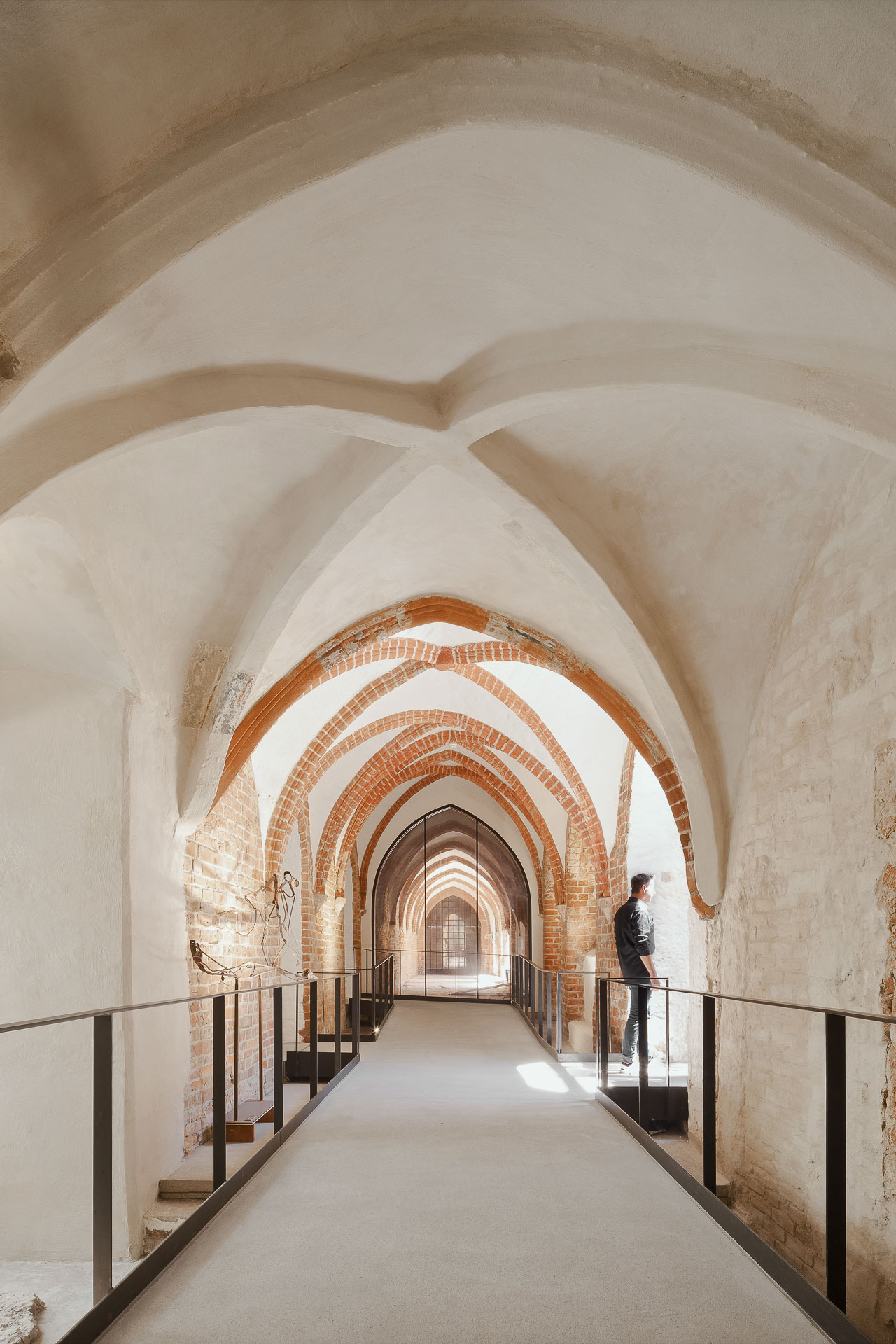
A path through the "Long Corridor" now leads over a footbridge above the original floor level. © Brigida González
Sustainability in a historic building
The approach to the existing structure is also part of the energy concept. Where possible, components have been preserved or reused, including granite paving in the west courtyard, windows, railings, and wooden elements. New building envelopes were mainly constructed using timber. Technically, the museum focuses on increasing efficiency with minimal intervention: air-water heat pumps with heat recovery, LED lighting, and optimised pump technology for the aquariums all significantly reduce energy consumption. This has given the traditional building a new functional purpose as part of the German Oceanographic Museum umbrella brand, which also includes the Ozeaneum, built in 2008 by Behnisch Architekten, while enhancing its status as a multi-layered historical ensemble.
Discover more museum buildings in our Detail Inspiration database.
Architecture: Reichel Schlaier Architekten
Client: Deutsches Meeresmuseum Stralsund
Location: Bielkenhagen 10, 18439 Stralsund (DE)
Gallery


