
Interview with Mariam Issoufou
„We Have Forgotten the Proper Techniques for Building with Earth”
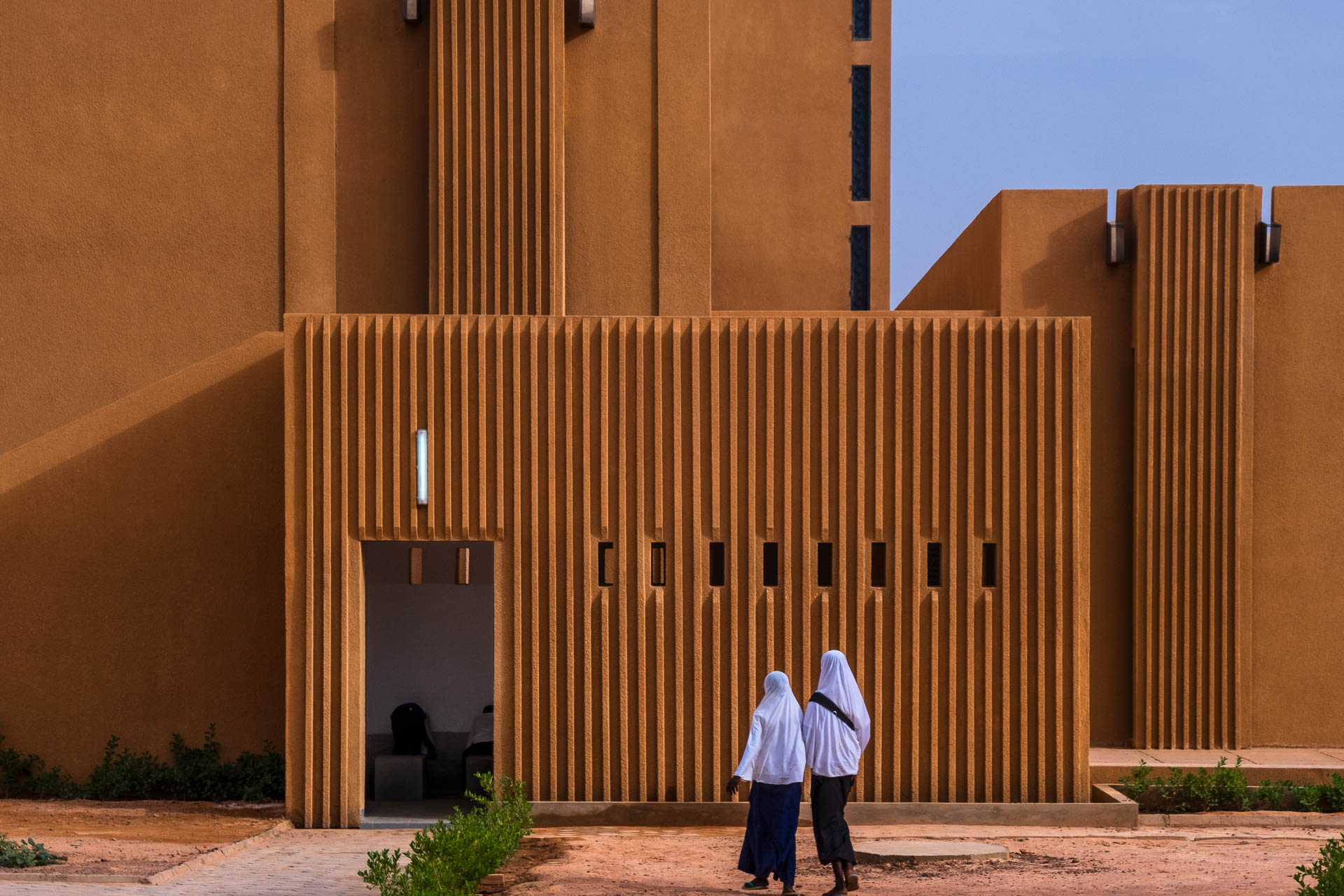
In May 2018, Mariam Issoufou and her former architectural firm Atelier Masomi completed the Hikma Community Complex in Dandaji in the arid west of Niger. © James Wang
Mariam Issoufou began early on to make earthen architecture socially acceptable in West African cities. An interview about her experience with natural materials, climate change in Africa, and what she has learned from software engineering for her career as an architect.
Mariam Issoufou, you spent your childhood in Niger – a region where climate change was felt earlier and more strongly than in Europe. When did you first notice that the natural environment was changing?
During my early years, we lived in Niamey, the capital of Niger, which was very tropical at the time. I remember the smell of leaves and snails in the garden. When I was six, we moved to the desert for about five years. Returning to Niamey afterwards, I noticed dramatic changes – sandstorms happened during the rainy season, the snails had disappeared, and many trees were gone. The city was much less green. That transformation took place 30 years ago. Since then, conditions have worsened. When you land in Niamey today, all you can see around you is desert. We already have climate refugees: in the early 2000s, large parts of the rural population lost their livelihoods as land became infertile and livestock died. This triggered an urban migration that continues today.
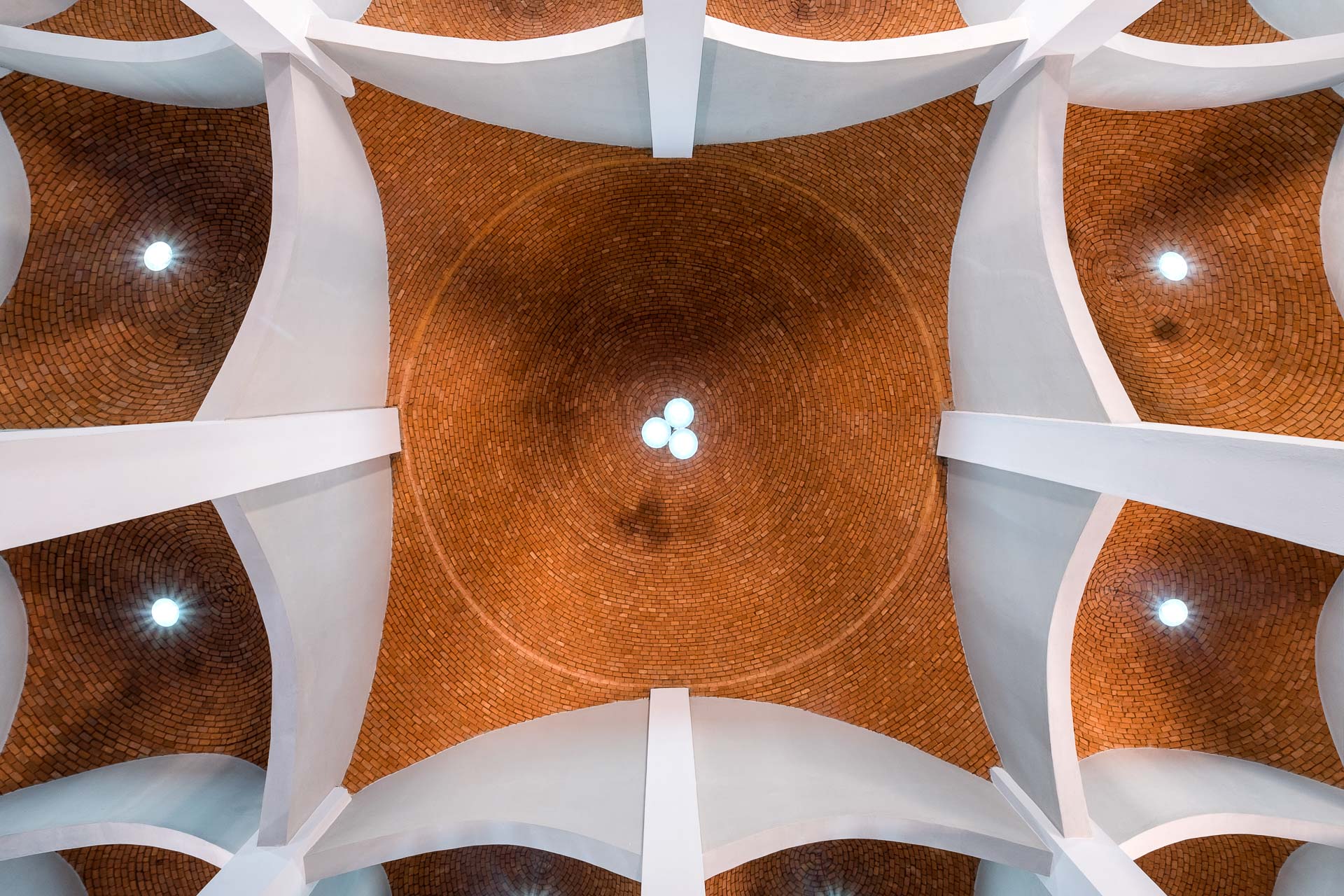
The building envelope of the Hikma Community Complex is made of unfired clay bricks. © James Wang
You began working with earthen construction, including compressed earth blocks, in Niger from the outset. Did your studies in the United States shape this direction?
I originally went to the U.S. to study computer science and worked as a software developer for several years. This gave me time to prepare myself mentally for studying architecture. Even before beginning my studies, I knew that I wanted to design buildings rooted in their context. At university, I actively sought out courses on regional architecture and building with local materials. In Niger, that means clay and earth. The work of Francis Kéré was a significant influence and served as a kind of blueprint for building in my region, as the climatic conditions in Burkina Faso and Niger are very similar.
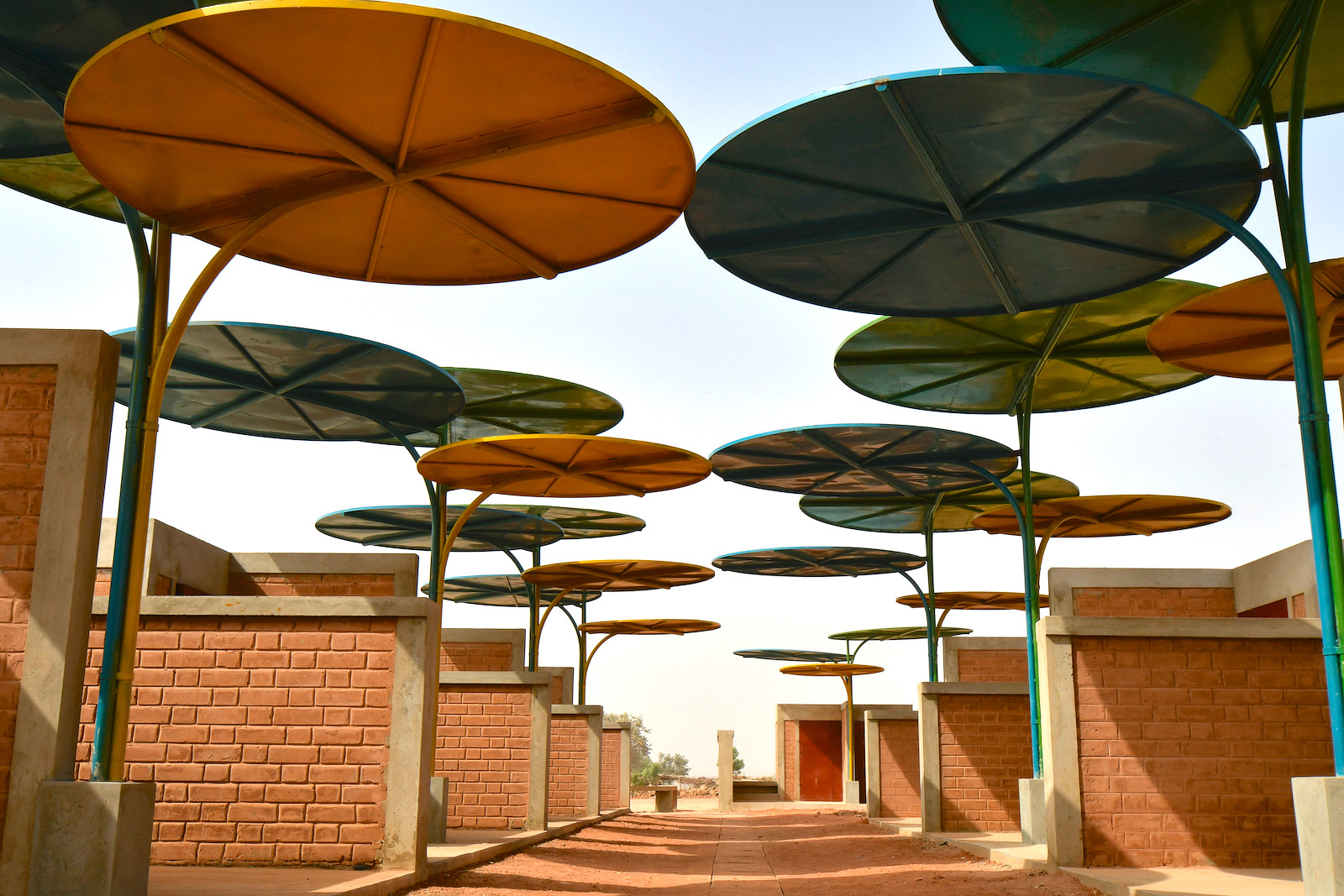
Mariam Issoufou and her office created these market stalls with shady metal roofs for the weekly market in Dandaji in 2018. © Maurice Ascani
Francis Kéré told me it was difficult to convince his clients of the benefits of using rammed earth in contemporary architecture, as many considered the material outdated. Have you faced the same challenge?
Absolutely. There is a deep-seated fear of using earth as a building material. Much of this fear stems from memories of earthen houses in villages or poorer neighbourhoods collapsing during heavy rains. However, people fail to recognize the real reason behind these incidents: we have forgotten the proper techniques for building with earth. Single-layer walls do not work the same way as concrete; earthen walls must be much thicker and require annual maintenance. I’ve focused on convincing people with contemporary examples from around the world, including from Germany. I realised that the best way to combat this stigma was to build with earth in urban contexts, not only in rural ones. That’s why my first projects were designed for cities. It took two years to convince investors, but the most compelling argument turned out to be the costs: we showed how we could build 20 to 30 % more affordably.
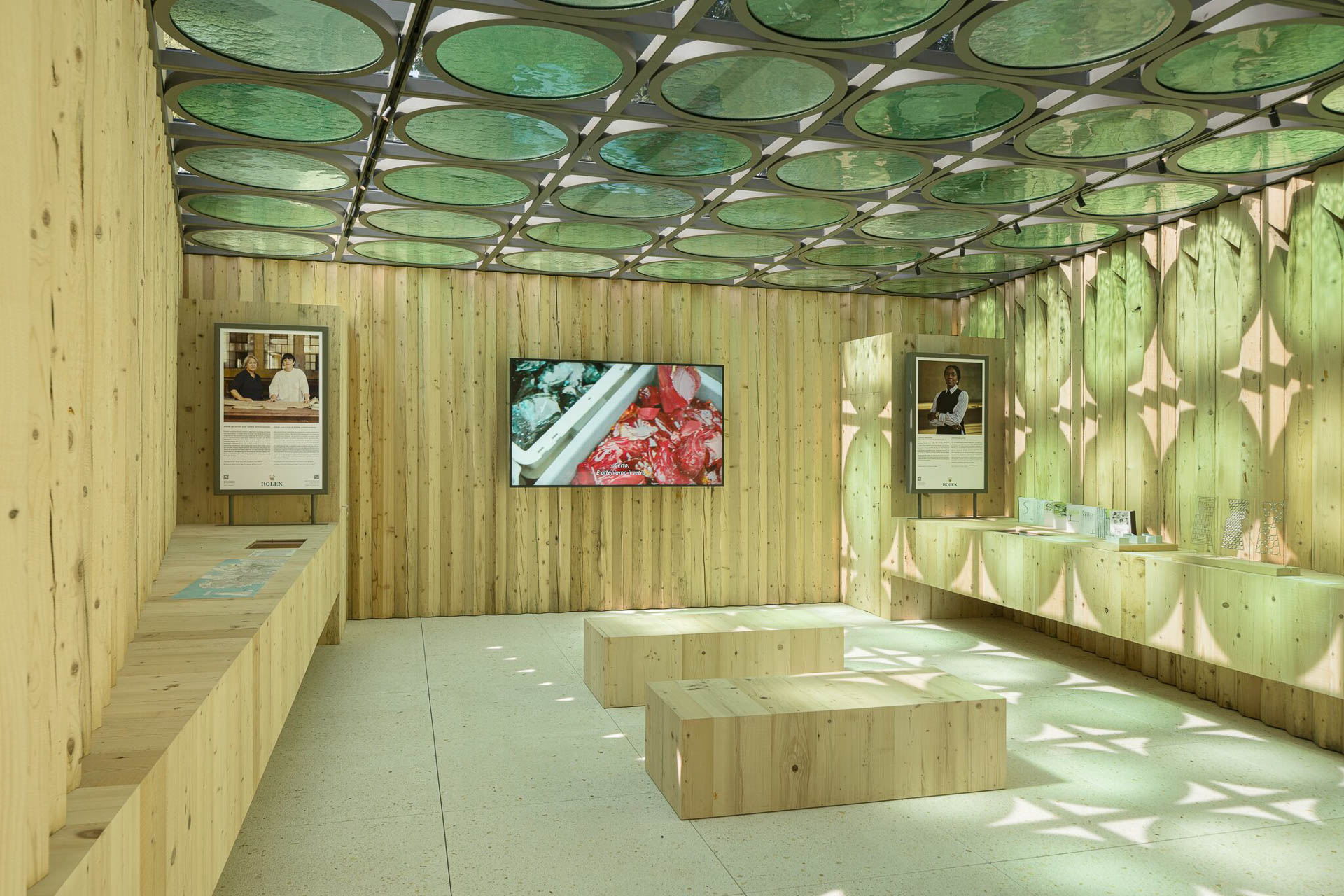
In 2025, the new Rolex Pavilion, designed by Mariam Issoufou, was inaugurated in the Giardini in Venice. © Rolex
You first studied computer science before becoming an architect. Does that background still influence your work?
At first, I saw my experience in software development as something entirely unrelated to architecture. But over time, I realized just how much that education shaped the way I work. It allowed me to quickly learn new software, write scripts when needed, and understand technical aspects more easily than many of my colleagues in architecture.
As a former backend developer, I was used to building systems from the ground up – which conceptually is not so different from designing an architectural structure. So, I didn’t make a complete break between the two fields; rather, I transferred the problem-solving tools from computer science into the more tangible, human-centred world of architecture.
Read the full interview in Detail 3.2026 and in our Detail Inspiration database.
Mariam Issoufou was born in 1979 in Saint-Étienne, France, and grew up in Niger. She first studied computer science in the United States and worked for several years as a software developer. In 2013, she completed a second degree in architecture at the University of Washington in Seattle. The following year, she founded her own architecture firm in Niamey, and in 2023, she opened a branch in New York. Since 2022, Issoufou has been Professor of Architectural Heritage and Sustainability at ETH Zurich. In 2025, Mariam Issoufou received the Iconic Award as “Creator of the Year.”
Mariam Issoufou was born in 1979 in Saint-Étienne, France, and grew up in Niger. She first studied computer science in the United States and worked for several years as a software developer. In 2013, she completed a second degree in architecture at the University of Washington in Seattle. The following year, she founded her own architecture firm in Niamey, and in 2023, she opened a branch in New York. Since 2022, Issoufou has been Professor of Architectural Heritage and Sustainability at ETH Zurich. In 2025, Mariam Issoufou received the Iconic Award as “Creator of the Year.”
Gallery


